 Current
location:
Current
location: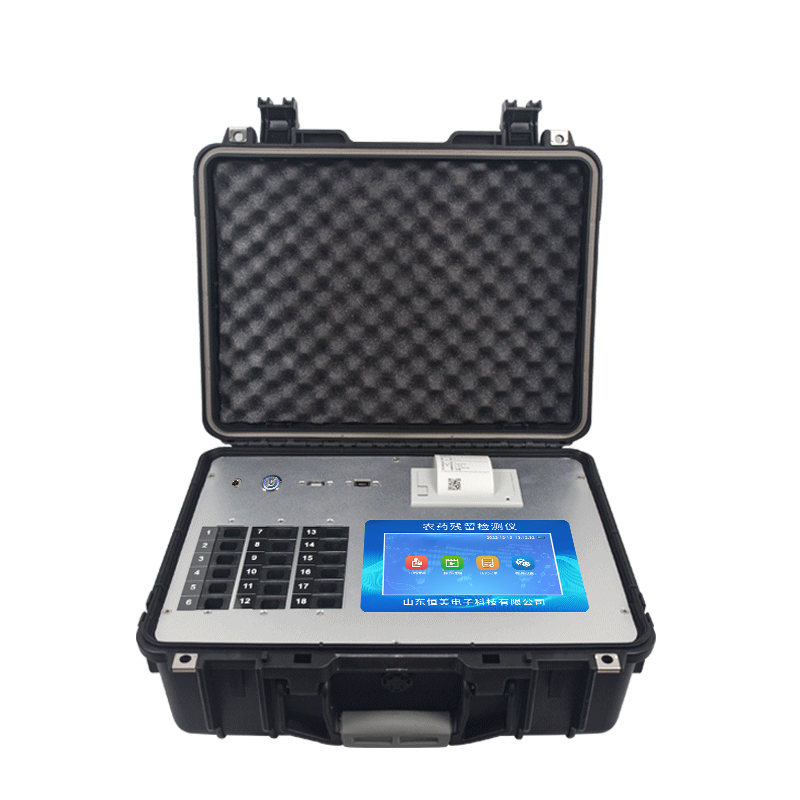
 +86
17853698681
+86
17853698681





Product Introduction
Food testing laboratories and third-party inspection facilities operate under fundamentally different requirements than field screening stations. Daily sample volumes routinely reach hundreds, turnaround time commitments are contractually binding, and every result must be supported by an auditable data trail meeting ISO 17025 documentation standards. When a contract laboratory signs an agreement to screen export-bound produce for EU MRL compliance, the operational question is not simply whether pesticides can be detected—it is whether hundreds of samples can be processed, documented, and reported with complete traceability within the promised service window.
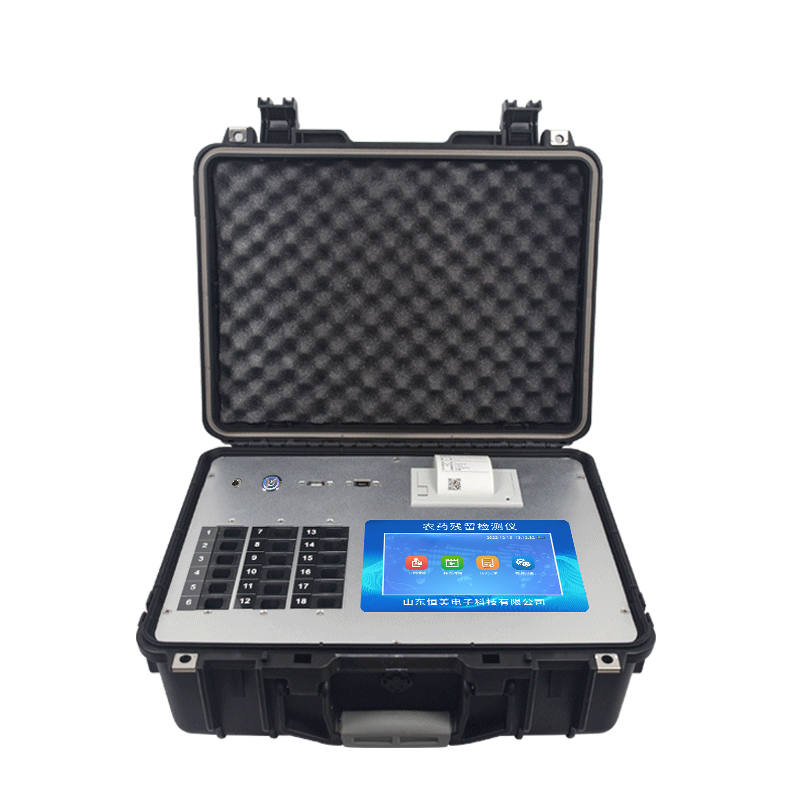
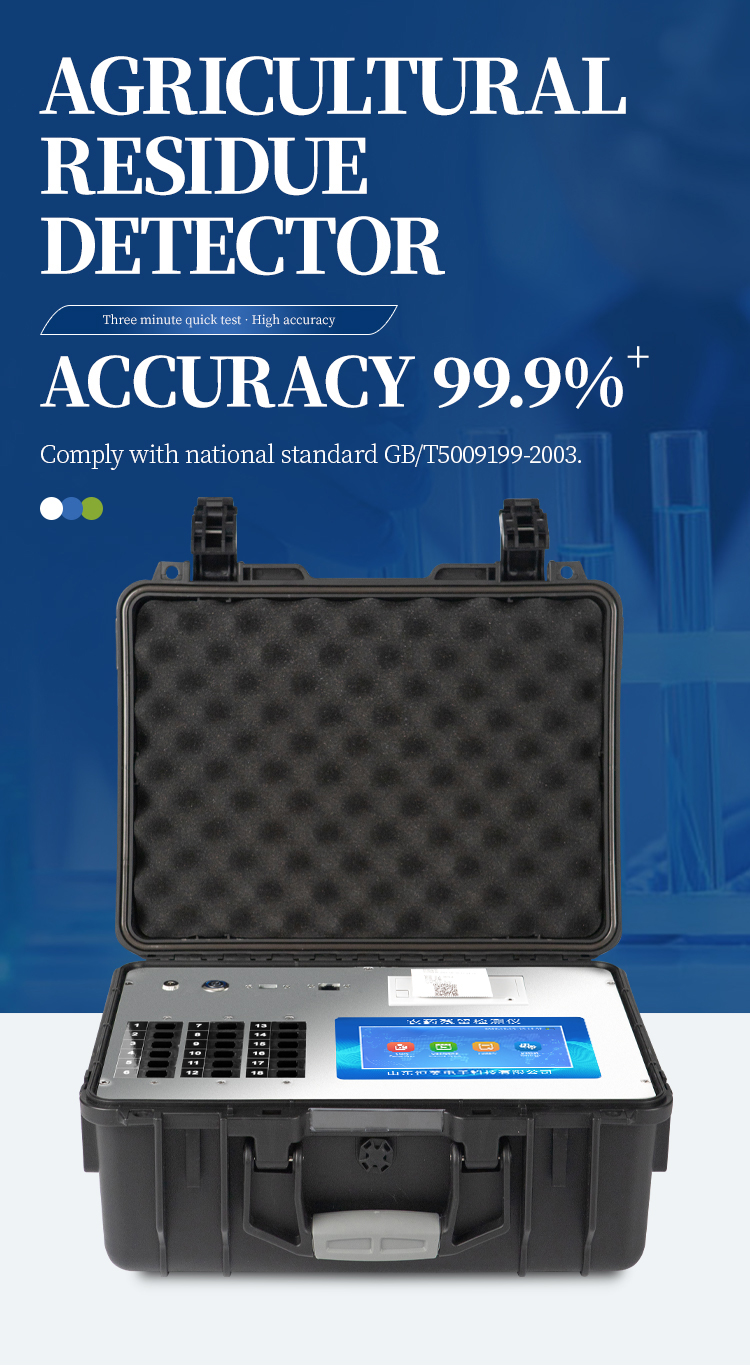
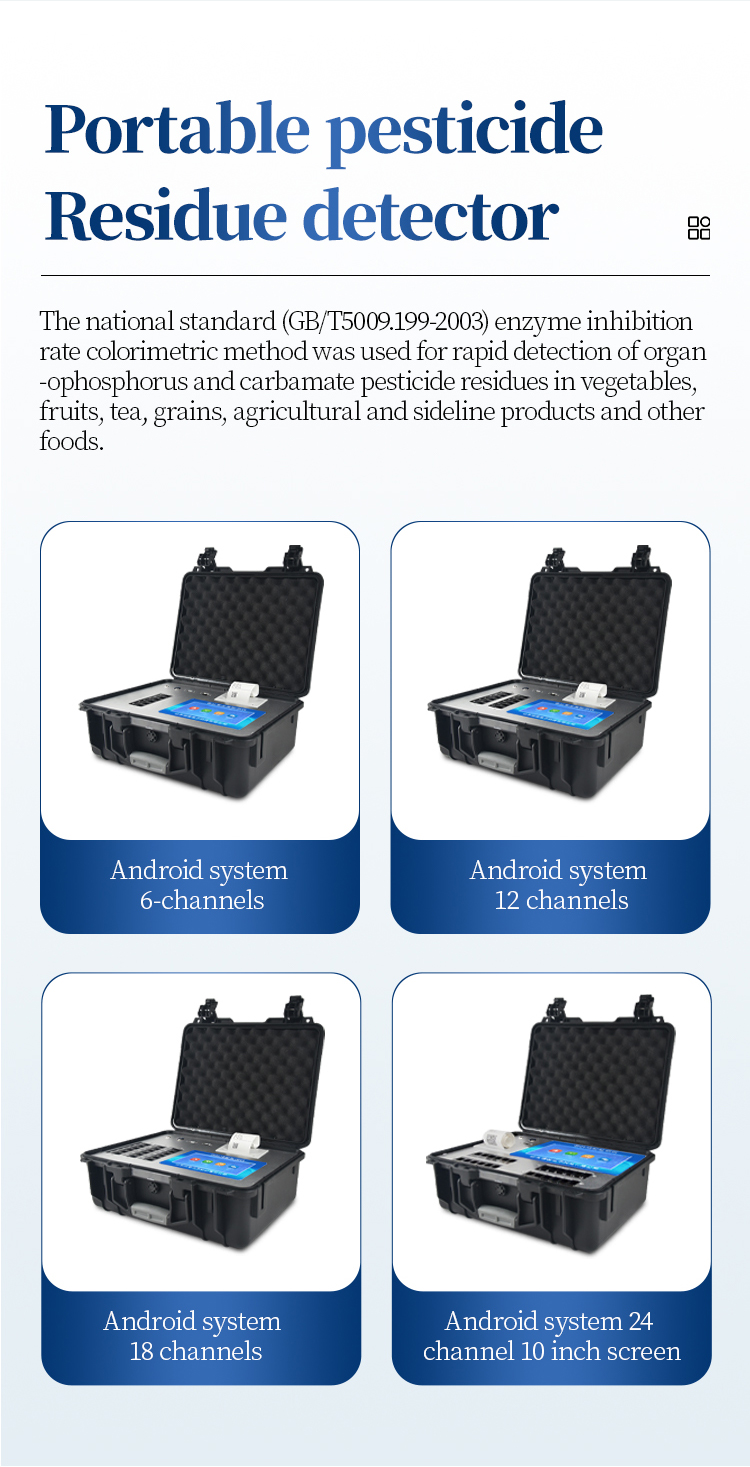
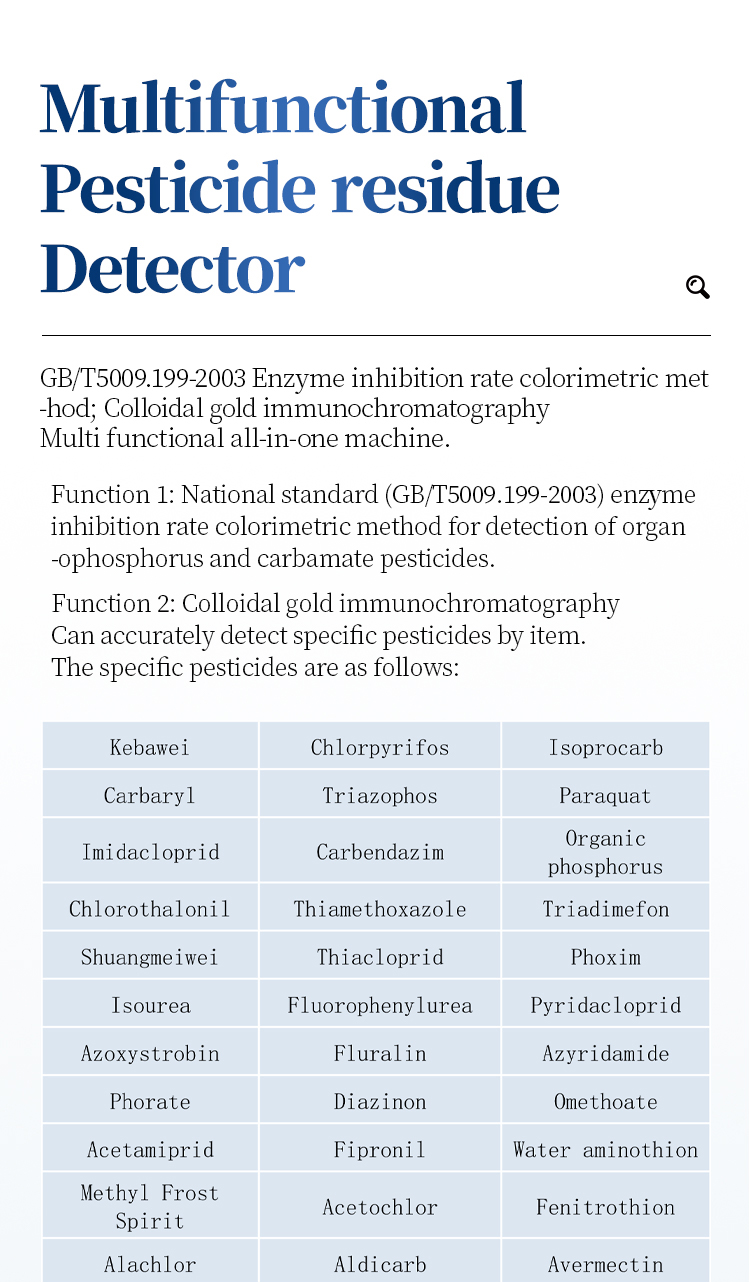
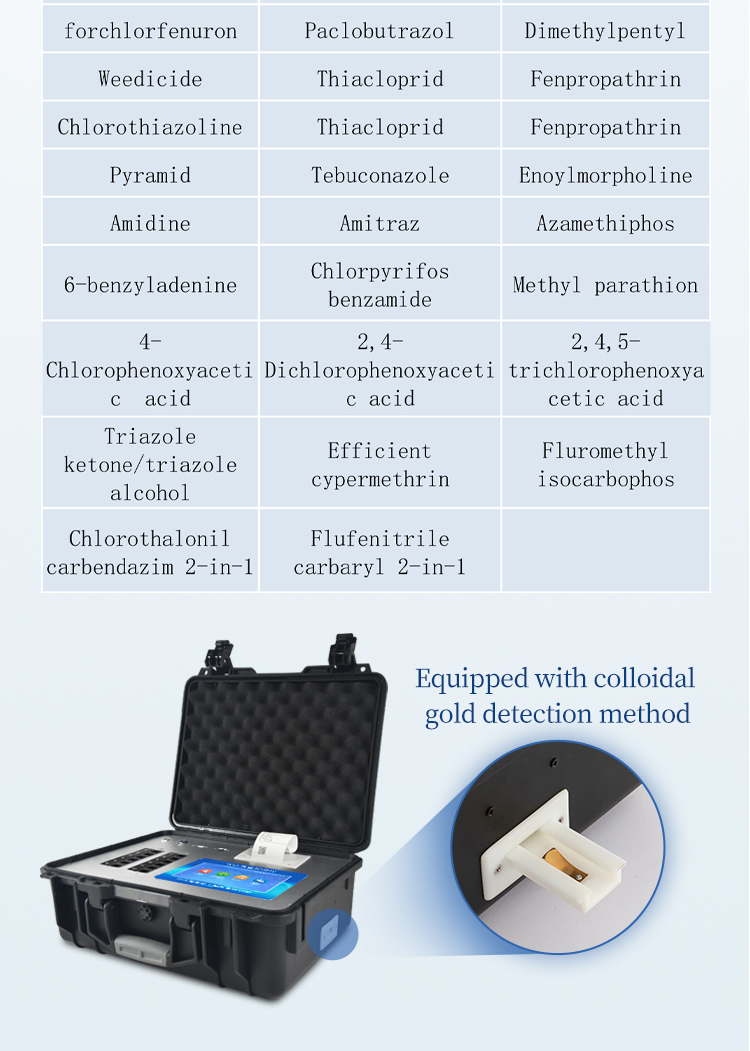
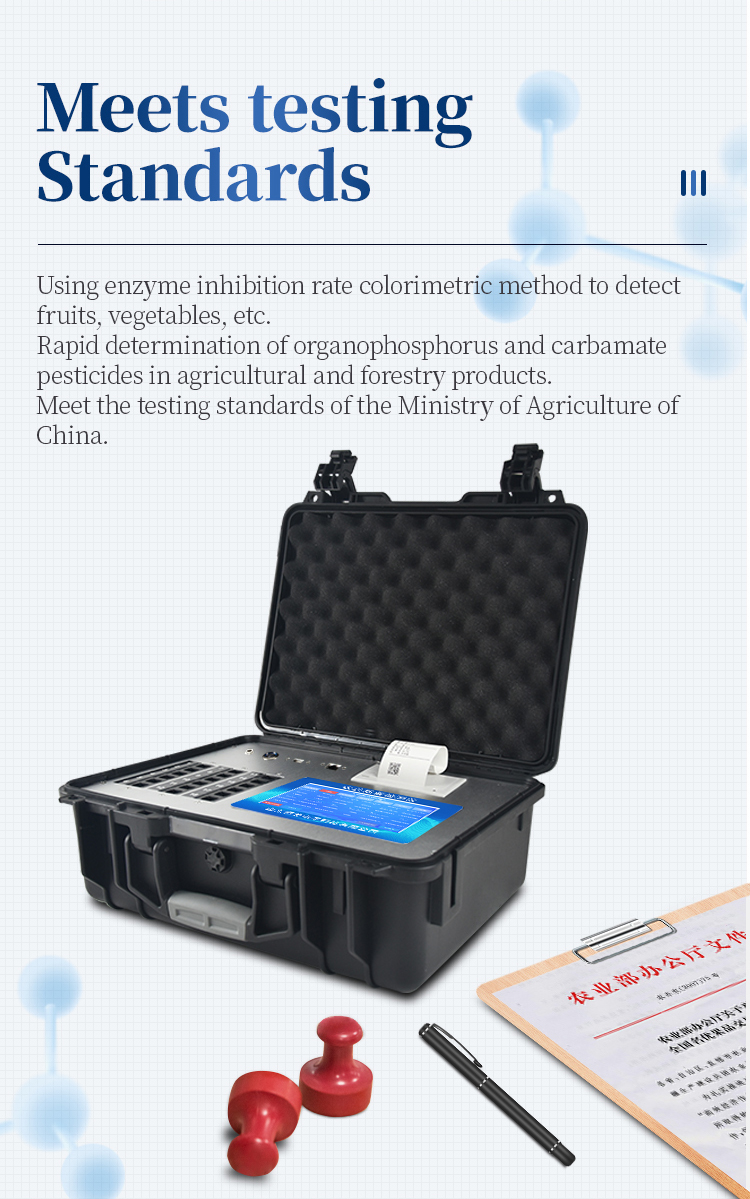
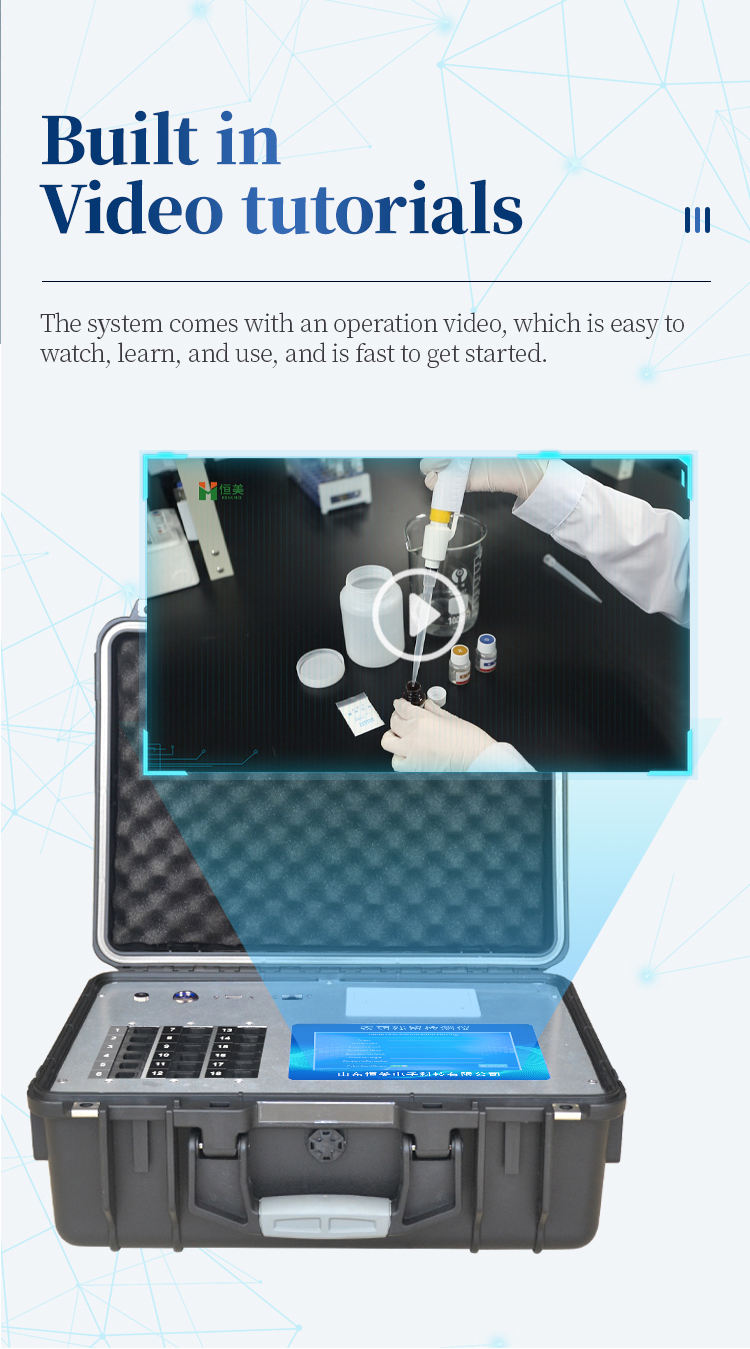
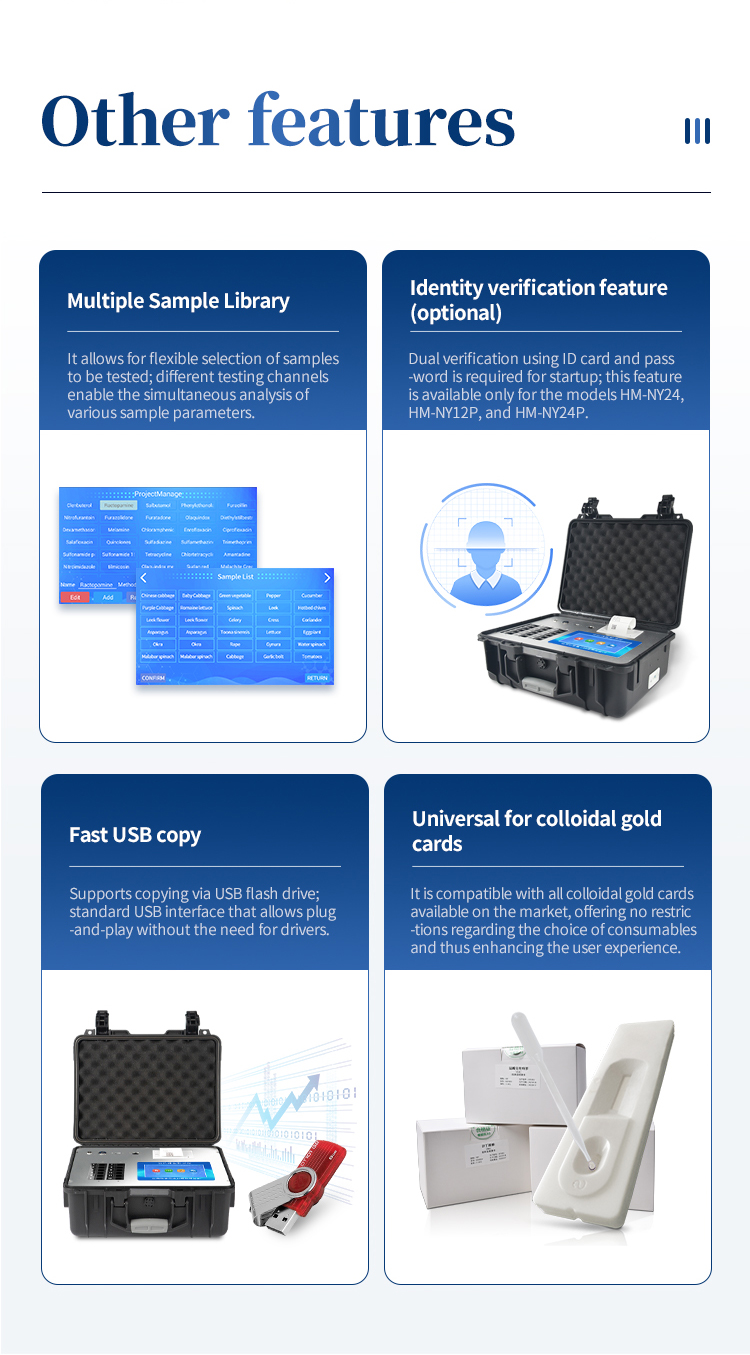
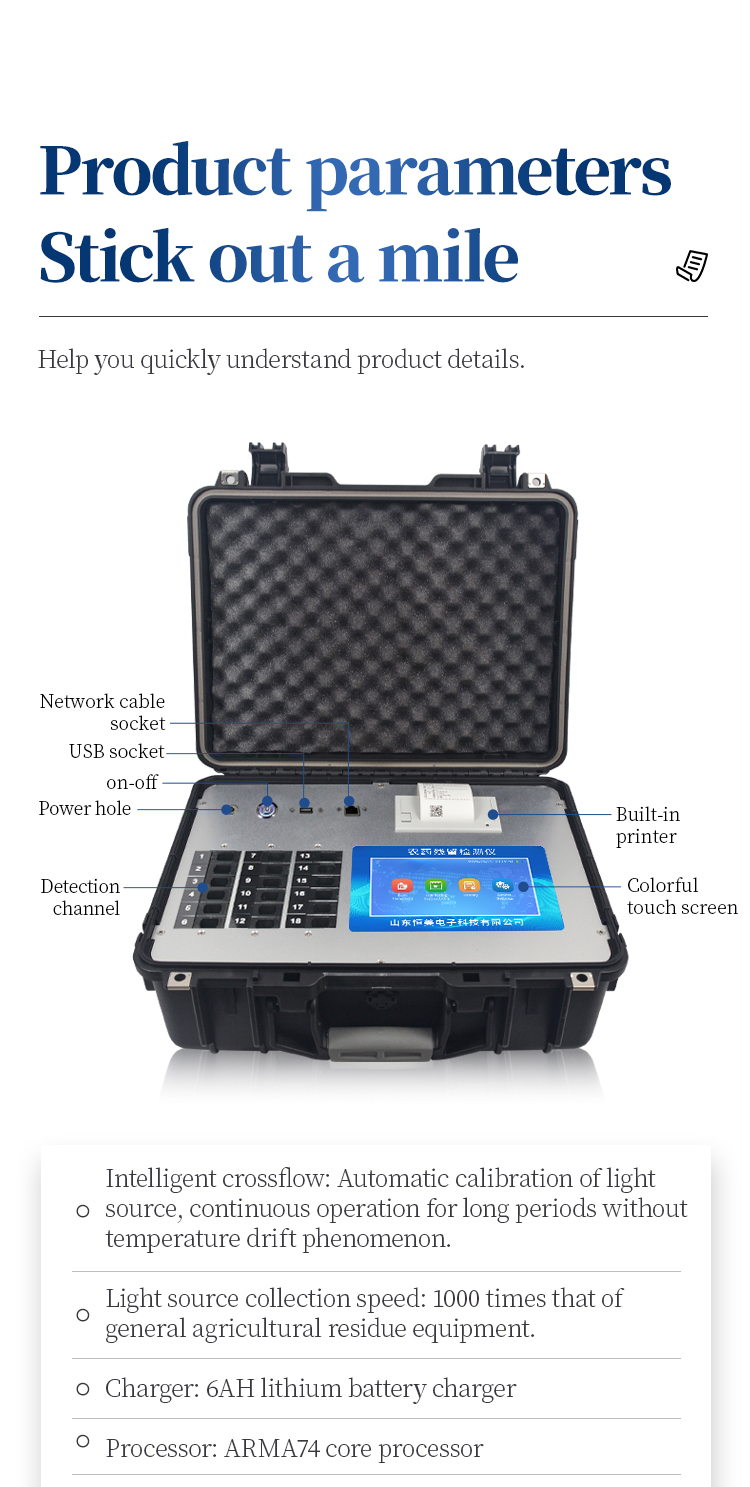
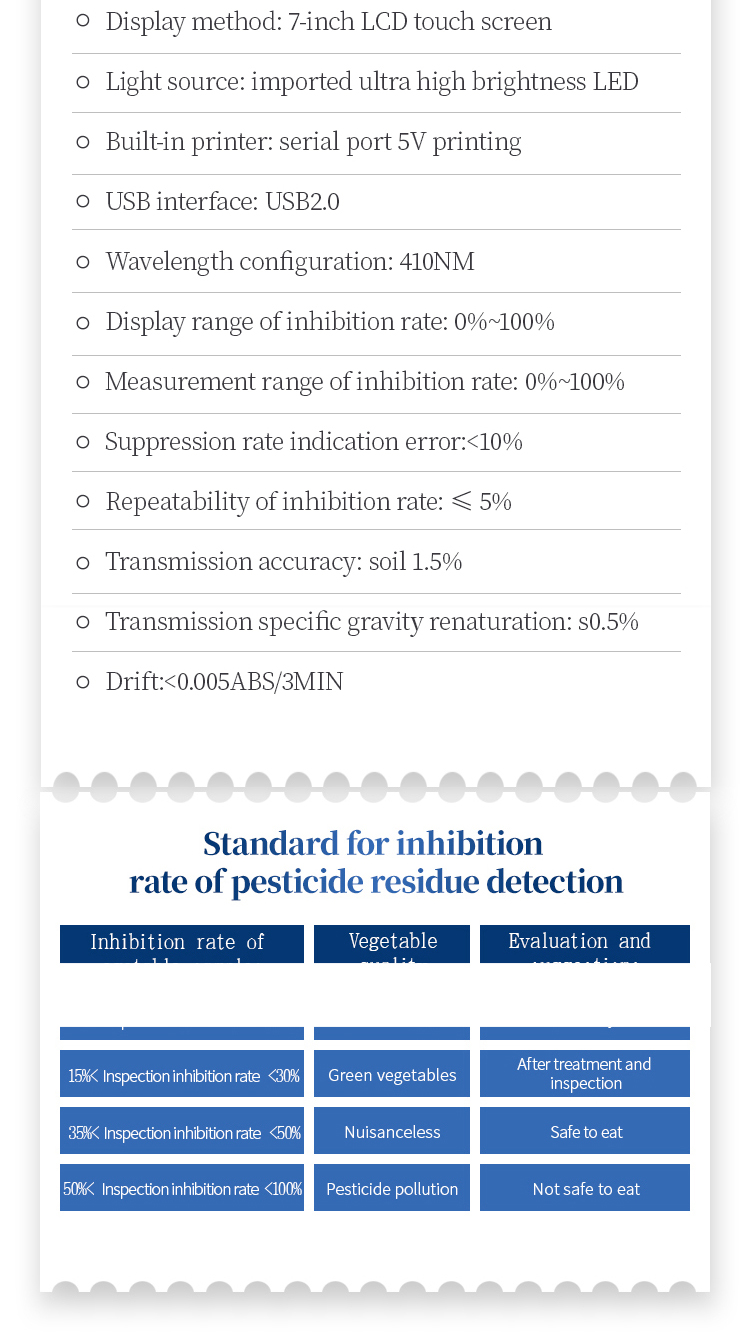
The HM-NY24P addresses these laboratory-grade requirements through parallel processing capacity and dual-method flexibility. Twenty-four independent channels operate through a 10-inch color touchscreen, enabling batch processing against enzyme inhibition and colloidal gold protocols in a single workflow. The enzyme inhibition module at 412 nm per GB/T5009.199-2003 provides quantitative organophosphate/carbamate screening across all channels concurrently. The integrated colloidal gold card reader extends coverage to over 60 specific pesticide varieties including chlorpyrifos, parathion, dichlorvos, and carbofuran—compounds commonly monitored in export programs. Powered by an ARM Cortex-A7 RK3288 processor with 200,000-record storage and USB export, the HM-NY24P generates the structured data trail that accredited laboratories need. See our export produce pesticide compliance testing guide for protocol details.
Applications
- Third-party food testing laboratories: Contract labs processing high daily volumes benefit from 24-channel throughput and dual-method coverage on one platform.
- Export produce certification: Pre-shipment screening against destination-market MRLs combining enzyme inhibition with targeted colloidal gold identification.
- Government food safety laboratories: Regulatory monitoring requiring documented, defensible screening results with complete traceability chains.
- Large-scale wholesale market testing centers: Centralized facilities handling peak-season volumes where single-channel instruments create bottlenecks.
- Food processing QA laboratories: Incoming raw material inspection at plants sourcing from multiple regional suppliers.
- Agricultural research institutions: Comparative pesticide residue profiling across crop varieties with high sample throughput requirements.
- Retail and supermarket central laboratories: Private-label programs verifying supplier compliance at distribution center level.
Key Features & Advantages
- 24 independent detection channels enabling simultaneous parallel processing, reducing per-sample turnaround time and eliminating single-channel queuing bottlenecks during peak testing periods.
- Dual detection methods on one platform: enzyme inhibition colorimetry (412 nm, GB/T5009.199-2003) for broad-spectrum organophosphate/carbamate screening plus colloidal gold immunochromatography for targeted compound identification.
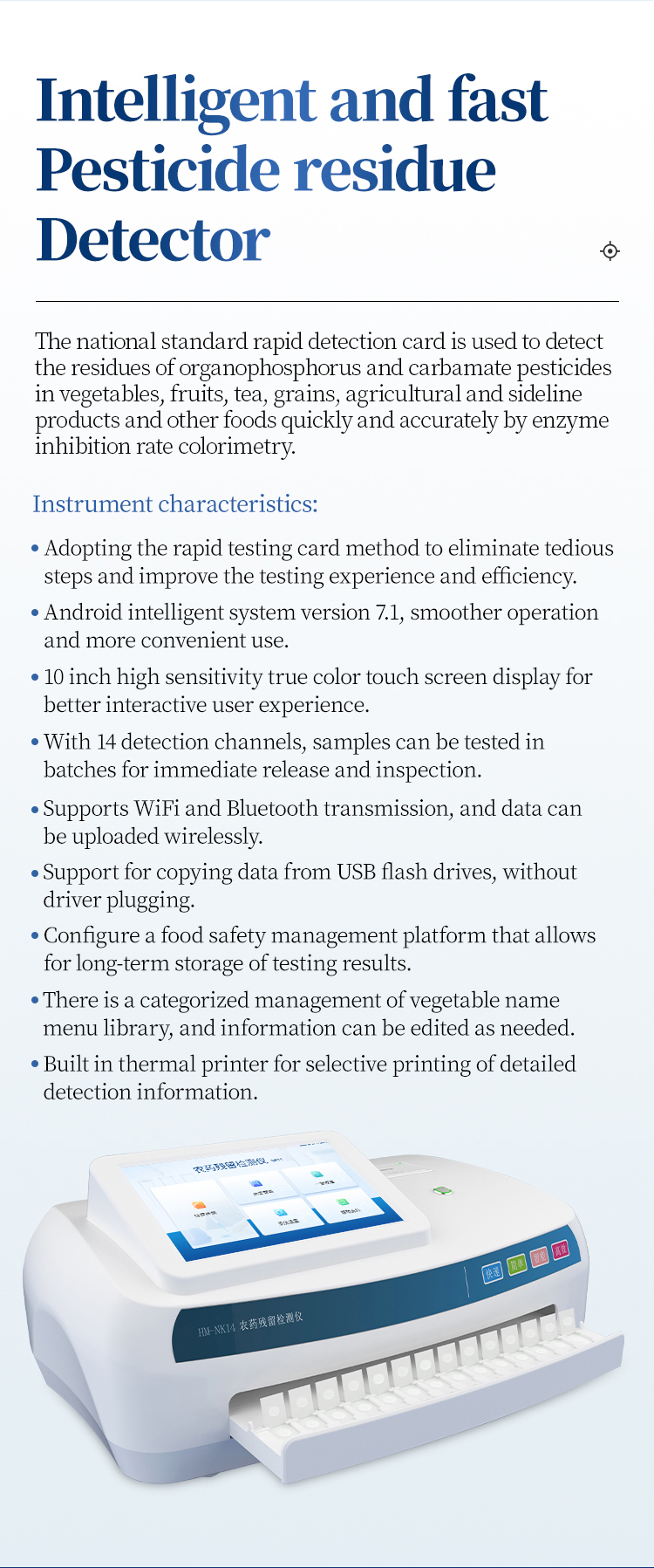
- 10-inch color capacitive touchscreen with intuitive multi-sample workflow interface designed for laboratory technicians managing concurrent batch testing operations.
- Over 60 detectable pesticide compounds spanning organophosphorus, carbamate, and colloidal gold strip-targeted varieties, supporting comprehensive screening programs for multi-market export compliance.
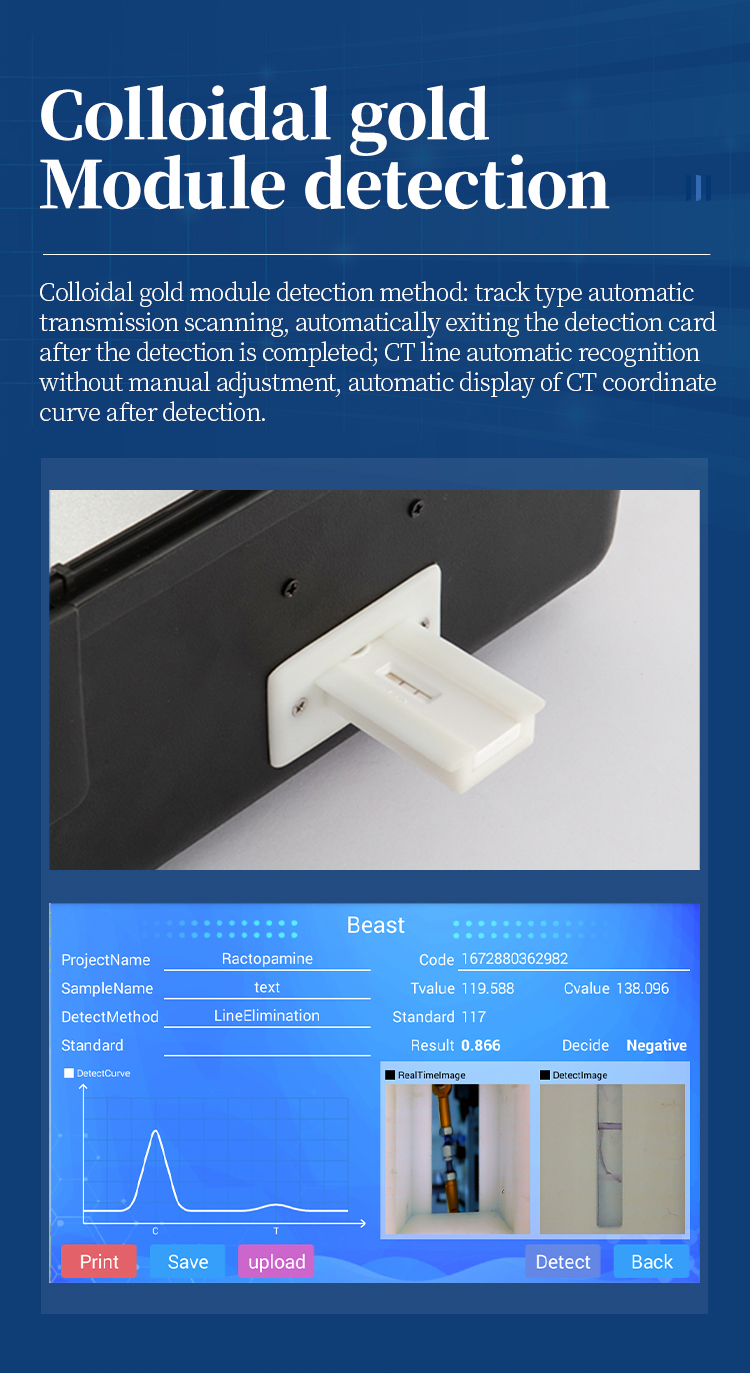
- Automatic colloidal gold card image acquisition and quantitative interpretation replacing subjective visual line-reading with objective instrument-reported results suitable for formal test reports.
- ARM Cortex-A7 RK3288 quad-core processor delivering responsive multi-threaded performance for real-time data processing across all 24 channels simultaneously.
- 200,000 test record storage with automatic indexing by sample ID, date/time, operator, and batch number, supporting ISO 17025 documentation and audit trail requirements.
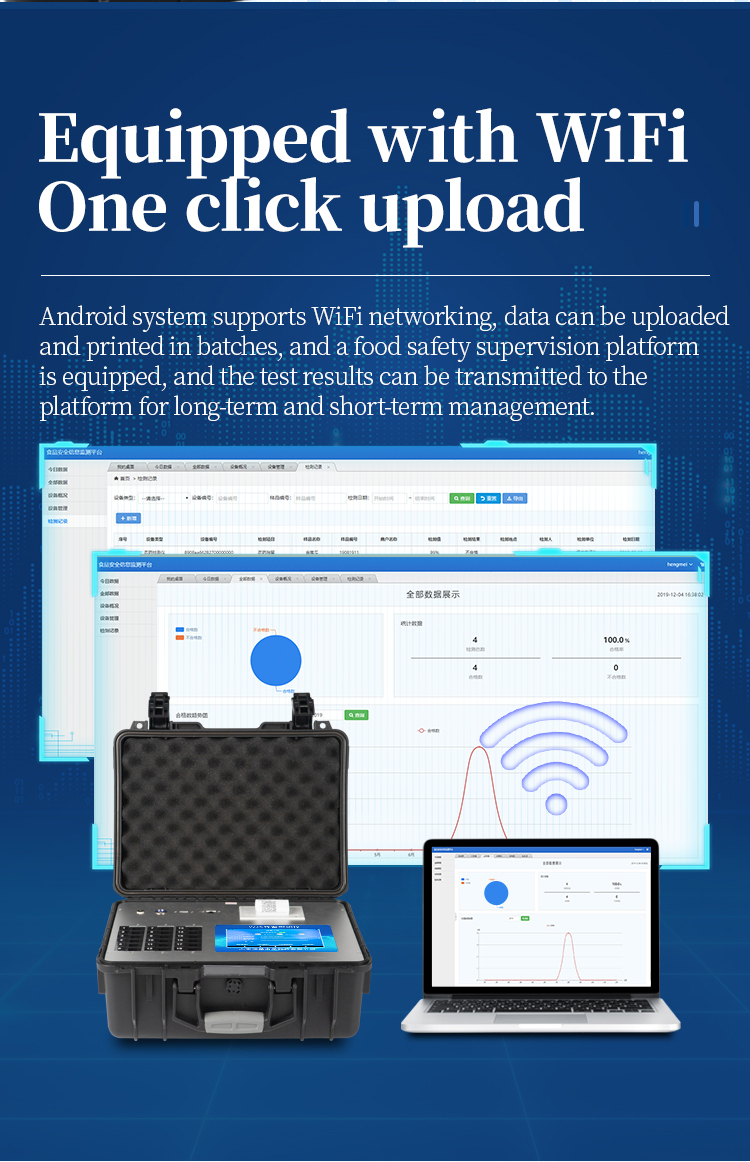
- USB data export supporting Excel and PDF formats for direct LIMS integration or client report generation without manual transcription errors.
- Built-in 6 Ah rechargeable lithium battery with AC/DC dual power, supporting both fixed bench installation and deployment in mobile laboratory vehicles for on-site contract testing.
- Compact 43×35×19 cm footprint with 5.2 kg net weight enabling practical benchtop placement in space-constrained laboratory environments without sacrificing 24-channel capacity.
- Compatible with standardized reagent kits and test cards from major manufacturers, providing supply chain flexibility for laboratories managing multi-vendor procurement.
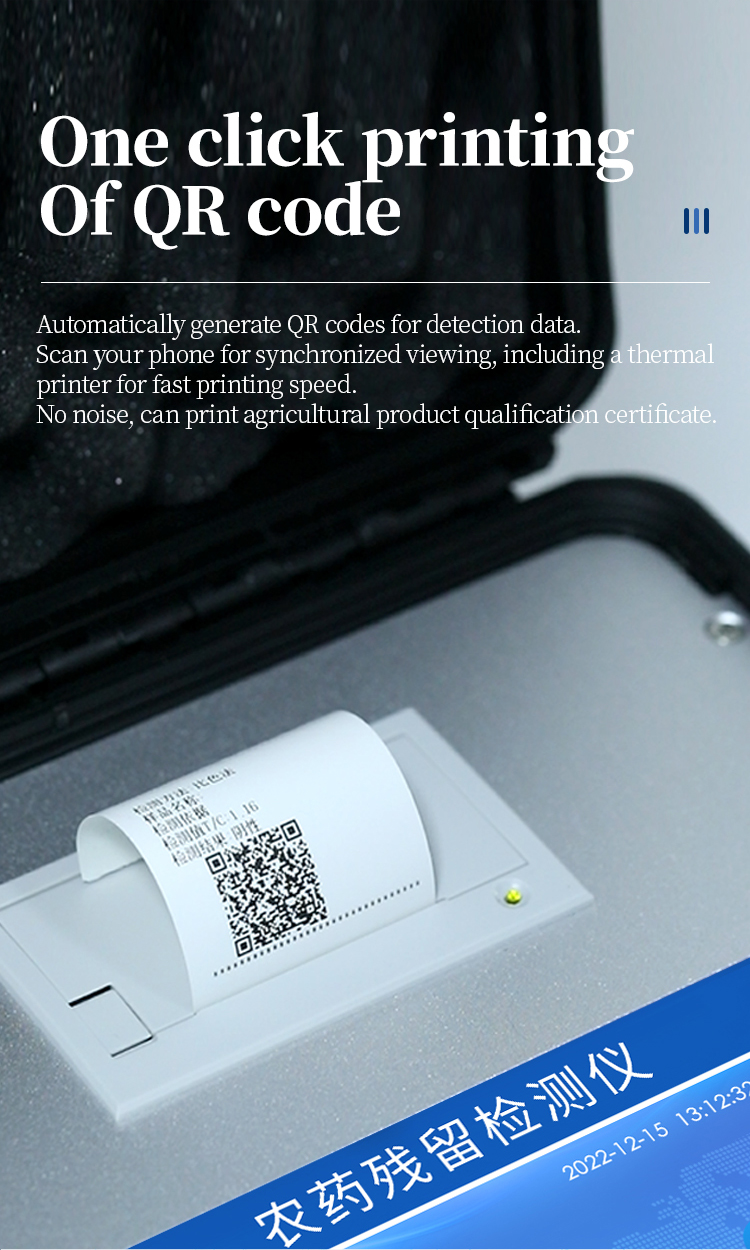
- Built-in thermal printer with configurable report headers for immediate client-ready documentation at the bench, reducing report turnaround delays.
Technical Specifications
| Parameter | Specification |
|---|---|
| Detection Methods | Enzyme inhibition rate colorimetry + Colloidal gold immunochromatography |
| Number of Channels | 24 independent detection channels |
| Display | 10-inch color capacitive touchscreen |
| Enzyme Inhibition Wavelength | 412 nm |
| Applicable Standard | GB/T5009.199-2003 |
| Inhibition Rate Range | 0.0% – 100.0% |
| Transmittance Accuracy | ±1.5% |
| Colloidal Gold Detection | Automatic card image acquisition and result interpretation |
| Detectable Pesticide Compounds | 60+ (organophosphorus, carbamate, and regulated varieties) |
| Processor | ARM Cortex-A7 RK3288 quad-core |
| Data Storage Capacity | 200,000 test records |
| Data Export Formats | USB (Excel and PDF supported) |
| Battery | Built-in 6 Ah rechargeable lithium battery |
| Power Supply | AC adapter / DC input / battery |
| Printer | Built-in thermal printer |
| Dimensions | 43 × 35 × 19 cm |
| Net Weight | 5.2 kg |
| Packaged Weight | 9.4 kg |
FAQ
A single-channel instrument yields approximately 12-15 samples per hour; a 12-channel instrument achieves 60-80 per hour. The HM-NY24P's 24 channels deliver 120-160 samples per hour, enabling a single operator to process 200 samples within a morning shift. Higher channel count reduces labor cost per sample and improves margins on volume contracts. The 24-channel configuration handles daily volume fluctuations from 50 to 250 samples without creating reporting backlogs.
These methods address different questions and are best deployed sequentially. Enzyme inhibition provides broad-spectrum screening: "Is there significant aggregate organophosphate/carbamate toxicity?" Run first across all samples to identify lots needing investigation. Colloidal gold answers: "Does this sample contain a specific regulated pesticide?" Use it as targeted follow-up to positive screens or when clients require verification that a particular compound is absent. The HM-NY24P's dual-method integration means labs run enzyme inhibition on all channels, then immediately switch to colloidal gold for flagged samples without transferring to a separate instrument—preserving chain of custody and reducing transcription errors critical for ISO 17025 accreditation.
EU MRLs under Regulation (EC) No 396/2005 set compound-specific thresholds often at 0.01-0.05 mg/kg. While definitive compliance requires LC-MS/MS or GC-MS/MS confirmation, the HM-NY24P serves as an efficient pre-screening gateway. The enzyme inhibition module identifies samples with elevated aggregate pesticide load likely to exceed MRLs; the colloidal gold module targets specific compounds of concern such as chlorpyrifos. Pre-screening export lots reduces expensive confirmatory analysis volume while ensuring high-risk samples receive priority. The 200,000-record storage with USB export provides traceability documentation required by importing authorities and schemes such as GlobalG.A.P.
Operators create a batch, assign sample IDs, and select detection protocols for each channel. The 24 channels can run identical protocols for maximum throughput or split into groups running different methods simultaneously. During execution, the 10-inch touchscreen displays real-time incubation progress, absorbance readings, and result flags. Completed results are automatically indexed with metadata. Batch reports print immediately or export via USB. This design integrates naturally with LIMS: sample login occurs at batch creation, results are reviewed as a batch, and the batch record serves as the primary documentation unit for QC review and client reporting.
ISO 17025 requires results to be traceable, reproducible, and supported by complete records. The HM-NY24P captures sample ID, date/time, operator, detection method, raw absorbance values, calculated inhibition rate or colloidal gold result, and pass/fail determination per test. Startup self-check and calibration data are logged, providing evidence of proper instrument performance. The 200,000-record storage supports extended retention. USB export in Excel format enables direct LIMS or QMS incorporation, eliminating manual transcription errors. While not a full LIMS replacement, the HM-NY24P provides the instrument-level data granularity ISO 17025 assessors expect when reviewing pesticide residue testing scope.
Traditional visual interpretation introduces problems in regulated contexts: different operators interpret the same strip differently, ambient lighting affects perception, and visual readings cannot be objectively documented. The HM-NY24P replaces visual reading with automated image acquisition and quantitative analysis. The reader captures a digital image, measures test and control line optical density algorithmically, and reports a numerical pass/fail result. This eliminates inter-operator variability, produces objective records suitable for formal reports, and stores digital strip images for retrospective audit. For laboratories transitioning from visual reading to accredited operations, this represents significant documentation quality improvement.
The HM-NY24P uses two consumable categories. Enzyme inhibition kits contain acetylcholinesterase enzyme, chromogenic substrate, and buffer—available from multiple suppliers; refrigerate at 2-8°C, 6-12 month shelf life. Colloidal gold cards from major manufacturers come in sealed foil pouches, stable at room temperature for 12-24 months. A dual-method lab typically stocks 2-3 months of reagents and 1-2 months of test cards, calibrated to client contract requirements. HM Instruments provides a consumables specification sheet listing compatible formats. Laboratories with multi-vendor procurement policies can source independently.
Article address:https://www.hmfoodtesting.com/nycl2/high-throughput-pesticide-lab-analyzer.html