 Current
location:
Current
location: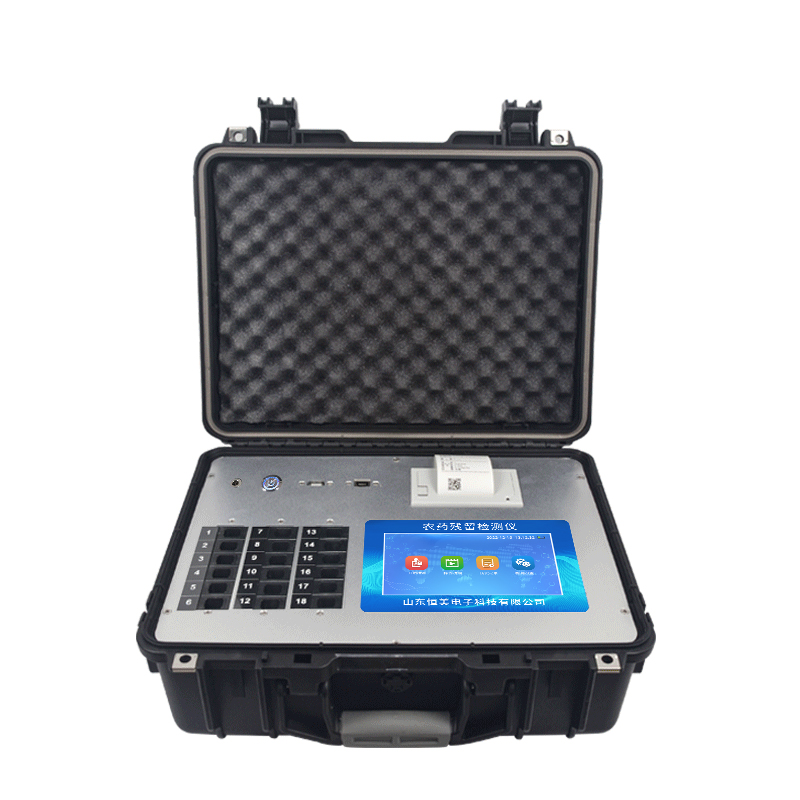
 +86
17853698681
+86
17853698681









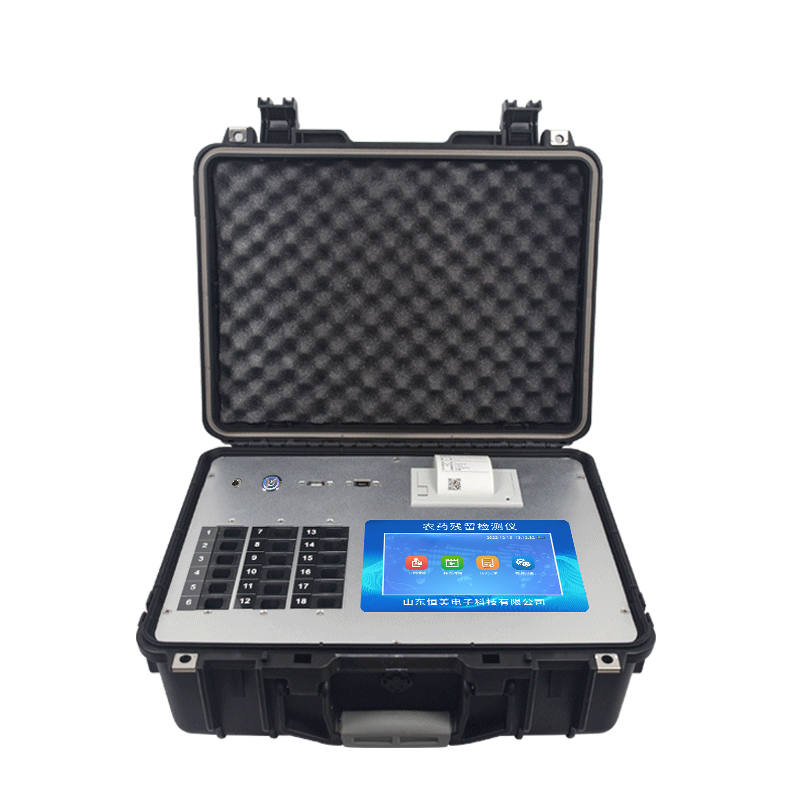
Product Introduction
At wholesale produce markets each morning, truckloads of freshly harvested vegetables arrive for distribution. For market operators and food safety inspectors, the challenge is verifying pesticide compliance across dozens of batches within the narrow window before produce moves downstream. Off-site laboratory testing means 24 to 48 hours of delay—by which time vegetables have already reached consumers. This gap between commercial speed and laboratory pace is a persistent vulnerability in fresh produce safety.
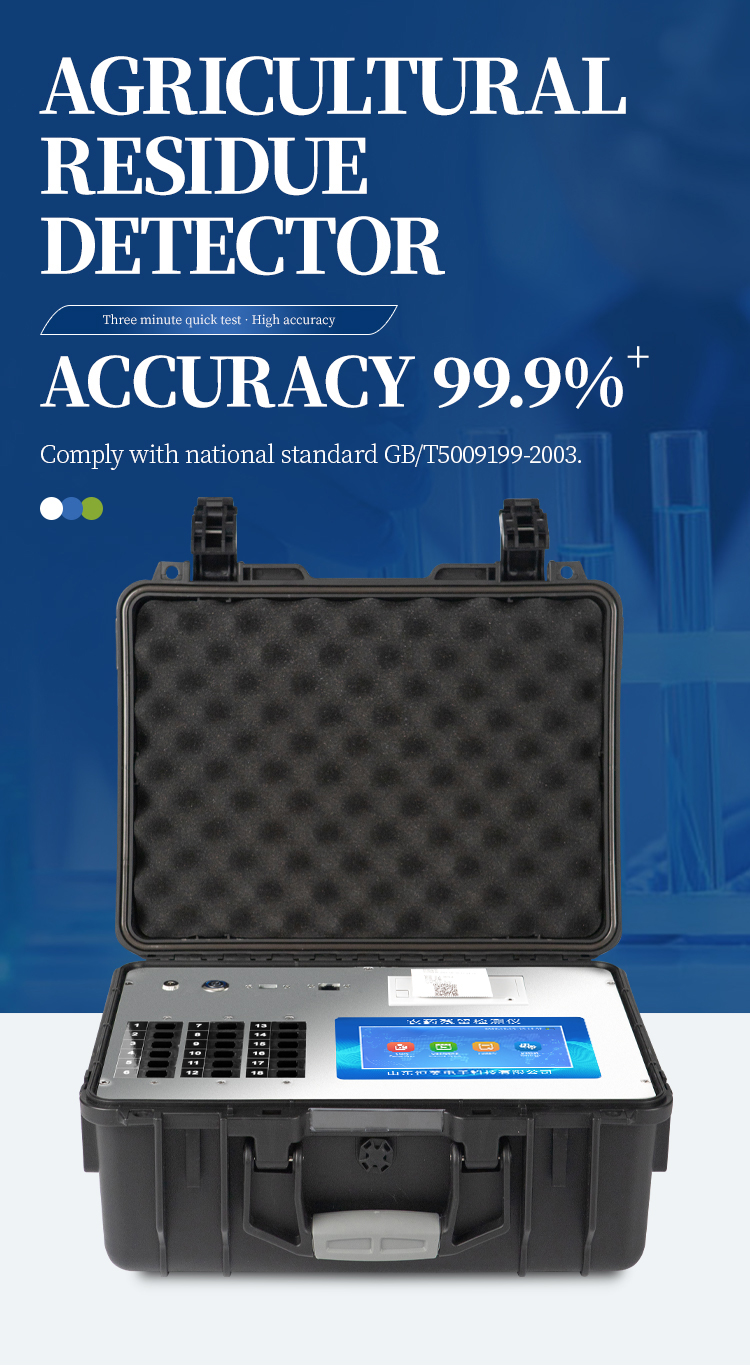
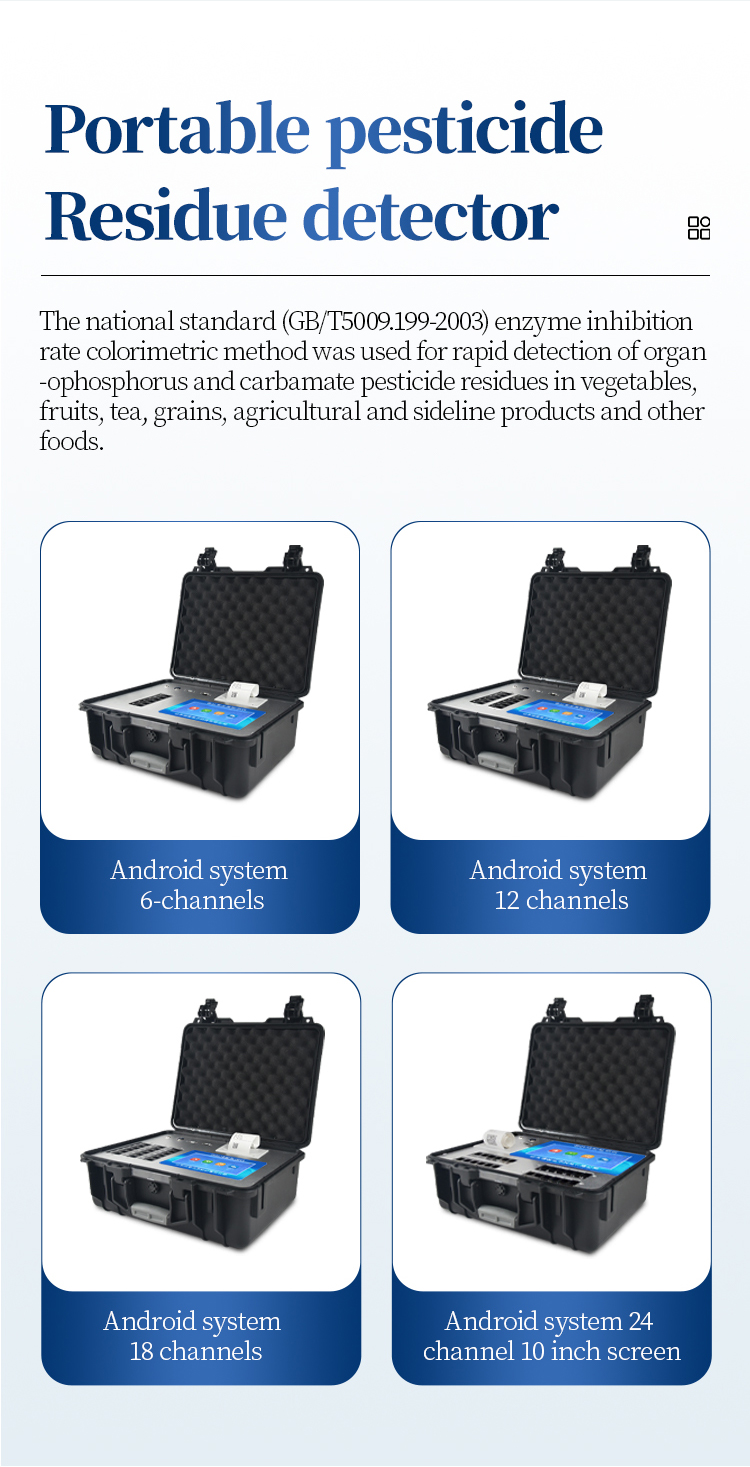
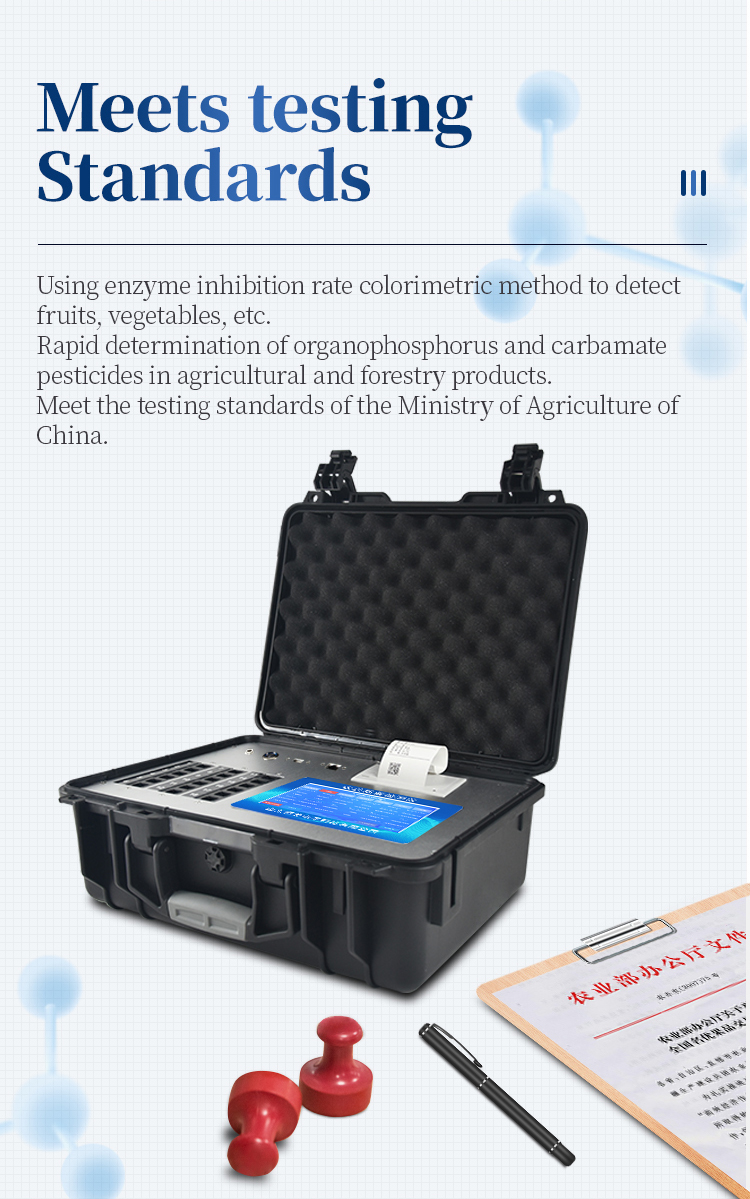
The HM-NY24 directly addresses this bottleneck. Using enzyme inhibition rate colorimetry per GB/T5009.199-2003, it measures organophosphate and carbamate inhibition of acetylcholinesterase at 412 nm. The inhibition rate provides immediate pass/fail assessment. Unlike GC-MS methods requiring skilled analysts and hours of preparation, the HM-NY24 delivers results at the point of inspection—farm packing shed, wholesale market station, or community food safety post. AC power with optional lithium battery and self-heating incubation ensure consistent performance despite variable field conditions. See our on-farm pesticide screening implementation guide for program development frameworks.
Applications
- Farm-gate pre-harvest screening: Growers verify pesticide intervals have elapsed before harvest, reducing non-compliant produce risk.
- Wholesale market inspection: QC teams screen incoming vegetable lots during morning receiving, flagging suspicious batches before retail distribution.
- Agricultural cooperative collection centers: Cooperatives implement uniform incoming quality checks for pooled shipments destined for supermarket and export buyers.
- Community-supported agriculture: CSA operators demonstrate pesticide safety to subscribers through documented harvest screening, building trust in local markets.
- Greenhouse and protected cultivation: Growers integrate rapid pesticide verification into harvest workflow before packing for premium retail channels.
- School and institutional procurement: Officers verify fresh produce deliveries against pesticide thresholds in institutional food safety policies.
- Border inspection points: Quarantine inspectors perform initial rapid screening of imported produce, prioritizing samples for confirmatory lab analysis.
Key Features & Advantages
- Enzyme inhibition colorimetric detection at 412 nm compliant with GB/T5009.199-2003 for rapid organophosphate and carbamate screening.
- Rapid sample-to-result workflow enabling a single operator to process multiple samples within minutes at busy market receiving docks.
- Inhibition rate 0% to 100% with clear numerical readout and configurable pass/fail thresholds, minimizing interpretation training.
- Transmittance accuracy ±1.5% and repeatability ≤0.5% for defensible screening decisions in commercial and regulatory contexts.
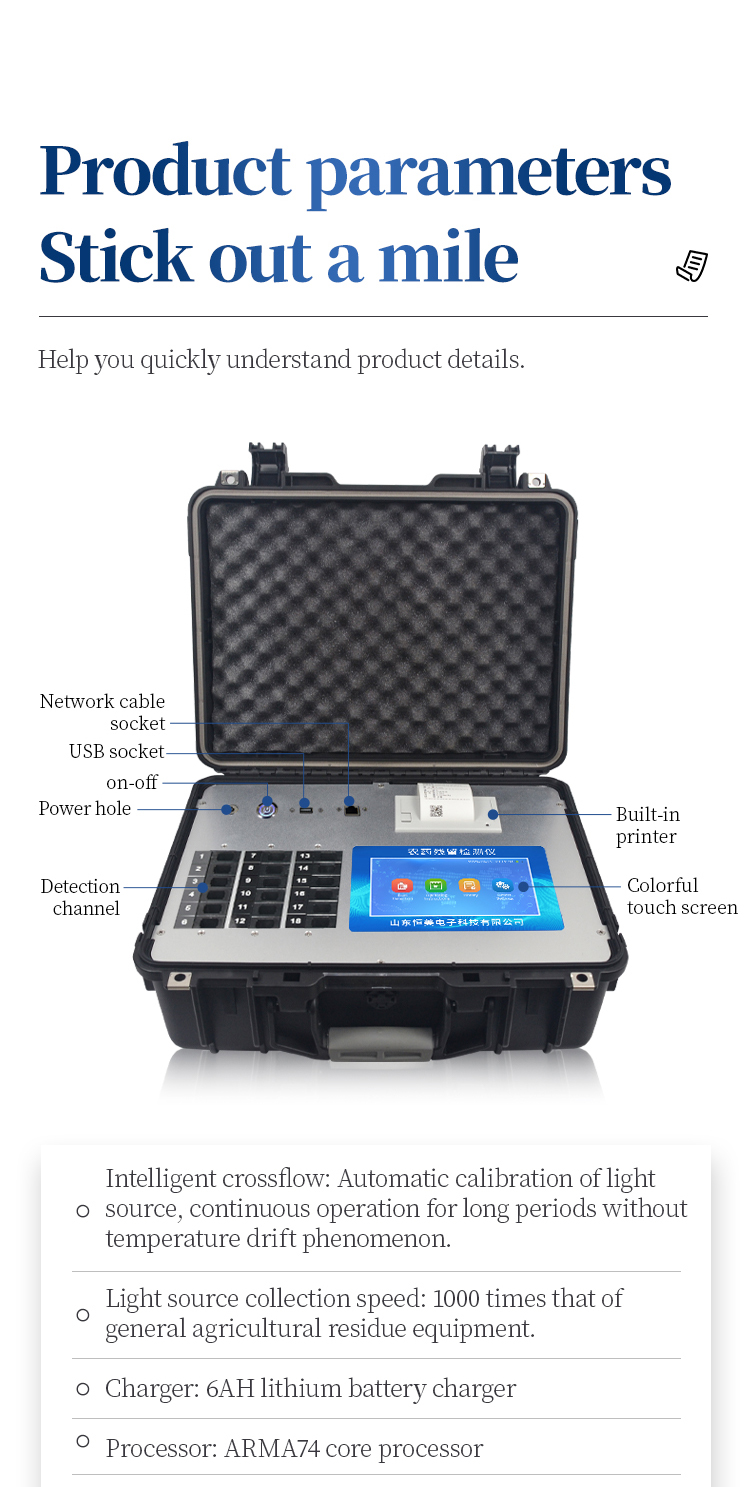
- ARM Cortex-A7 RK3288 quad-core processor for stable performance under variable field power conditions.
- Optional rechargeable lithium battery with AC/DC dual power for uninterrupted operation at sites without reliable mains electricity.
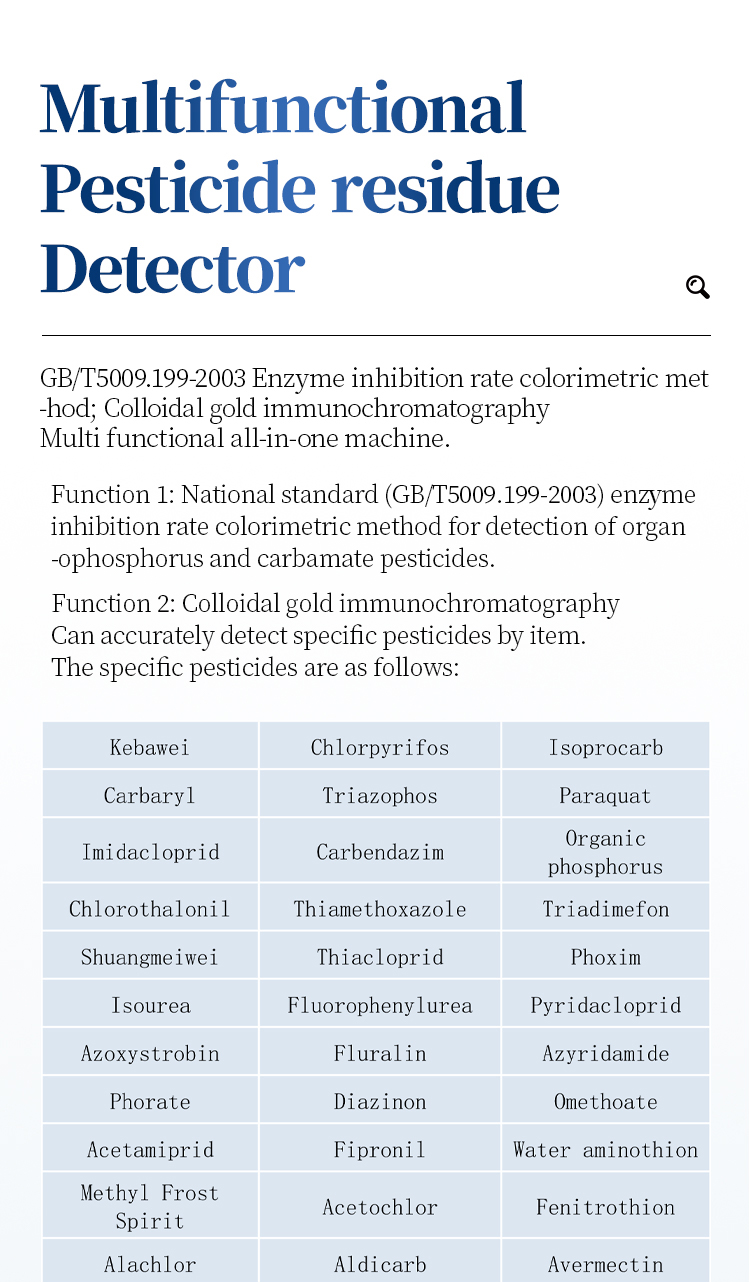
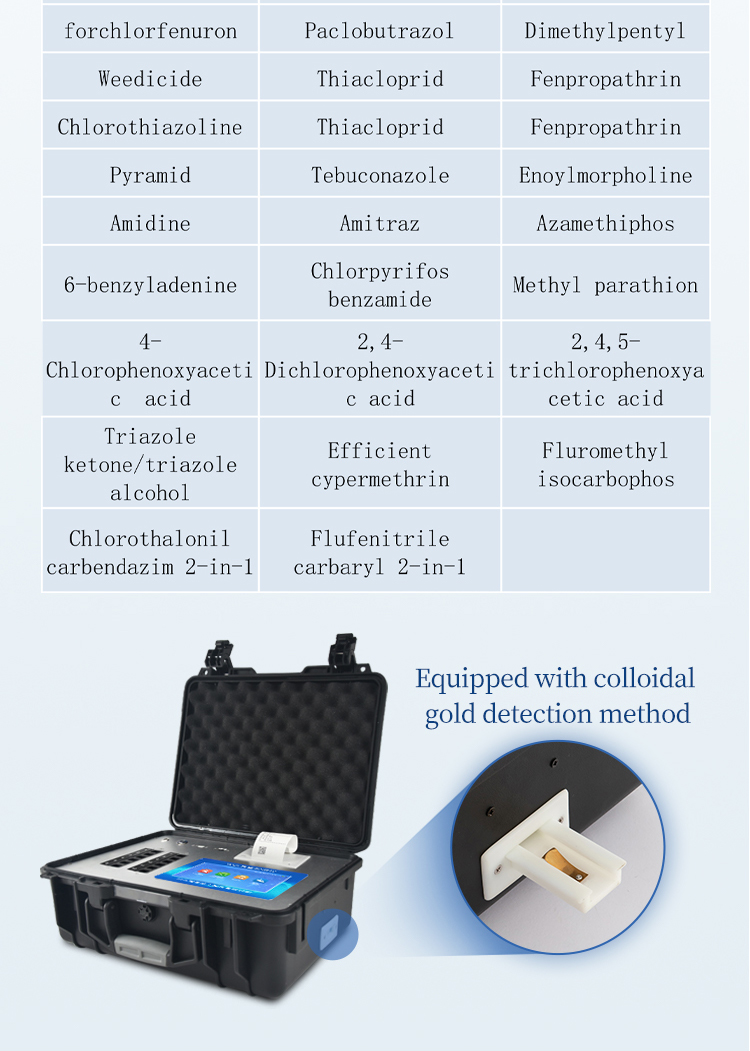
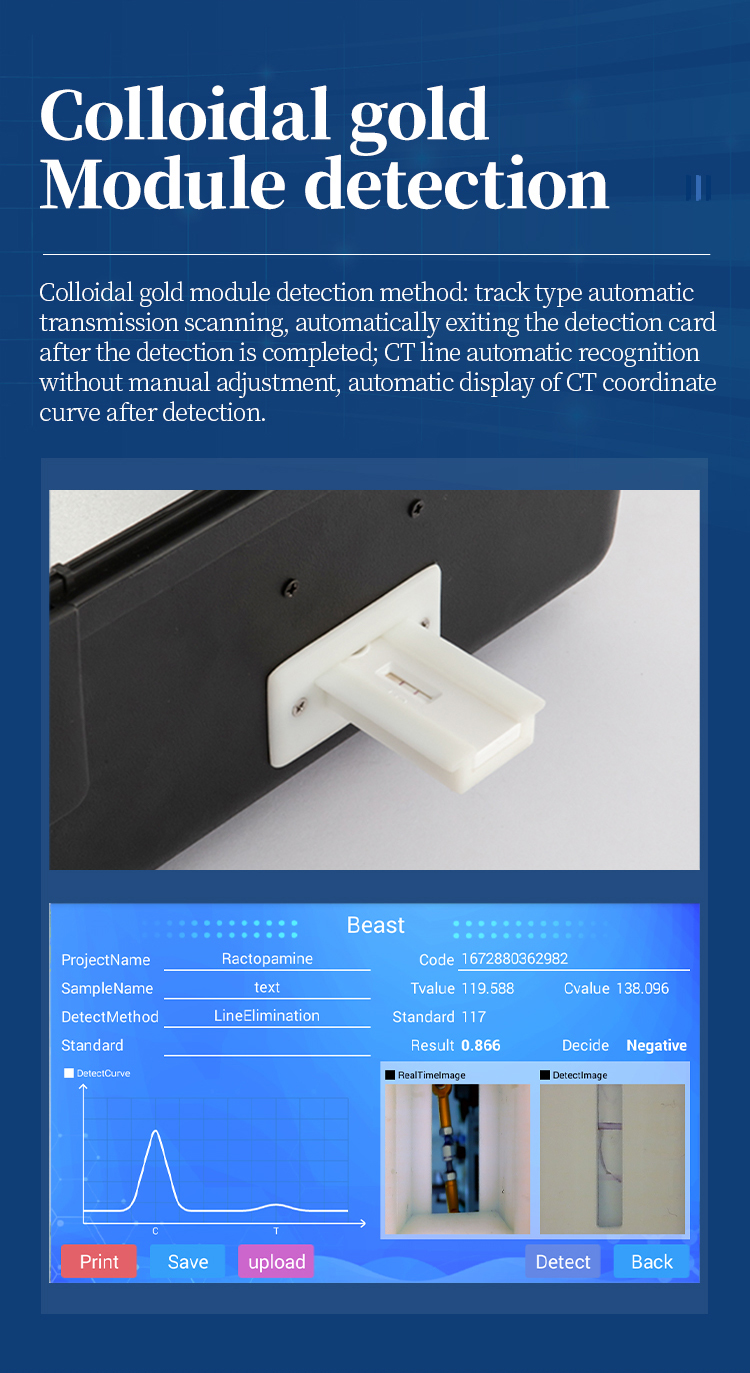
- Compatible with standardized colloidal gold test cards for targeted pesticide identification when confirmatory rapid tests are needed.
- Self-heating incubation module maintaining consistent reaction temperature without separate water bath or incubator in the field.
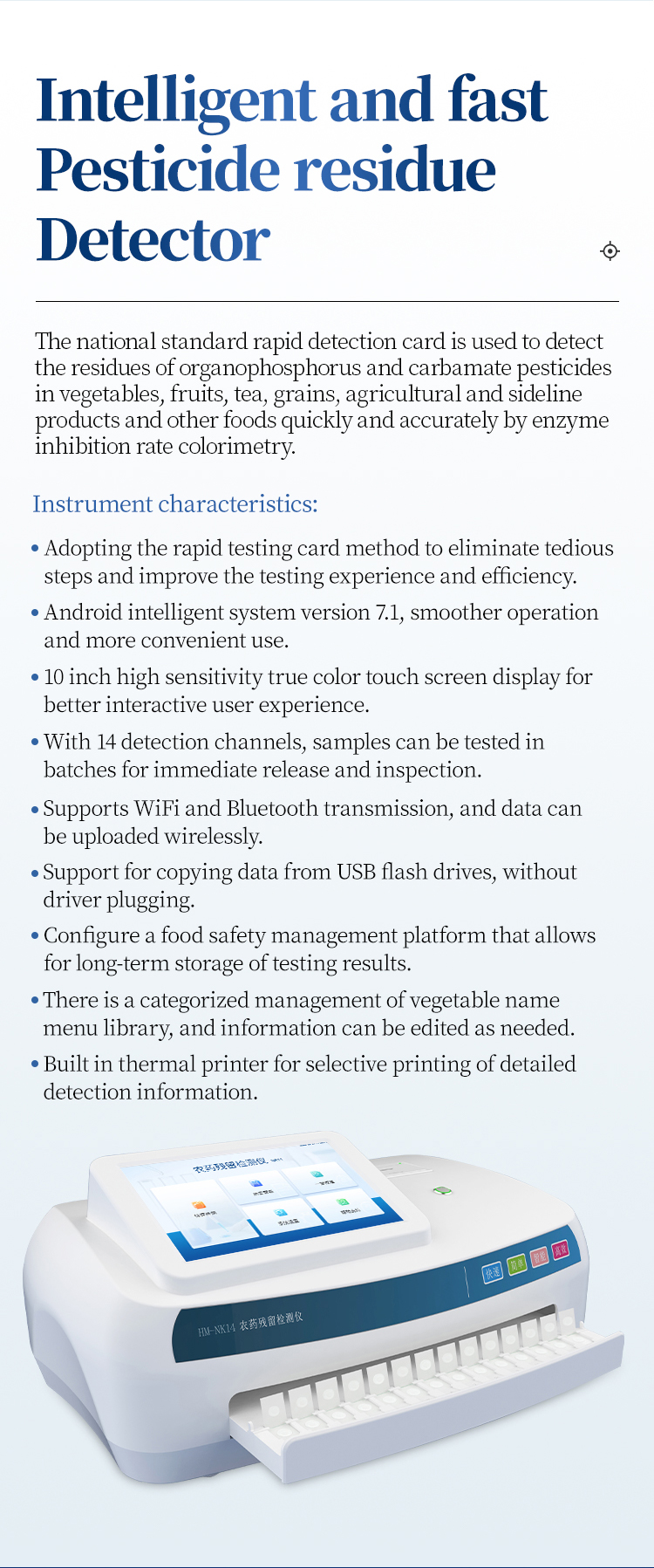
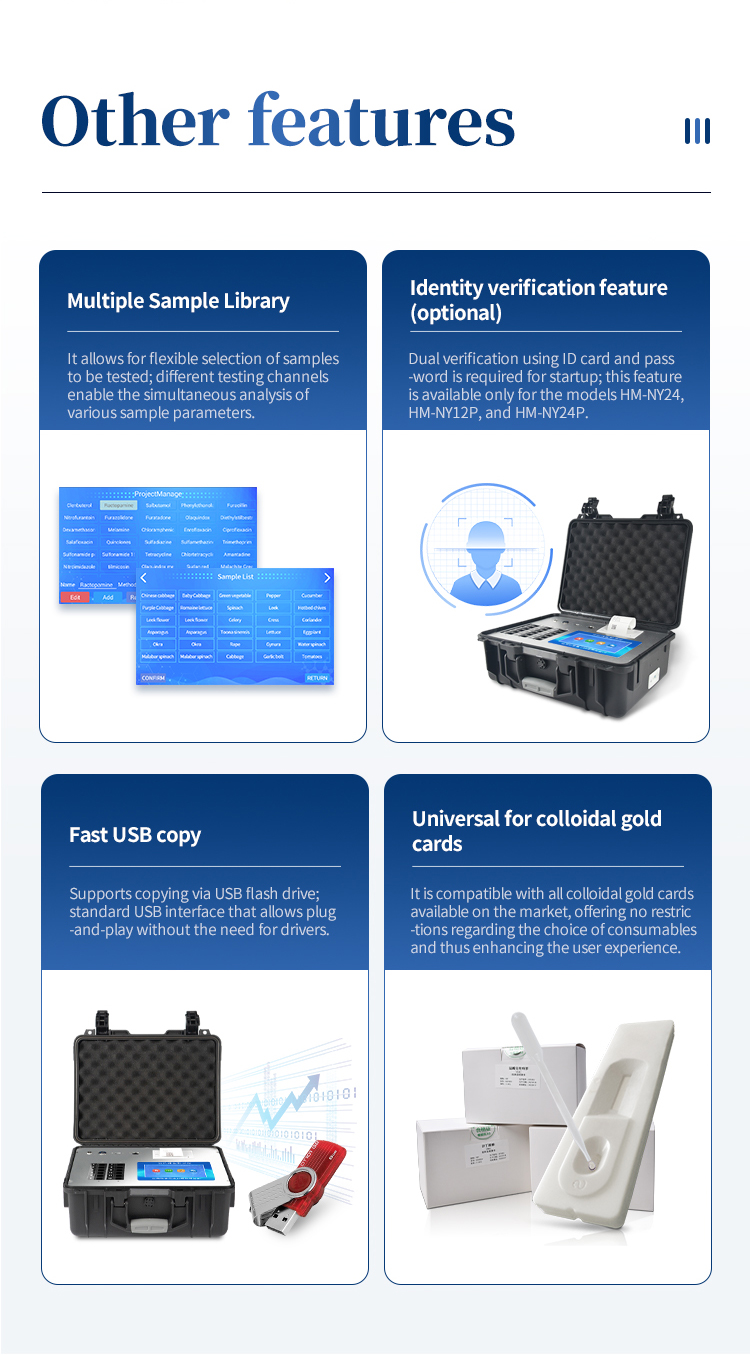
- 200,000 test record storage with automatic indexing by date, time, sample ID, and batch number for traceability.
- USB data export to flash drive without requiring a computer for shift-end result archiving.
- Voice-guided operating instructions with audio prompts, reducing training burden for seasonal inspection staff.
- Built-in thermal printer for immediate on-site reports, enabling pesticide certificates to accompany produce lots.
- Compact packaging 510×390×375 mm, 9.3 kg for practical transport between inspection sites.
Technical Specifications
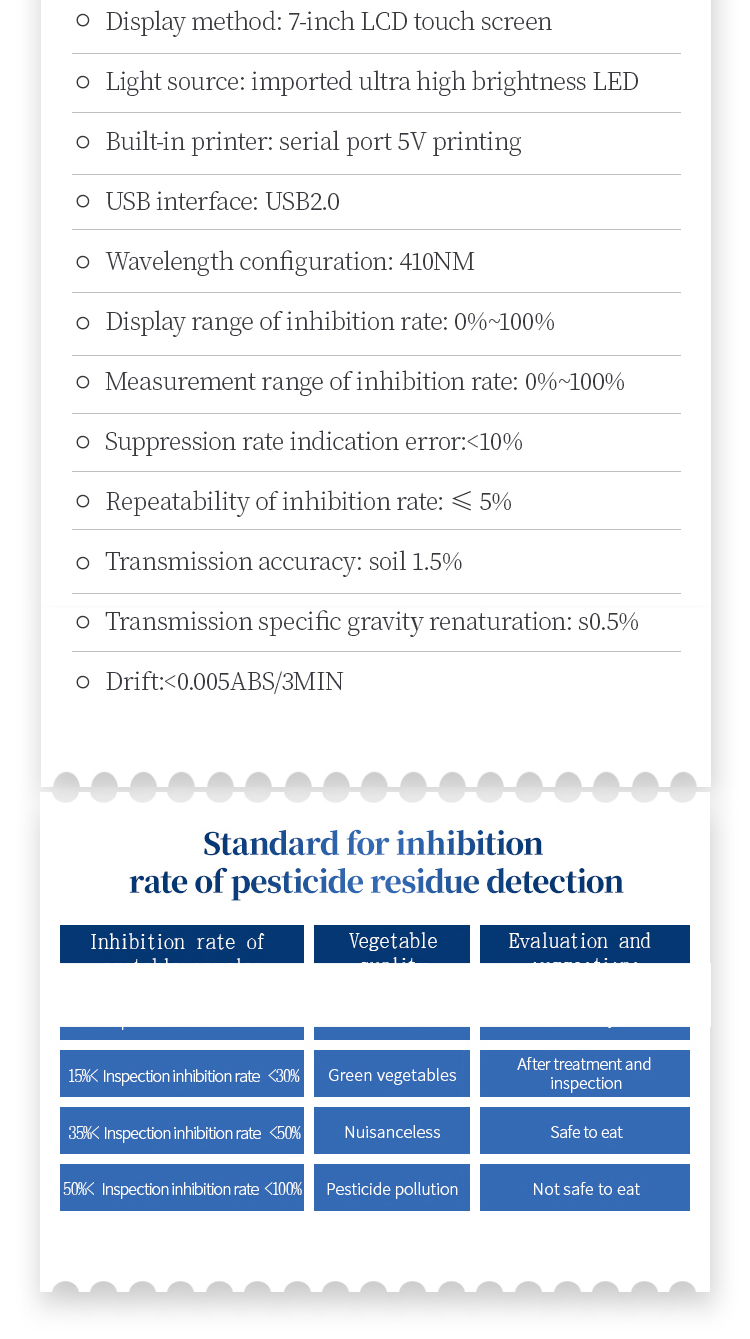
| Parameter | Specification |
|---|---|
| Detection Principle | Enzyme inhibition rate colorimetry (acetylcholinesterase) |
| Applicable Standard | GB/T5009.199-2003 |
| Detection Wavelength | 412 nm |
| Inhibition Rate Display Range | 0.0% – 100.0% |
| Transmittance Accuracy | ±1.5% |
| Transmittance Repeatability | ≤ 0.5% |
| Photometric Drift | ≤ 0.3% / 3 min |
| Processor | ARM Cortex-A7 RK3288 quad-core |
| Colloidal Gold Card Compatibility | Supported (standardized test cards) |
| Data Storage Capacity | 200,000 test records |
| Data Export | USB mass storage device |
| Self-Heating Incubation | Integrated temperature-controlled module |
| Voice Guidance | Built-in multilingual audio operation prompts |
| Display | High-contrast LCD screen |
| Printer | Built-in thermal printer |
| Power Supply | AC adapter / DC input / optional lithium battery |
| Packaging Dimensions | 510 × 390 × 375 mm |
| Packaged Weight | 9.3 kg |
FAQ
The enzyme inhibition method measures how much a sample extract suppresses acetylcholinesterase activity—the same enzyme that organophosphate and carbamate pesticides target. The instrument measures light transmission at 412 nm through the reaction solution; inhibited enzyme activity produces less hydrolyzed chromogenic substrate, yielding a measurable absorbance change. Results report as an inhibition rate percentage, with values above 50% typically indicating a positive screen per GB/T5009.199-2003. This provides broad-spectrum aggregate toxicity assessment rather than individual compound identification. For targeted testing, the HM-NY24 also reads colloidal gold immunochromatographic cards that detect specific pesticide molecules through antigen-antibody binding.
Enzyme inhibition screening and chromatographic methods serve complementary roles. GC-MS and LC-MS/MS provide definitive identification of individual pesticide compounds at parts-per-billion sensitivity—the reference standard for regulatory enforcement. However, these methods require expensive instrumentation, skilled analysts, and typically one to three days for results. For a farmer deciding whether today's harvest can ship, that timeline is unworkable. The HM-NY24 fills this gap with rapid field-deployable screening that flags samples with elevated aggregate pesticide levels. Passing samples proceed into commerce; failing samples are held for confirmatory lab analysis. This tiered approach reduces the volume of samples requiring expensive lab testing while providing timely decisions at harvest and market entry.
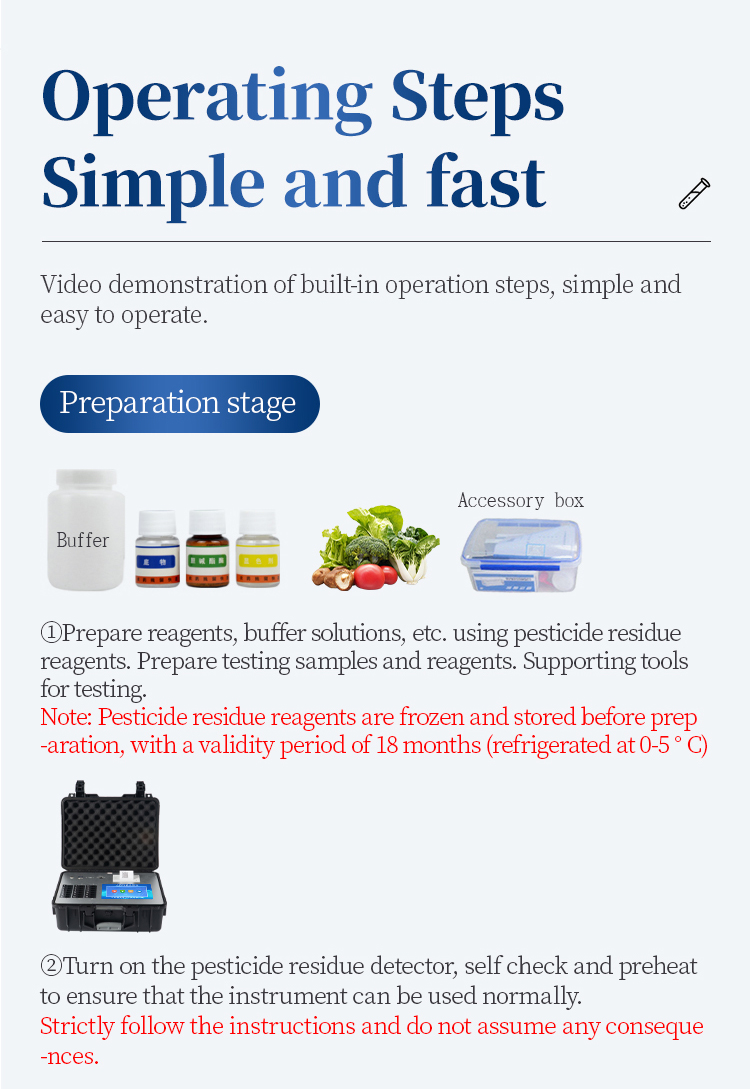
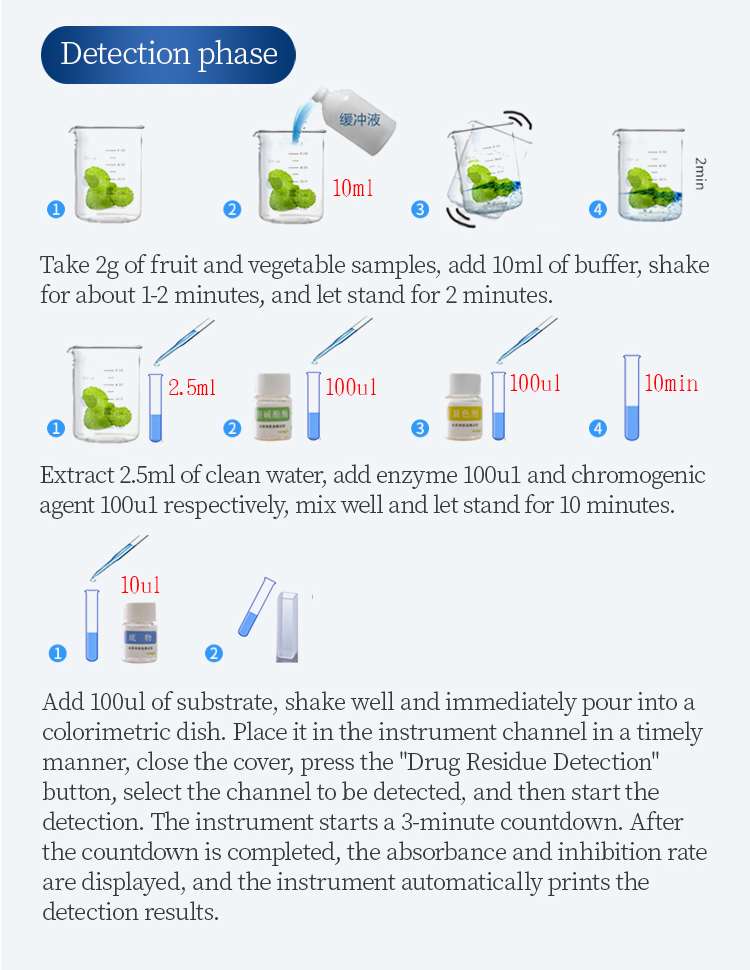
Sample preparation follows a field-suitable protocol requiring no organic solvents or specialized lab equipment. For leafy vegetables, 1-2 grams of edible tissue is taken after removing decayed areas, cut into small pieces, placed in an extraction tube with buffer, and shaken briefly to release residues into the liquid phase. After settling or filtration, an aliquot transfers to a cuvette with enzyme reagent and chromogenic substrate—the process takes 5-10 minutes per sample. For high-water-content produce like cucumbers, slightly larger sample amounts compensate for dilution. The instrument's voice-guided prompts walk operators through each step, reducing variability between users. Note that allium vegetables and cruciferous crops contain natural compounds producing mild enzyme inhibition; using matrix-matched blanks from known pesticide-free produce helps distinguish true positives from natural background interference.
Inhibition rate results range from 0% to 100%, representing suppression of acetylcholinesterase relative to a pesticide-free control. Results of 0-30% indicate negligible residue—a clear pass. Results between 30% and 50% suggest low-level residue warranting attention, possibly from pesticide degrading within the pre-harvest interval. Results above 50% are flagged as positive per GB/T5009.199-2003, indicating significant probability that residues exceed acceptable levels. The instrument displays numerical values alongside a clear pass/fail indicator based on user-configurable thresholds, which can be adjusted for specific regulatory or buyer requirements. A single positive screening should not be treated as a confirmed violation; it triggers appropriate hold-and-retest procedures before the produce lot is released or rejected.
Routine maintenance focuses on three areas: optical path cleanliness, incubation temperature verification, and periodic calibration. The cuvette holder and 412 nm light path should be inspected weekly and cleaned with a lint-free ethanol-moistened cloth—especially important in humid wet markets where condensation forms on optical surfaces. The instrument performs automatic self-check and wavelength calibration at startup; monthly verification with a standardized reference absorbance filter confirms photometric accuracy within ±1.5%. The incubation module should be checked quarterly with an external thermometer to confirm 37°C ±0.5°C. Enzyme reagent kits require refrigerated storage at 2-8°C; reagents left at ambient temperatures for extended periods lose activity and produce falsely low readings. A desiccant pack in the cuvette chamber during storage helps prevent moisture accumulation in tropical climates.
The HM-NY24 is engineered for non-laboratory use with a self-heating incubation module that actively maintains enzyme reaction temperature in air-conditioned offices or under shaded market canopies. The LCD display is optimized for bright outdoor ambient light readability. The housing provides basic dust and moisture protection, though heavy rain requires additional shelter. The optional lithium battery provides 4-6 hours of continuous field operation for a full morning screening session. At 9.3 kg packaged weight, the instrument transports practically between inspection locations within market complexes or across farm sites.
The HM-NY24 supports practical data workflows for organizations documenting pesticide screening within food safety plans. Each test record is automatically indexed with date, time, and user-defined sample identifier, creating an audit trail for buyers, auditors, and regulators. USB export transfers records to a flash drive; data opens in spreadsheet software for review, trend analysis, or QMS integration. For cooperatives implementing HACCP-based programs, screening records serve as verification documentation for incoming raw material control points. Market operators can correlate screening data across seasons and suppliers to identify patterns—which suppliers consistently deliver compliant produce and which crop types warrant increased screening. While the HM-NY24 does not include built-in LIMS or cloud connectivity, USB export provides a straightforward bridge between field testing and centralized record-keeping. Organizations with advanced data management requirements may consider the HM-NY24P model with enhanced connectivity options.
Article address:https://www.hmfoodtesting.com/nycl2/farm-market-pesticide-rapid-screening.html