 Current
location:
Current
location:
 +86
17853698681
+86
17853698681



Product Introduction
Food supply chains face an ongoing challenge: contaminants such as pathogenic bacteria, pesticide residues, veterinary drug residues, and biotoxins can enter at any stage — from farm production and processing to distribution and retail. Conventional laboratory testing requires sample transport, incubation, and analysis cycles that can take hours to days, delaying critical decisions about product safety and market release.
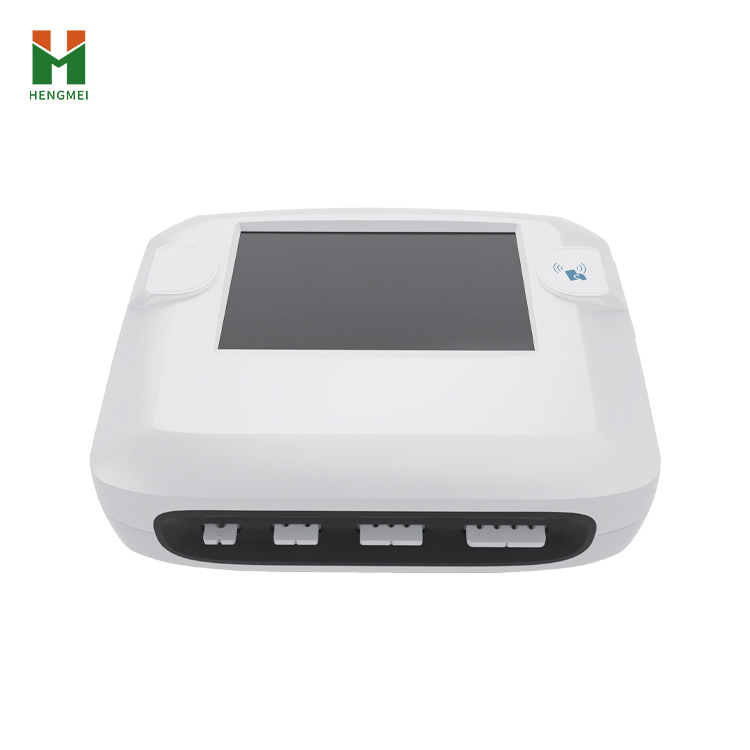
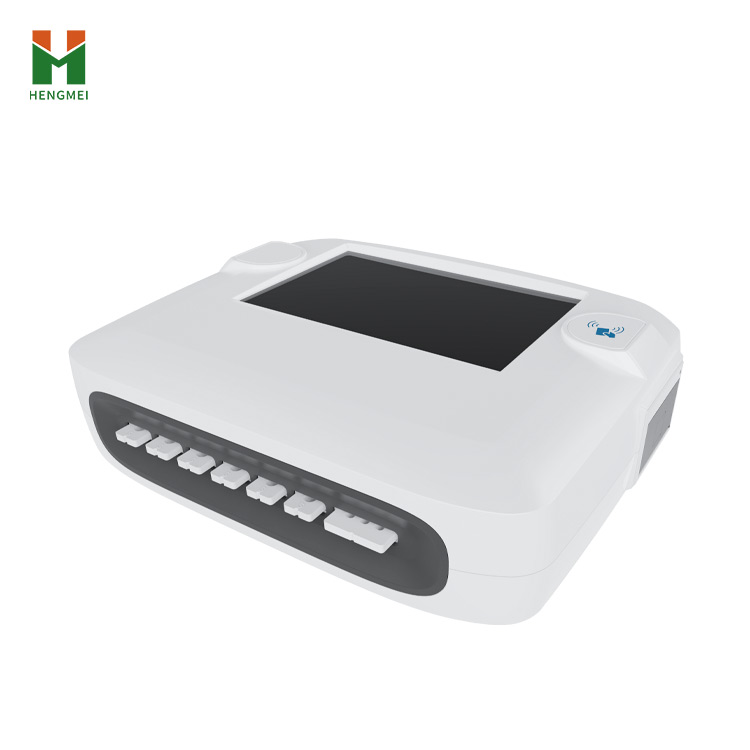
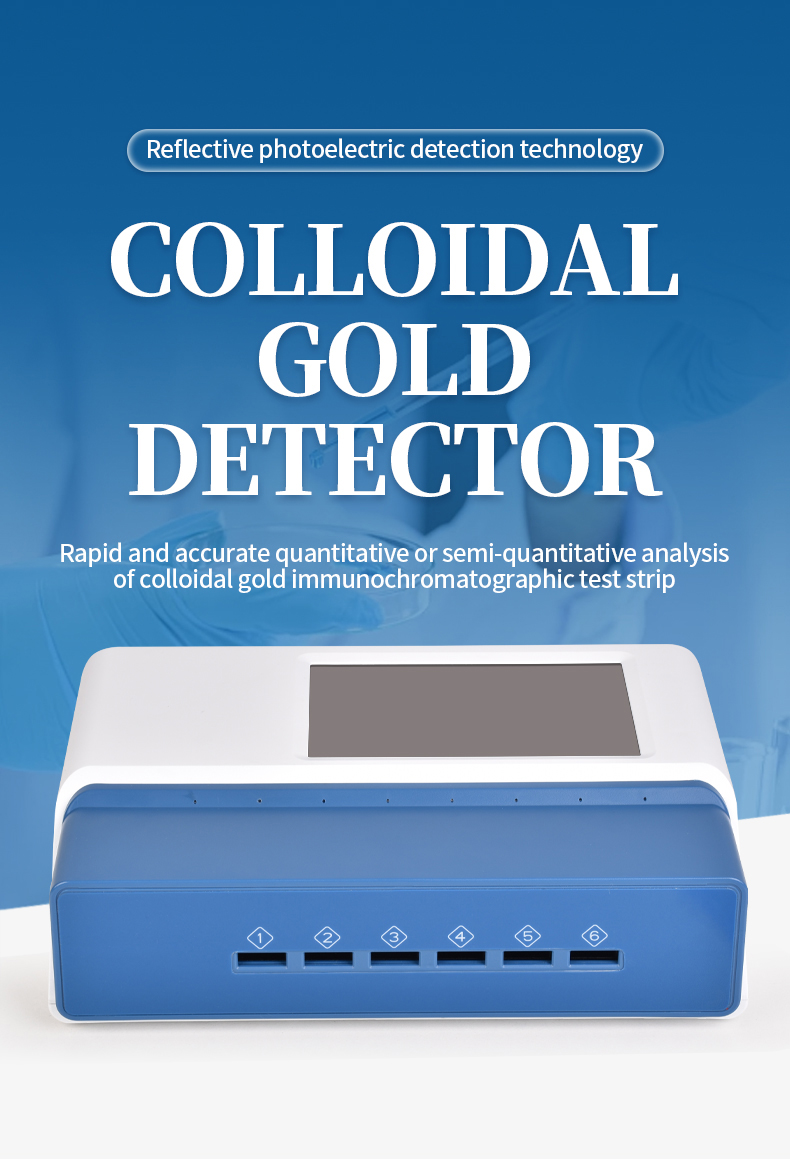
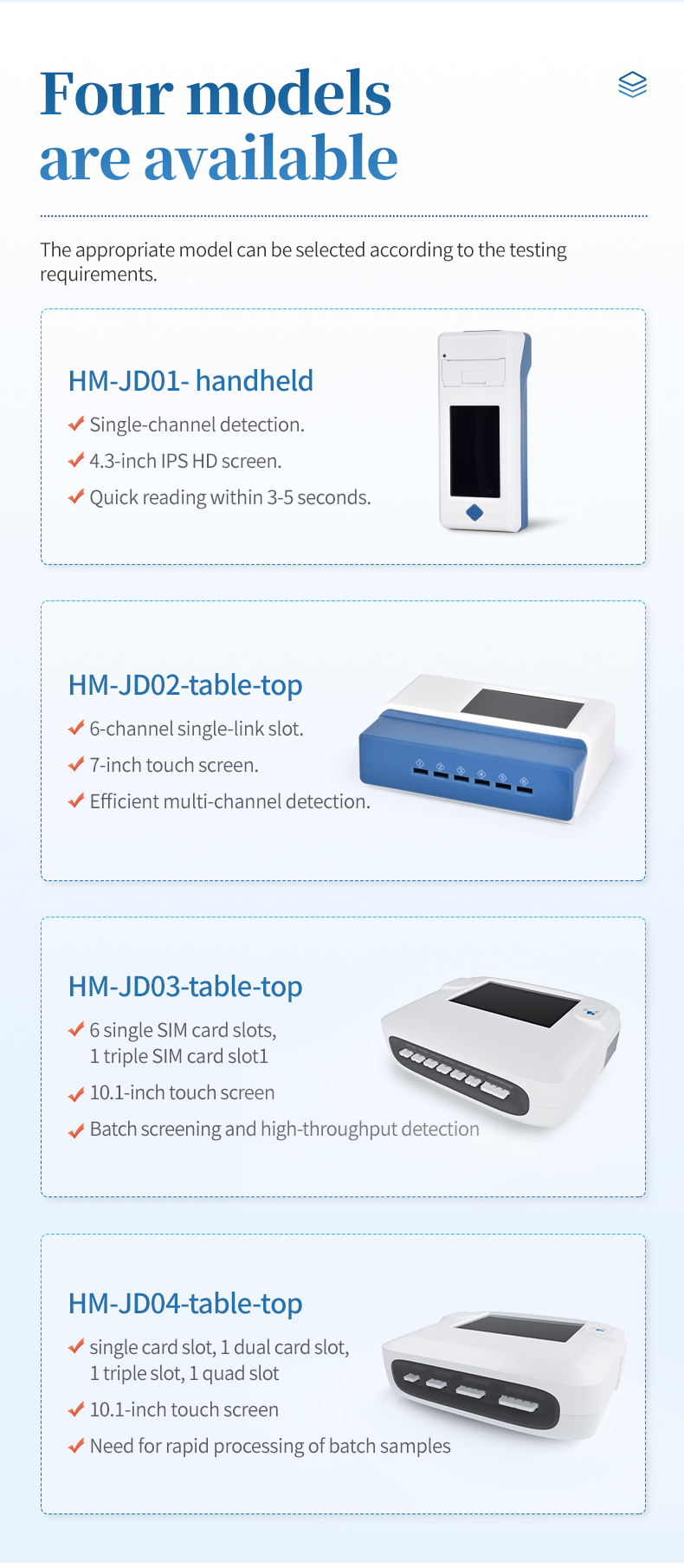
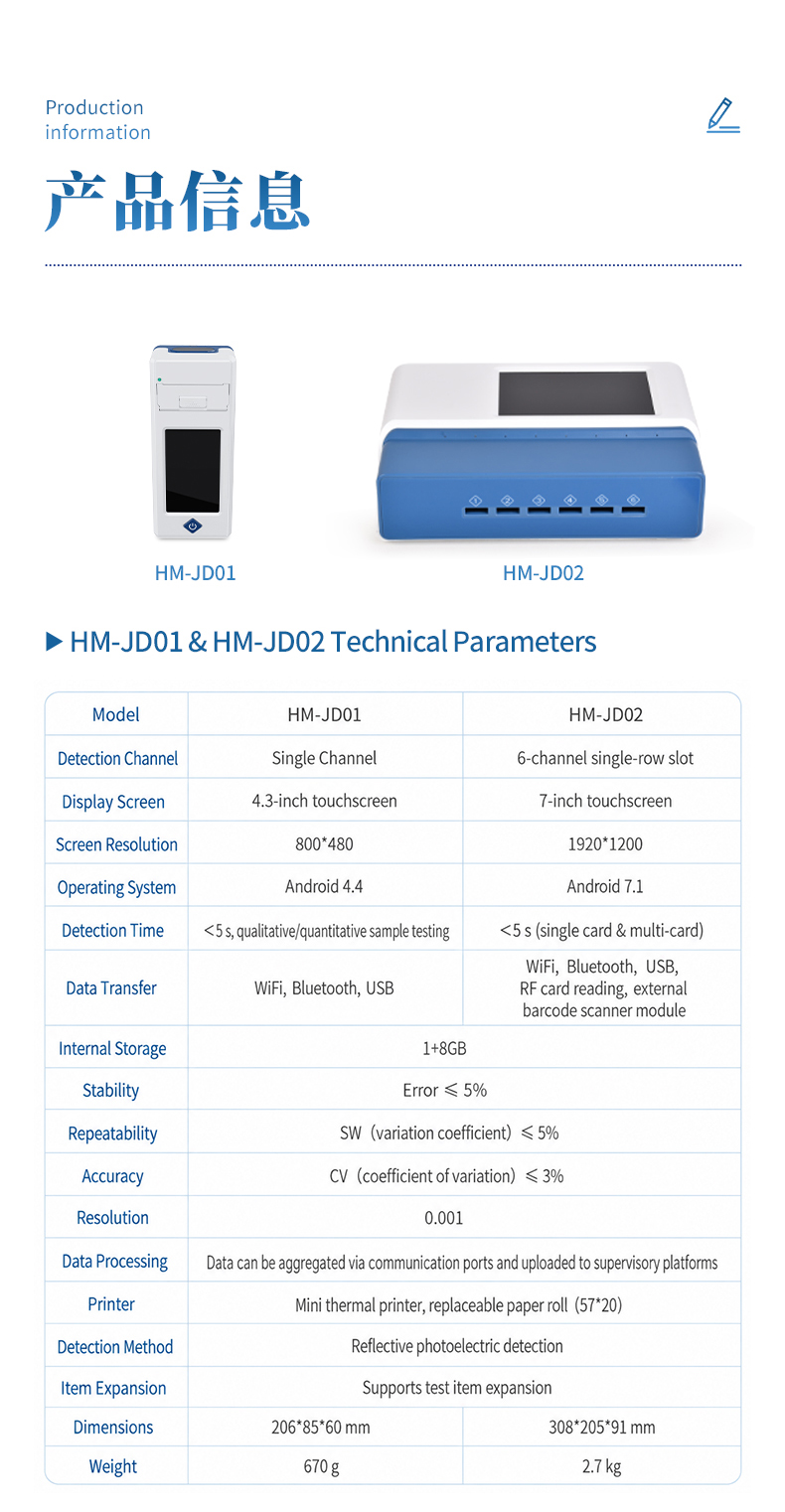
The HM-JD01 addresses this gap by providing quantitative results from colloidal gold immunochromatographic assay (GICA) test strips in under 5 seconds at the point of inspection. As a fully handheld instrument weighing 670g with a 6000mAh rechargeable battery, it allows food safety inspectors, quality control personnel, and veterinary professionals to perform on-site screening without reliance on laboratory infrastructure.
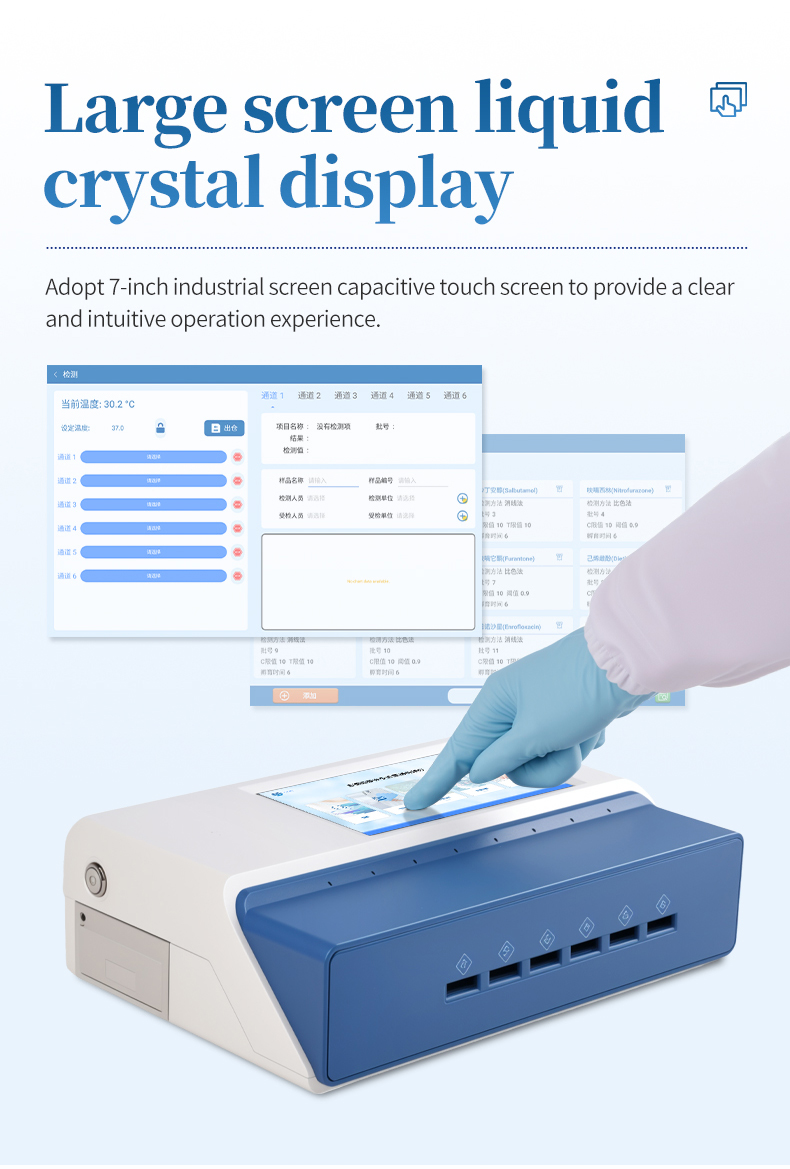
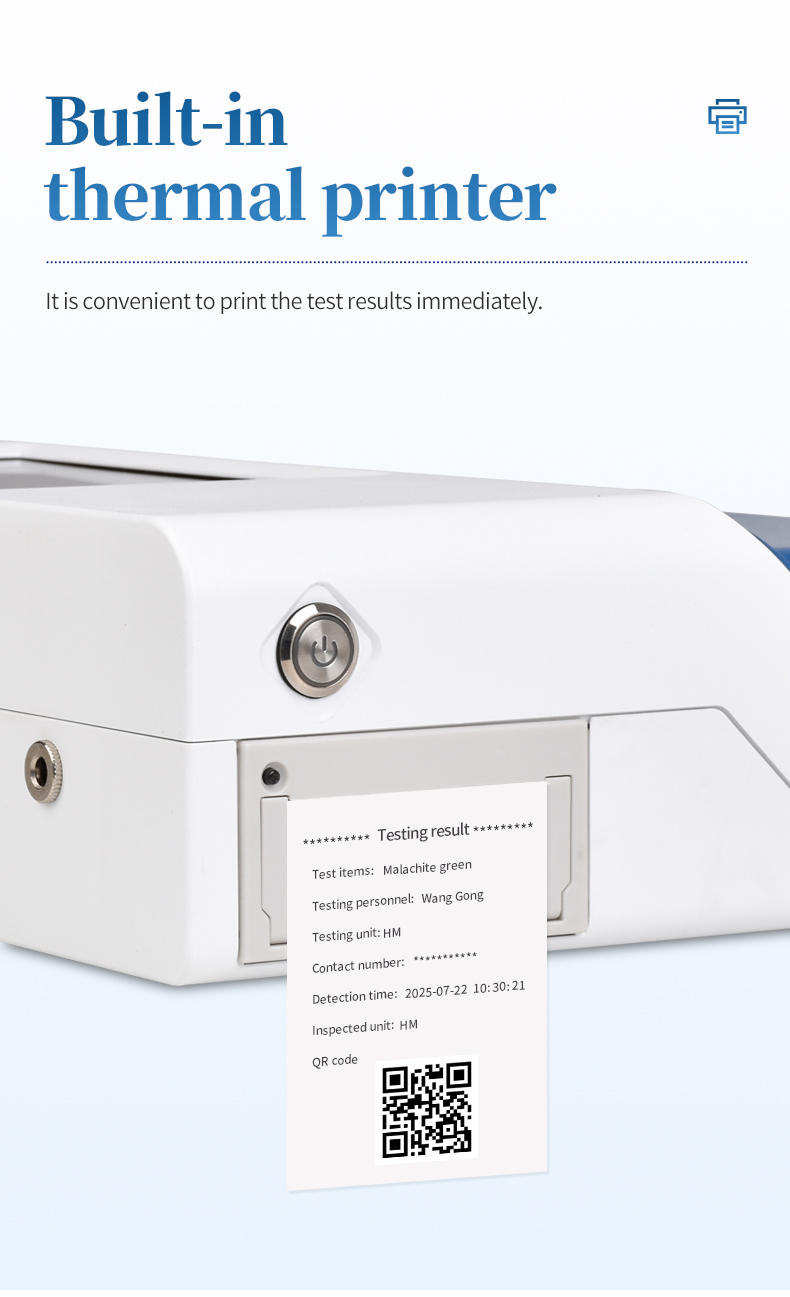
The reflectance photometric detection system uses a specific wavelength light source and photoelectric sensor to read GICA strip results with 0.001 resolution and error ≤5%, while the integrated incubation module (ambient +5°C to 60°C) ensures proper reaction conditions for time-sensitive assays. The Android 4.4 platform with 4.3-inch touchscreen provides an intuitive workflow: scan sample information via QR code, insert the test strip, and read the quantitative result. On-site documentation is enabled by the built-in thermal printer, and WiFi/Bluetooth/Type-C connectivity allows real-time data upload to traceability systems and laboratory information management platforms.
With 8GB internal memory storing over 100,000 records, the HM-JD01 supports comprehensive inspection campaign management including date-based retrieval, result preview, and report generation — all without requiring external computing equipment in the field.
Applications
Food production: on-site screening of raw materials and finished products for pathogenic microorganisms, pesticide residues, and veterinary drug residues
Market surveillance: rapid testing of retail food products for biotoxins and contaminant residues at distribution checkpoints
Livestock and poultry: field diagnosis of animal diseases using veterinary GICA test strips at farms and quarantine stations
Aquaculture: monitoring fish and shrimp for drug residues and pathogen contamination at harvesting sites
Environmental health: on-site detection of water and soil pollutants in agricultural and industrial areas
Import/export inspection: rapid screening of food commodities at border checkpoints and customs facilities
Biosafety research: quantitative analysis of immunochromatographic test results in field epidemiological studies
Key Features & Advantages
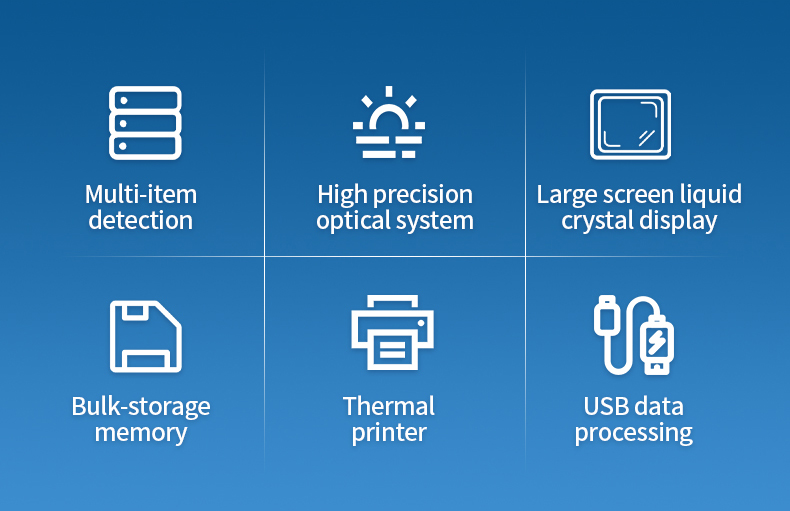
Handheld battery-powered operation at 670g — truly portable for on-site inspections at farms, markets, and checkpoints
Single-channel reflectance photometric detection with error ≤5% and CV ≤3% for reliable quantitative results
Under 5-second detection time enables high-throughput screening during field inspection campaigns
QR code scanning eliminates manual sample data entry, reducing transcription errors in inspection workflows
Built-in incubation module (ambient +5°C to 60°C) ensures controlled reaction conditions for time-sensitive assays away from the laboratory
Android 4.4 platform with 4.3-inch touchscreen — intuitive operation without specialized training
8GB memory for 100,000+ records with date-based query and report generation for inspection traceability
Built-in thermal printer provides immediate hard-copy documentation for regulatory compliance at the point of testing
WiFi and Bluetooth connectivity enables real-time data upload to food safety traceability platforms and LIMS
Detection curve verification against test cards prevents result misjudgment from invalid or improperly developed strips
Dual detection modes (incubation and immediate) accommodate diverse GICA assay protocols
Real-time self-diagnosis of critical components ensures instrument readiness before each inspection session
Project management function supports assay expansion for emerging contaminant screening requirements
Compatible with multiple brands and types of colloidal gold test strips, providing flexibility in test selection
Technical Specifications
| Parameter | Specification |
|---|---|
| Model | HM-JD01 |
| Screen | 4.3-inch touchscreen, 800×480 |
| Memory | 1+8GB |
| Operating System | Android 4.4 |
| Detection Method | Reflectance photometric |
| Adapted Card Shell | 70mm × 20mm |
| Language | Chinese / English |
| Storage Capacity | 100,000+ records |
| Accuracy | Error ≤5% |
| Stability | SW ≤5% |
| Repeatability | CV ≤3% |
| Resolution | 0.001 |
| Detection Channels | Single channel |
| Detection Time | <5 seconds |
| Data Transfer | WiFi, Bluetooth, Type-C |
| Incubation Temperature | Ambient +5°C ~ 60°C |
| Printer | Thermal (57×20mm) |
| Power Input | AC100V–240V / 0.3A 50Hz |
| Power Output | DC5V / 2A |
| Battery Capacity | 6000mAh |
| Operating Temperature | 0°C ~ 50°C |
| Operating Humidity | 0% ~ 90% |
| Dimensions | 206mm × 85mm × 60mm |
| Weight | 670g |
FAQ
Q1: What types of food contaminants can the HM-JD01 detect?
A: The HM-JD01 reads quantitative results from colloidal gold immunochromatographic (GICA) test strips. By selecting the appropriate test strip, it can detect pathogenic microorganisms (e.g., Salmonella, E. coli O157:H7), pesticide residues, veterinary drug residues (e.g., antibiotics, hormones), and biotoxins (e.g., aflatoxins, microcystins) in food samples. The instrument itself performs reflectance photometric analysis on the strip; the specific analyte detected depends on the test strip used.
Q2: How does the HM-JD01 compare to sending samples to a laboratory?
A: Laboratory methods such as ELISA or PCR typically require sample transport, preparation, incubation, and analysis cycles spanning several hours to days. The HM-JD01 provides quantitative GICA strip results in under 5 seconds at the point of inspection, enabling immediate decisions about product safety. While laboratory methods may offer higher sensitivity for some analytes, the HM-JD01 serves as an effective on-site screening tool that identifies contaminated samples for confirmatory laboratory testing, significantly reducing the number of samples requiring full laboratory analysis.
Q3: Can the HM-JD01 operate without access to mains power?
A: Yes. The 6000mAh rechargeable battery powers the instrument for extended field inspection sessions without requiring a wall outlet. When mains power is available, the AC100V–240V adapter charges the battery via the DC5V/2A output. The lightweight 670g design makes it practical for inspectors conducting testing at farms, markets, distribution centers, and border checkpoints where power infrastructure may be limited.
Q4: What is the incubation module used for in field testing?
A: Many GICA test strips require controlled temperature conditions during the reaction phase to produce valid results. The HM-JD01's channel-integrated incubation module maintains temperatures from ambient +5°C to 60°C, ensuring that time-sensitive assays develop properly even in variable field conditions. This is particularly important for tests involving enzymatic reactions or temperature-dependent antibody binding, where ambient temperature fluctuations could compromise result accuracy.
Q5: How does the QR code scanning feature improve inspection workflows?
A: Manual transcription of sample information — batch numbers, collection dates, source identifiers — is error-prone and time-consuming during high-volume inspection campaigns. The HM-JD01's QR code scanner captures this data instantly by scanning codes printed on sample containers or collection forms. The scanned information is automatically associated with the corresponding test result in the instrument's 100,000+ record database, eliminating transcription errors and streamlining traceability documentation for regulatory compliance.
Q6: How are test results documented for regulatory reporting?
A: The HM-JD01 provides three documentation methods: the built-in thermal printer produces immediate hard-copy reports at the testing site, results are stored in 8GB internal memory with date-based query capability for retrospective retrieval, and WiFi/Bluetooth/Type-C connectivity enables real-time or batch data export to laboratory information management systems (LIMS) and food safety traceability platforms. This multi-channel documentation approach satisfies diverse regulatory reporting requirements across different inspection scenarios.
Q7: Is the HM-JD01 compatible with test strips from different manufacturers?
A: Yes. The instrument accommodates GICA test strips with a card shell size of 70mm × 20mm, which is a standard form factor used by numerous strip manufacturers. The project management function supports the addition of new assay parameters, allowing the HM-JD01 to be configured for different strip brands and test types as screening requirements evolve. This flexibility prevents vendor lock-in and enables users to select the most appropriate test strip for each target analyte.
Article address:https://www.hmfoodtesting.com/list_87/food-contaminant-rapid-screening-reader.html