 Current
location:
Current
location:
 +86
17853698681
+86
17853698681



Product Introduction
Quality control laboratories in food production, third-party testing, and regulatory agencies face mounting pressure to screen increasing numbers of samples across multiple contaminant categories — pathogens, residues, and toxins — often within tight reporting deadlines. Single-channel colloidal gold readers process one test strip at a time, creating throughput bottlenecks when laboratories must run parallel screening panels for different analytes on the same batch of samples.
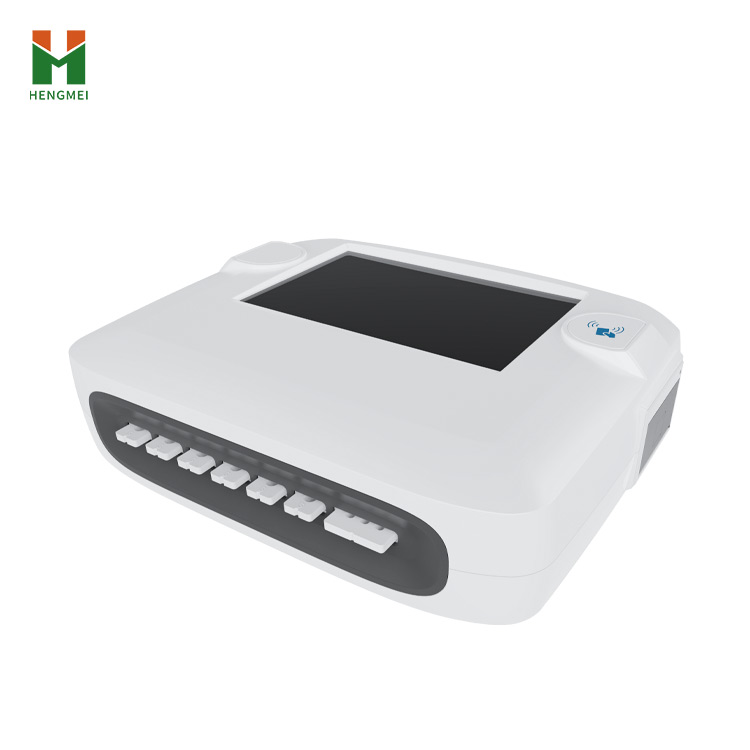
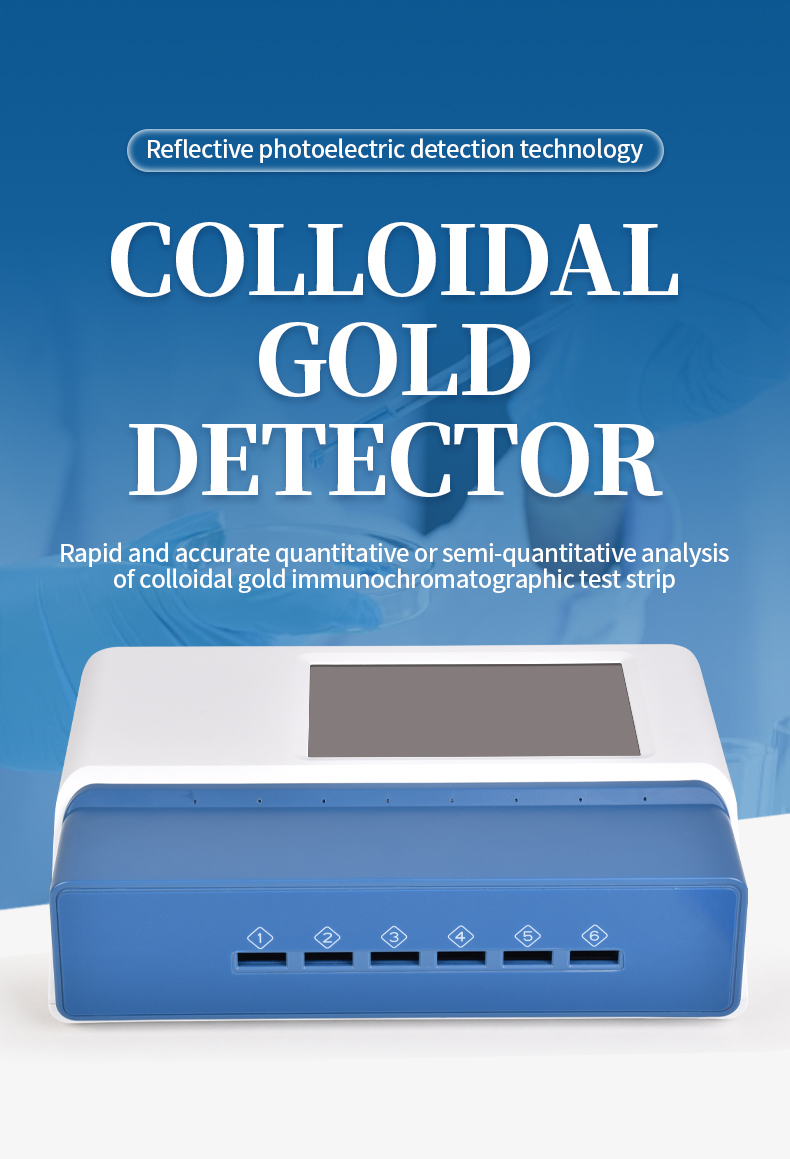
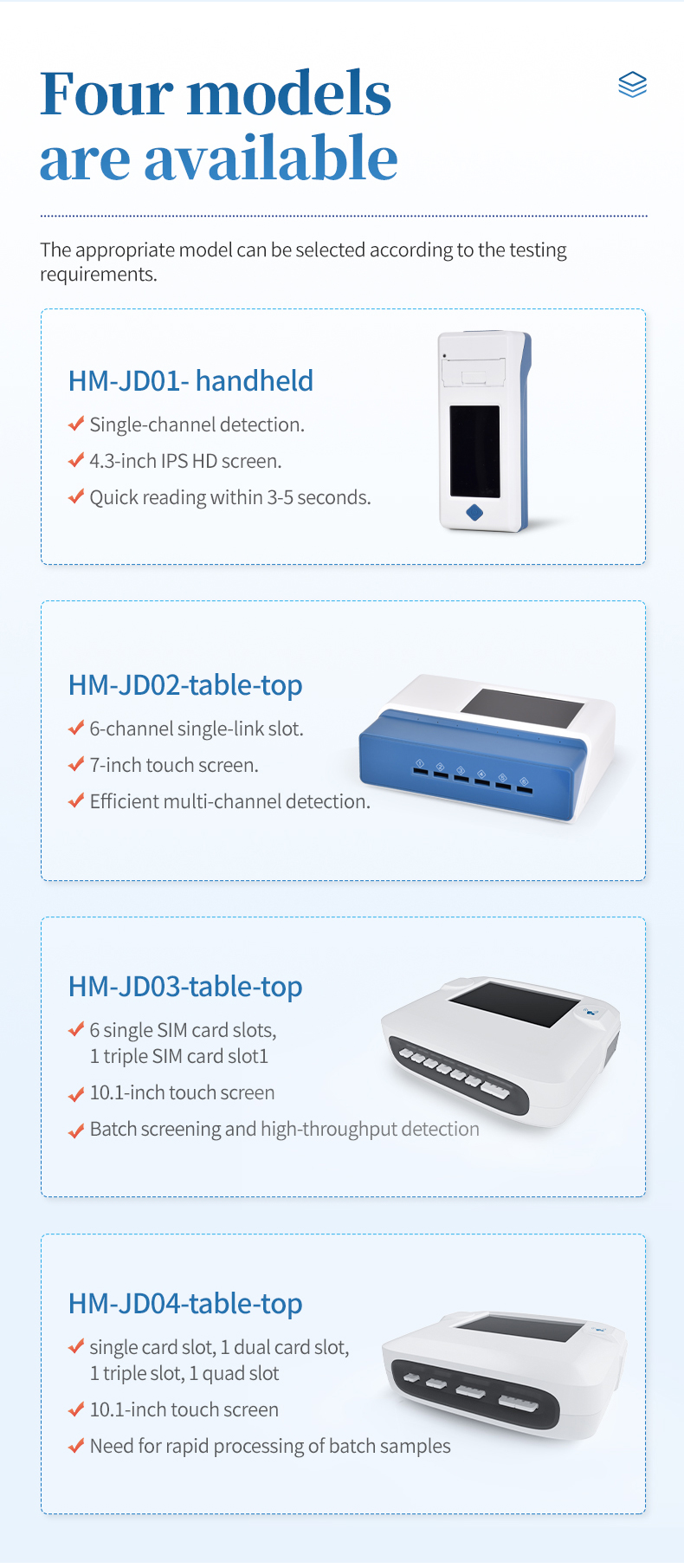
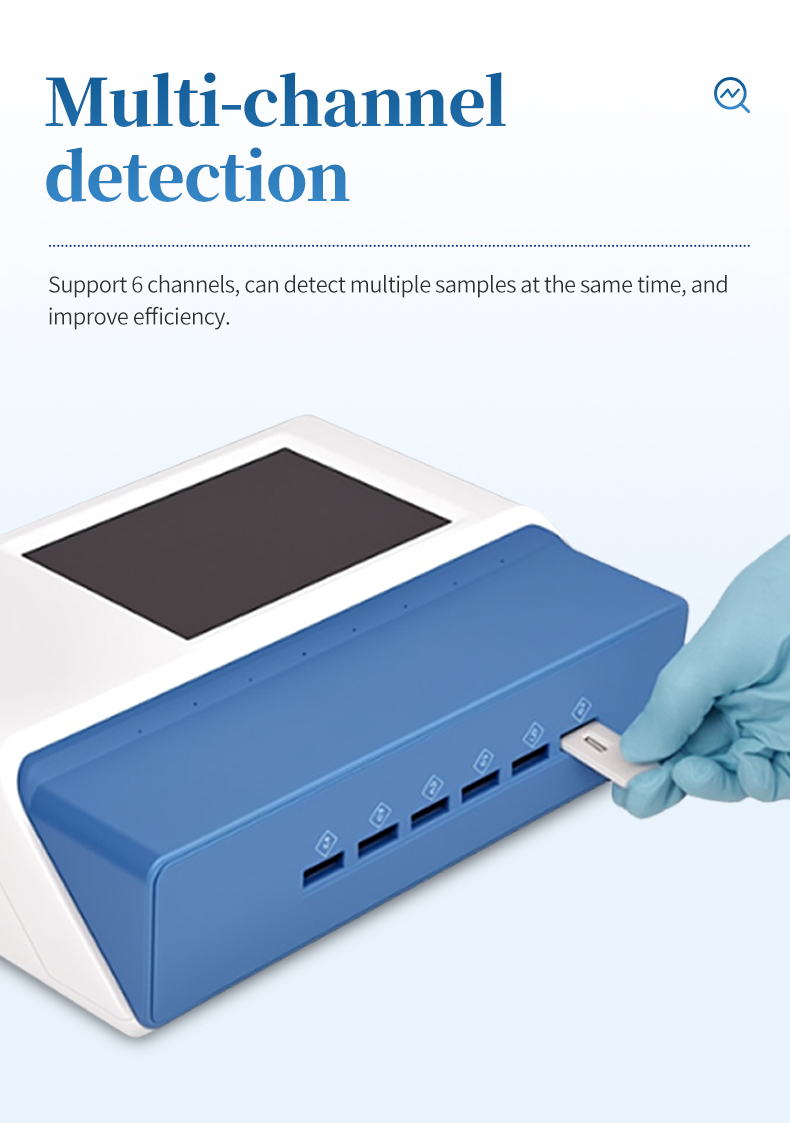
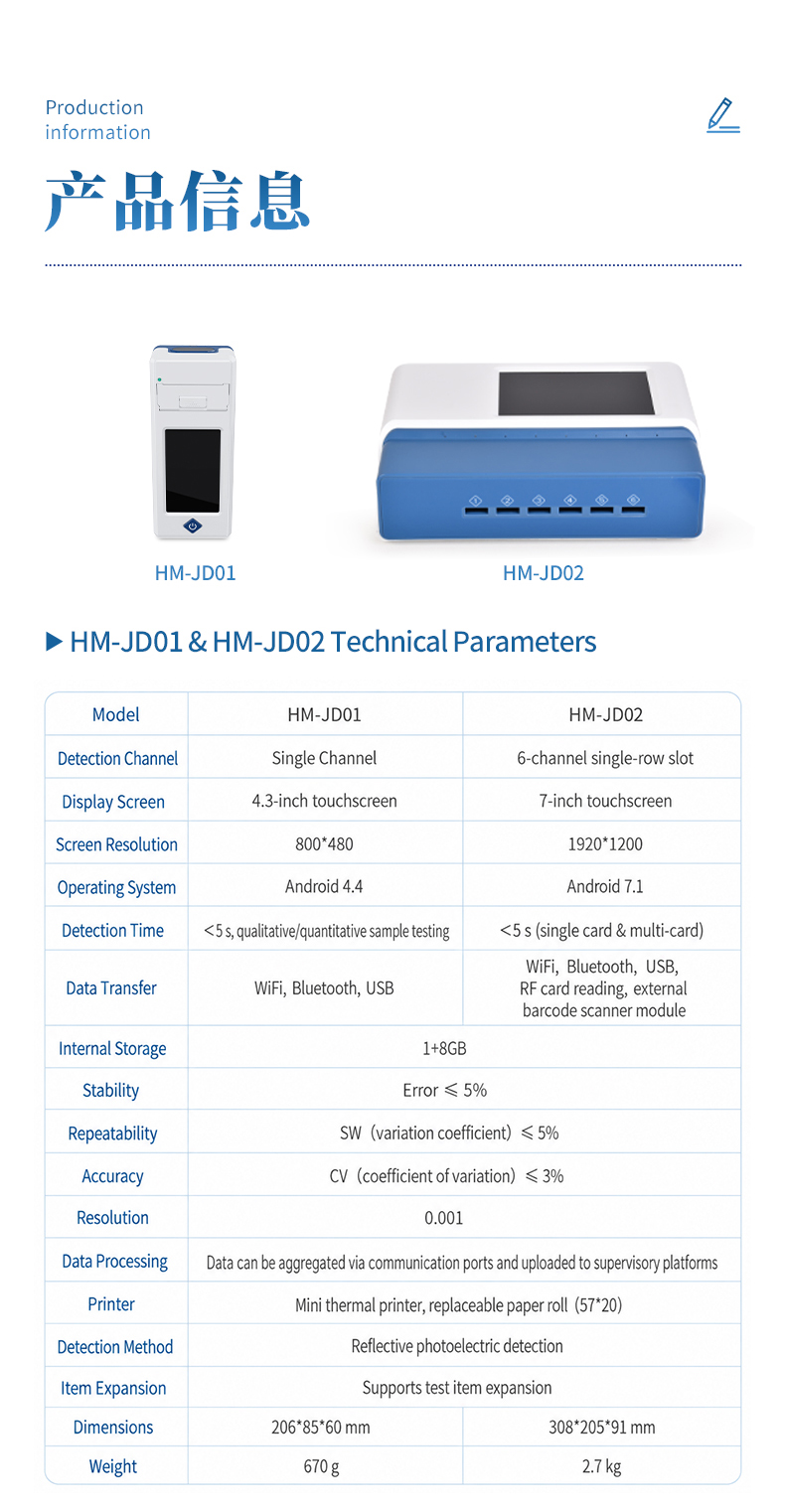
The HM-JD02 eliminates this bottleneck with 6 independent detection channels that operate concurrently. Each channel runs a different GICA assay simultaneously, delivering quantitative results in under 5 seconds per card. This enables a single operator to run a complete multi-analyte screening panel — for example, testing for Salmonella, antibiotic residues, and aflatoxin on the same sample batch — in the time it takes a single-channel instrument to complete just one analyte.
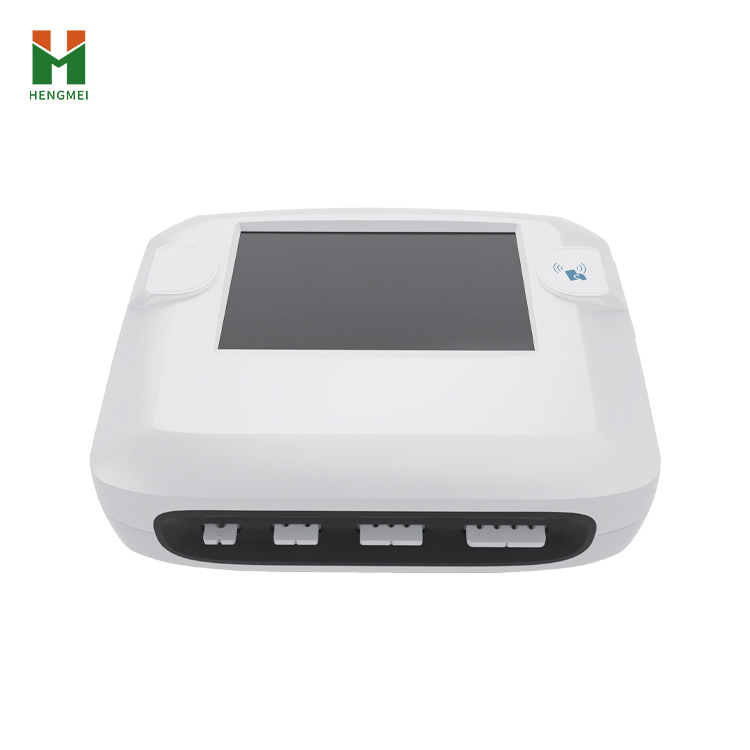
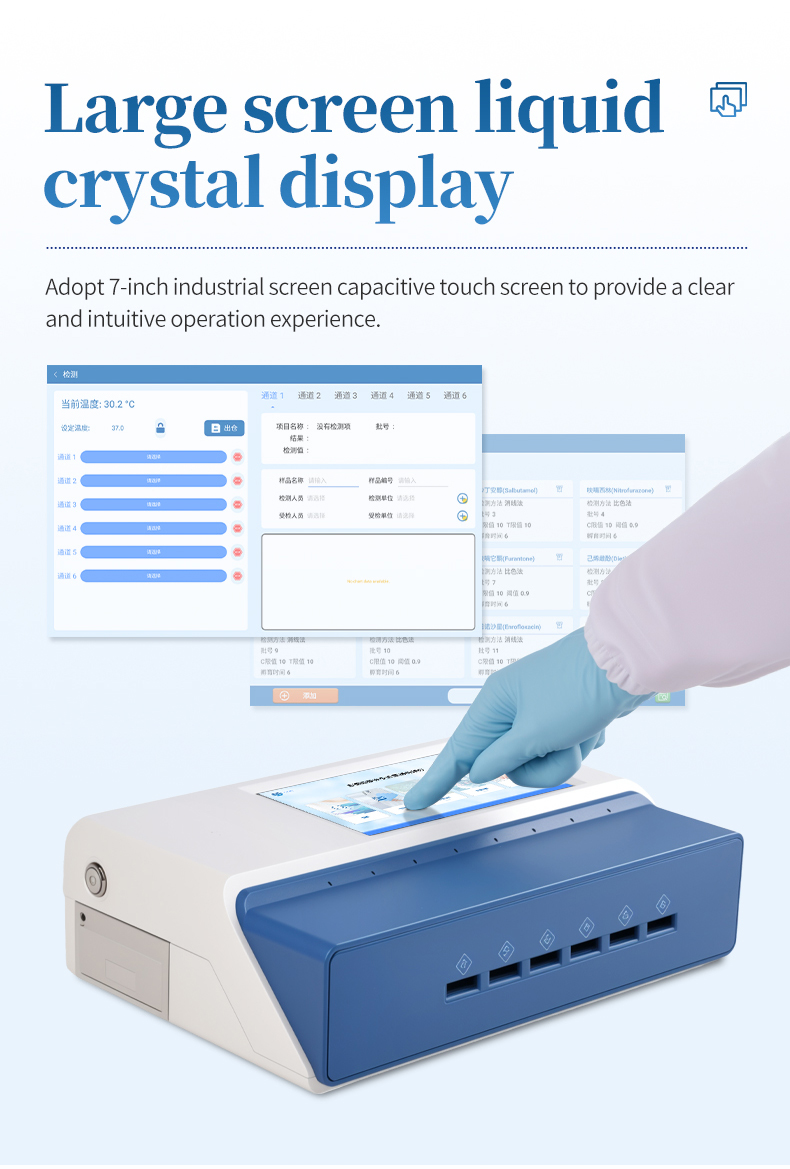
The Android 7.1 platform on a 7-inch capacitive touchscreen (1920×1200) provides a clear workspace for configuring multi-channel test protocols, reviewing results across all channels, and managing data. Connectivity is engineered for the laboratory environment: LAN (RJ-45) enables direct Ethernet connection to LIMS and enterprise networks, dual USB-A ports support peripherals and U-disk data export, and USB-B allows PC tethering for direct instrument control. WiFi and Bluetooth provide additional wireless data pathways, while the optional RFID reader and external barcode scanner automate sample tracking in high-volume workflows.
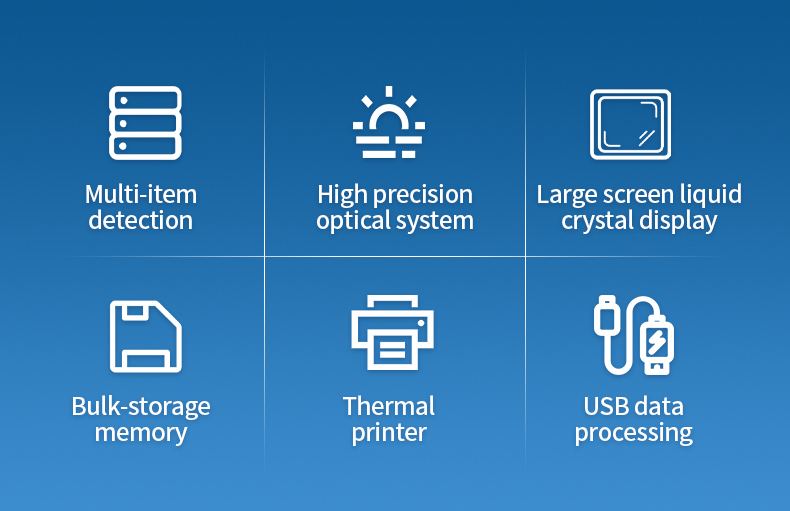
With 8GB internal memory for 100,000+ records, a built-in thermal printer for immediate documentation, and channel-level incubation control (ambient +5°C to 60°C), the HM-JD02 integrates the complete testing workflow — from sample entry through result reporting — into a single desktop instrument designed for the demands of high-throughput quality control environments.
Applications
Food production QC: simultaneous multi-analyte screening of raw materials and finished products for pathogens, drug residues, and biotoxins
Third-party testing laboratories: high-volume contract testing for regulatory compliance across multiple contaminant categories
Regulatory inspection agencies: batch screening of food samples for import/export certification and market surveillance
Dairy and meat processing: parallel testing for antibiotics, hormones, and pathogenic bacteria in production line samples
Grain and feed analysis: concurrent screening for mycotoxins, pesticide residues, and contaminants in agricultural commodities
Aquaculture product testing: simultaneous residue and pathogen screening in seafood and aquaculture products
Veterinary diagnostic laboratories: multi-panel animal disease screening using different GICA test strips concurrently
Environmental monitoring: batch water and soil sample analysis for multiple pollutant types in a single run
Key Features & Advantages
6 independent channels process different GICA assays simultaneously, multiplying laboratory throughput by up to 6× compared to single-channel readers
Under 5-second detection time per card (single and multi-strip formats) enables rapid completion of multi-analyte screening panels
LAN (RJ-45) interface provides direct wired connection to LIMS and enterprise networks for seamless data integration
Dual USB-A ports and U-disk data export support offline data transfer without network dependency
USB-B port enables direct PC tethering for instrument control and data acquisition through host software
7-inch capacitive touchscreen with 1920×1200 resolution delivers a spacious, clear interface for managing concurrent multi-channel operations
Android 7.1 operating system with intuitive workflow for test configuration, result review, and batch data management
Card insertion judgment automatically detects and validates test strip placement, reducing operator error
Built-in quality control function provides automated result validation across all 6 channels without manual intervention
Channel-level incubation with temperature control (ambient +5°C to 60°C) ensures proper reaction conditions for each assay independently
8GB internal memory with 100,000+ record capacity supports extensive data storage for high-volume testing campaigns
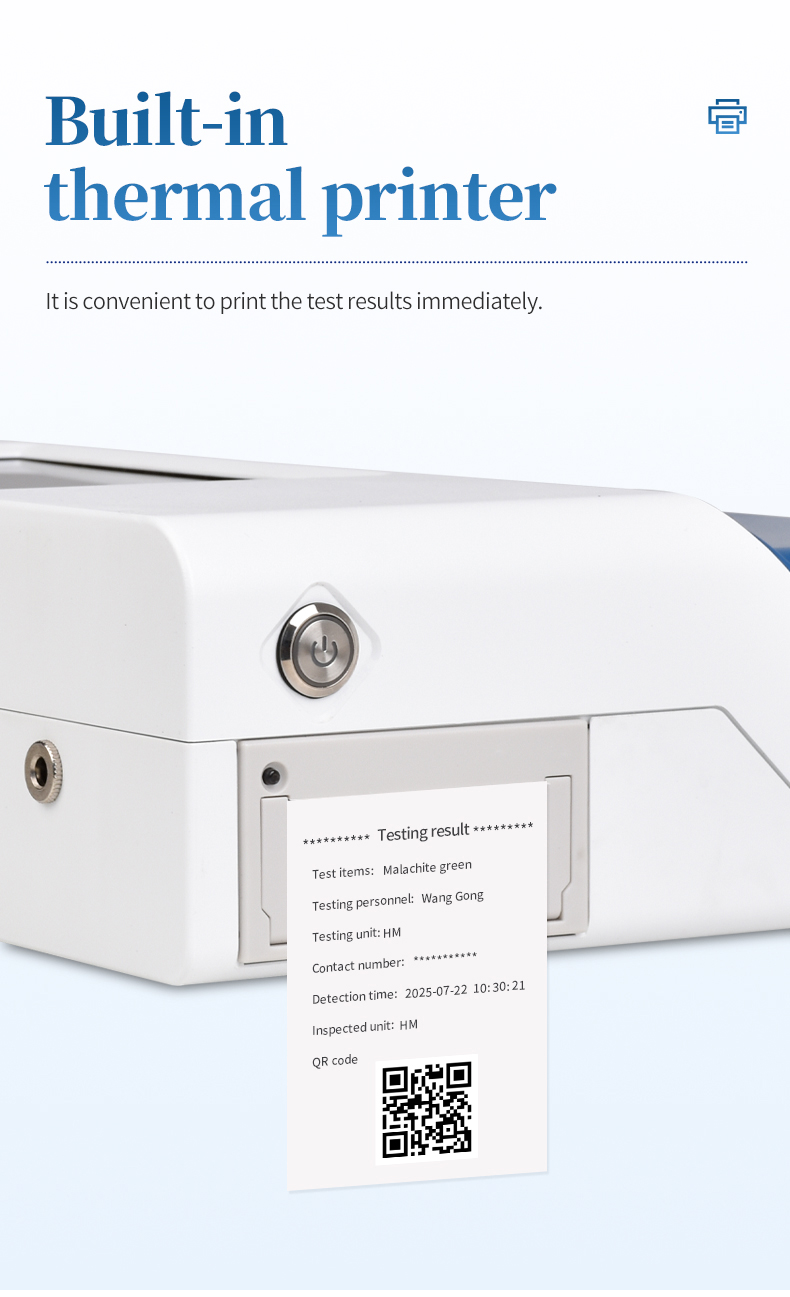
Built-in thermal printer generates immediate compliance documentation at the bench
QR code scanning streamlines sample data entry in high-throughput workflows
WiFi and Bluetooth connectivity supplement wired interfaces for flexible data transfer options
Optional RFID reader and external barcode scanner for automated sample tracking in production-level QC environments
Project management function supports assay expansion for emerging contaminant testing requirements
Technical Specifications
| Parameter | Specification |
|---|---|
| Model | HM-JD02 |
| Screen | 7-inch capacitive touchscreen, 1920×1200 |
| Memory | 1+8GB |
| Operating System | Android 7.1 |
| Detection Method | Reflectance photometric |
| Adapted Card Shell | 70mm × 20mm |
| Language | Chinese / English |
| Storage Capacity | 100,000+ records |
| Accuracy | Error ≤5% |
| Stability | SW ≤5% |
| Repeatability | CV ≤3% |
| Resolution | 0.001 |
| Detection Channels | 6 channels |
| Detection Time | <5 seconds (single and multi-strip cards) |
| Data Transfer | WiFi, Bluetooth, USB, RFID reader, external barcode scanner (optional) |
| Incubation Temperature | Ambient +5°C ~ 60°C |
| Printer | Thermal (57×20mm) |
| Interfaces | USB ×2, USB-B ×1, LAN ×1, DC 5.5/2.1mm |
| Power Input | AC100V–240V / 1.3A 50Hz |
| Power Output | DC12V / 5A |
| Operating Temperature | 0°C ~ 50°C |
| Operating Humidity | 0% ~ 90% |
| Dimensions | 308mm × 205mm × 91mm |
| Weight | Approx. 2.7kg |
FAQ
Q1: What throughput advantage does the HM-JD02 provide over single-channel readers?
A: With 6 independent detection channels, the HM-JD02 can process 6 different GICA assays simultaneously. In a quality control laboratory screening each sample for multiple contaminants — such as pathogens, antibiotic residues, and mycotoxins — the HM-JD02 completes a full multi-analyte panel in a single run cycle, whereas a single-channel reader would require sequential testing. This can reduce total screening time by up to 6× for multi-analyte workflows, significantly increasing daily sample processing capacity.
Q2: How does the HM-JD02 integrate with laboratory information management systems (LIMS)?
A: The HM-JD02 provides multiple integration pathways. The LAN (RJ-45) interface enables direct Ethernet connection to the laboratory network, allowing real-time data transmission to LIMS servers. The USB-B port supports PC tethering for direct instrument control and data acquisition through host software. For environments where network connectivity is restricted, U-disk export through the dual USB-A ports provides offline batch data transfer. WiFi and Bluetooth offer additional wireless data pathways for flexible integration with various LIMS architectures.
Q3: Can all 6 channels run different test types at the same time?
A: Yes. Each of the 6 channels operates independently, allowing simultaneous processing of different GICA test strip types. For example, channel 1 could test for Salmonella, channel 2 for E. coli O157:H7, channel 3 for chloramphenicol residue, channel 4 for aflatoxin B1, and so on. Each channel maintains its own incubation temperature setting and detection parameters, ensuring that different assay conditions are properly managed within the same run cycle.
Q4: What is the card insertion judgment feature?
A: The card insertion judgment function automatically detects when a test strip is properly seated in the detection slot and validates its positioning before initiating the read cycle. This prevents false readings caused by misaligned or partially inserted strips, which is particularly important in high-throughput environments where operators may process dozens of samples per hour. Combined with the built-in quality control function, it ensures that only valid, properly developed test results are recorded and reported.
Q5: How does the incubation module support different assay requirements across channels?
A: Each of the 6 channels includes an integrated incubation function with a temperature range from ambient +5°C to 60°C. This allows different channels to maintain appropriate reaction conditions for their respective assays — for instance, a pathogen detection strip may require 37°C incubation while a toxin assay operates at 45°C. The channel-level temperature control ensures that each assay develops under optimal conditions, even when running different test types concurrently, without cross-channel interference.
Q6: What data management capabilities does the HM-JD02 provide for regulatory compliance?
A: The HM-JD02 stores over 100,000 test records in 8GB internal memory, each timestamped and associated with sample information entered via QR code scan. Results can be retrieved by date range for batch reporting and trend analysis. The built-in thermal printer produces immediate hard-copy documentation at the bench. For electronic submission, data can be exported via LAN, USB, or U-disk in formats compatible with common LIMS platforms. The real-time self-diagnosis feature logs instrument status, providing traceability documentation required for GLP and ISO 17025 compliance.
Q7: Is the optional RFID reader necessary for routine food safety testing?
A: The RFID reader is optional and primarily benefits high-volume production environments where automated sample tracking is required. For routine food safety testing with moderate sample volumes, QR code scanning provides efficient sample data entry. The RFID reader becomes valuable when processing hundreds of samples per day with pre-tagged sample containers, as it eliminates the need to manually position each QR code for scanning, further accelerating the testing workflow in industrial-scale quality control operations.
Article address:https://www.hmfoodtesting.com/list_87/multi-channel-food-contaminant-screening.html