 Current
location:
Current
location: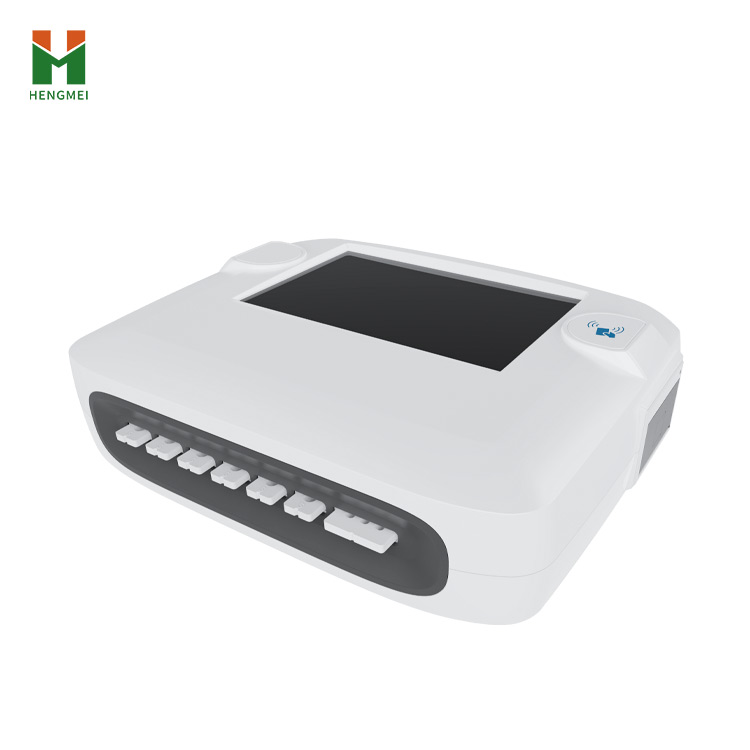
 +86
17853698681
+86
17853698681
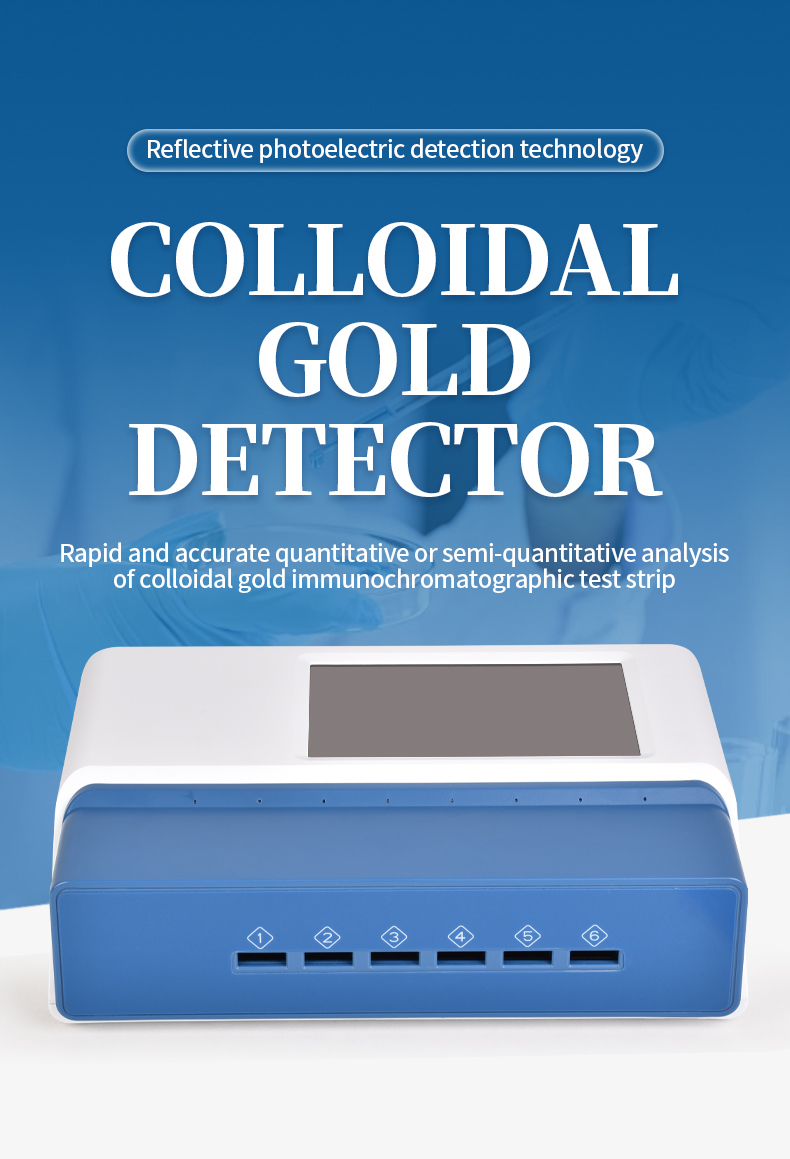



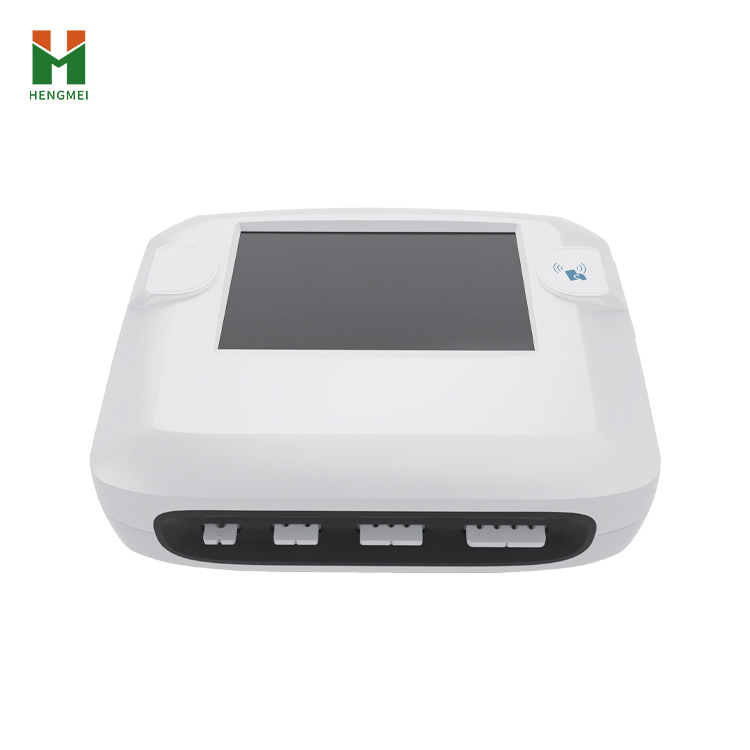
Product Introduction
Food testing laboratories responsible for monitoring pathogens, drug residues, and biotoxins across production batches face a recurring operational challenge: screening dozens to hundreds of samples per day against multiple contaminant categories. Conventional single-channel or limited-channel GICA readers require sequential processing, creating bottlenecks that delay batch release decisions and reduce laboratory efficiency.
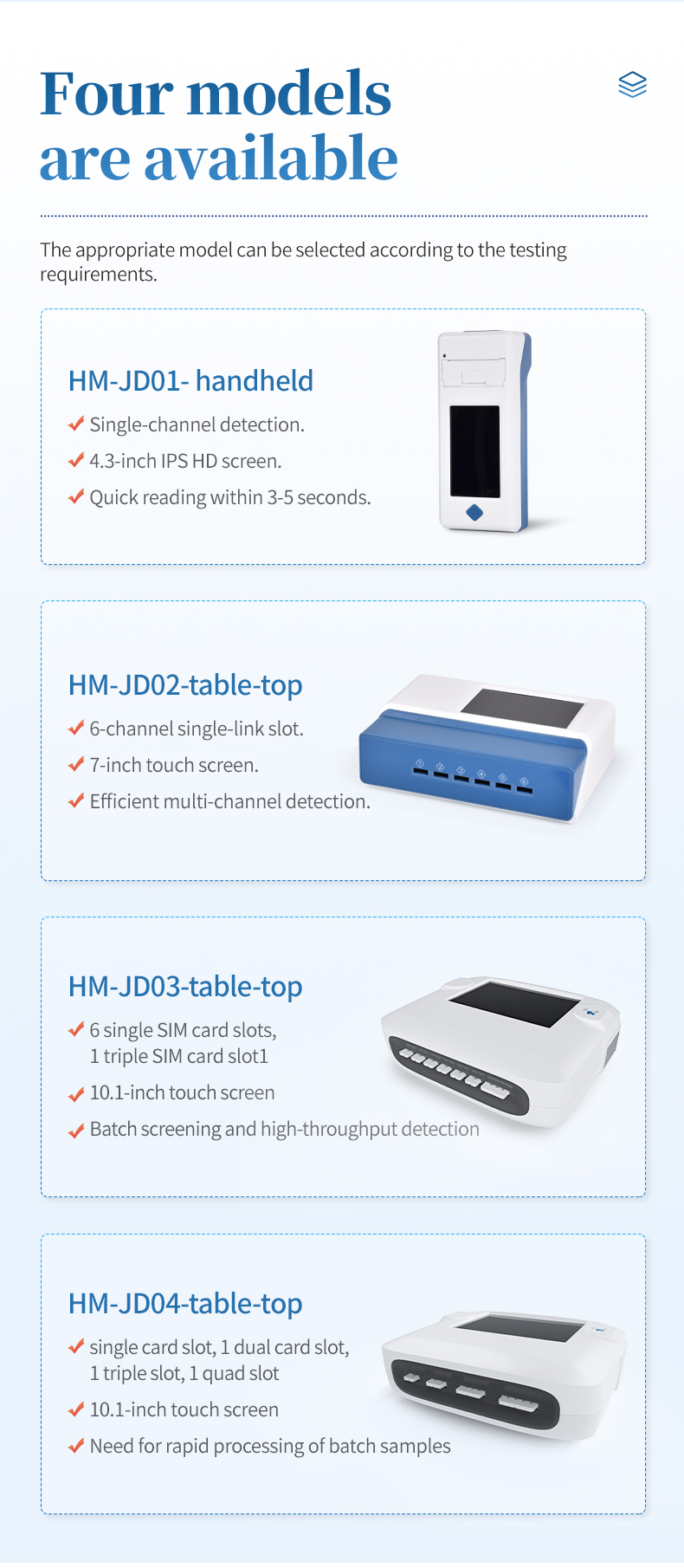
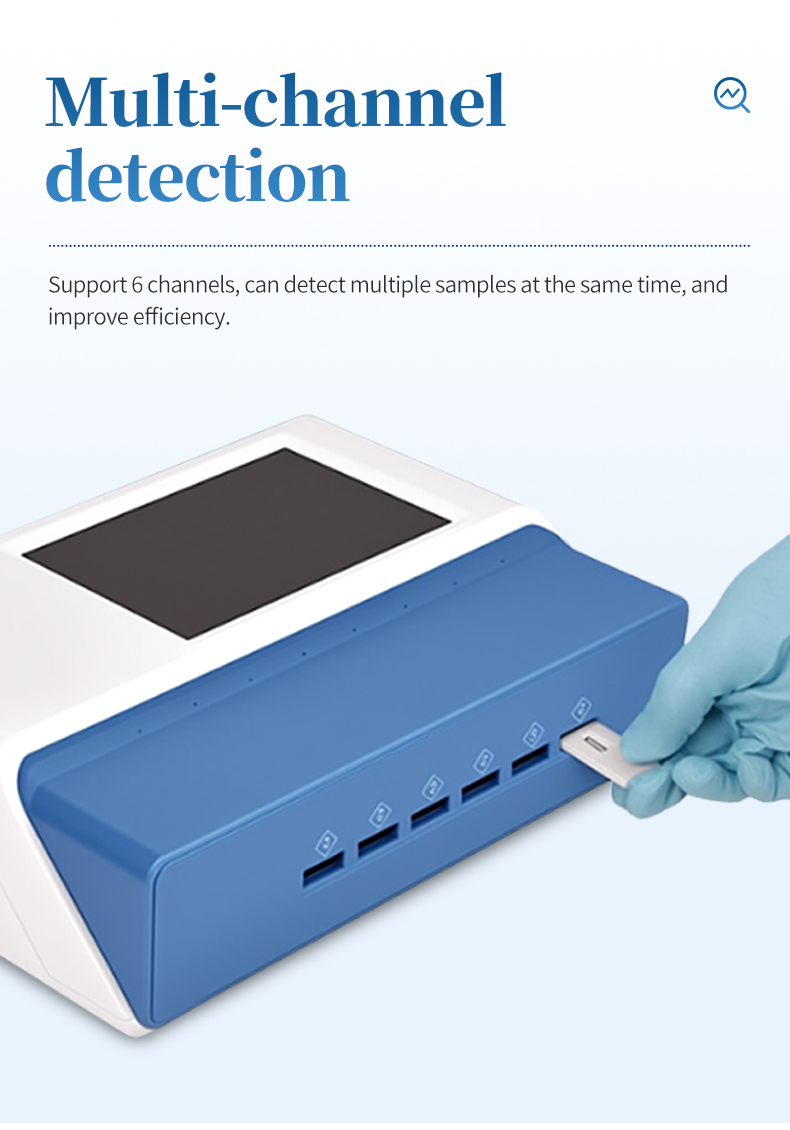
The HM-JD03 was developed specifically to resolve this throughput constraint. Its 7-slot architecture combines six single-card detection slots (70mm × 20mm × 5.6mm each) with one triple-strip card slot (70mm × 40mm × 5.6mm), allowing operators to load and process different test strips simultaneously. In a single run cycle, a laboratory technician can screen a sample batch for Salmonella on one slot, antibiotic residues on another, and aflatoxin on the triple-strip slot — all in parallel, with each result delivered in under 5 seconds.
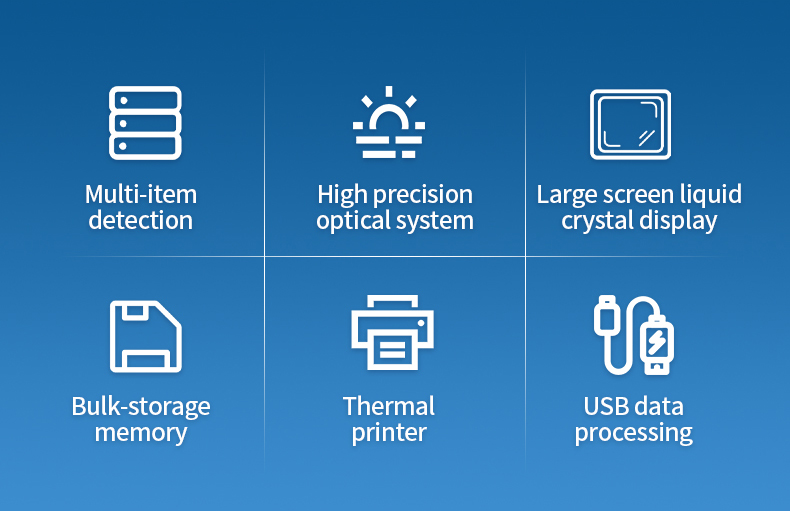
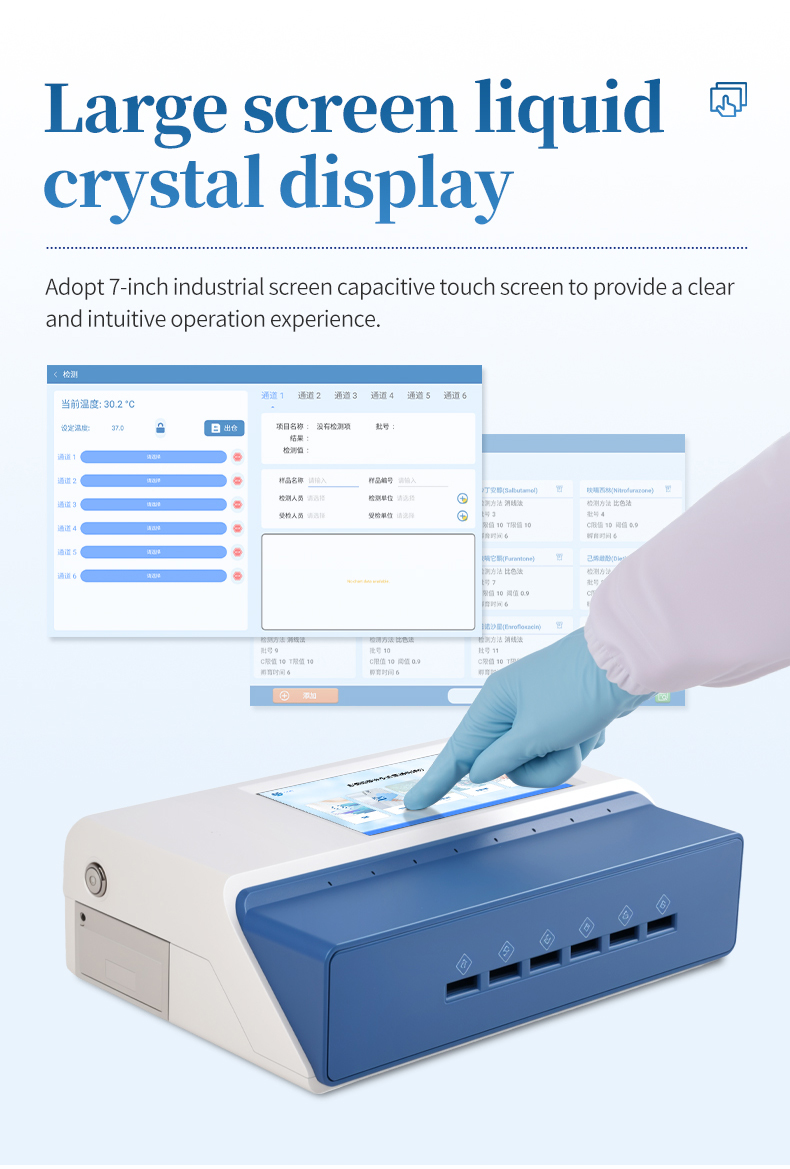
The reflectance photometric detection system maintains error ≤5% and CV ≤3% across all seven slots, while the integrated incubation module controls temperature from ambient +5°C to 60°C for time-sensitive assays. The 10.1-inch capacitive touchscreen with 1280×800 resolution provides a clear workspace for monitoring concurrent operations, reviewing results across all active slots, and managing batch test records stored in the instrument's 5 million record database.
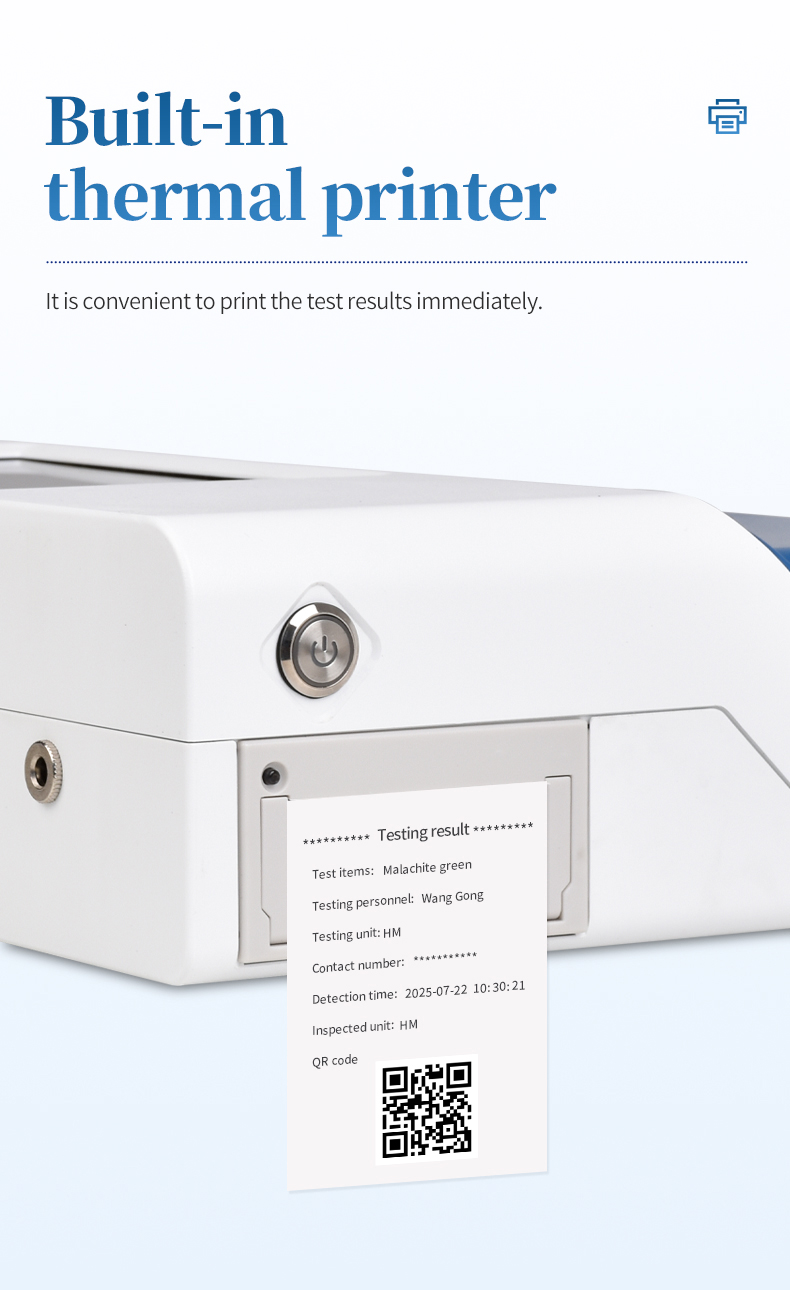
For laboratory data management, the HM-JD03 offers LAN (RJ-45) for direct LIMS integration, dual USB-A ports and U-disk export for offline data transfer, USB-B for PC tethering, and WiFi/Bluetooth for wireless connectivity. The built-in thermal printer (57×30mm) produces immediate compliance documentation, while QR code scanning and optional RFID reader streamline sample tracking in high-volume screening workflows.
Applications
Food production QC: batch screening of raw materials and finished products across pathogen, residue, and toxin categories using parallel multi-slot detection
Third-party testing laboratories: high-volume contract testing with simultaneous multi-analyte screening for regulatory compliance reporting
Regulatory inspection: rapid batch screening of food commodities at import/export checkpoints using triple-strip cards for comprehensive contaminant panels
Dairy and meat processing: parallel antibiotic, hormone, and pathogen screening of production line samples across multiple slots
Grain and feed analysis: batch mycotoxin and pesticide residue screening using concurrent single-card and multi-strip formats
Livestock and veterinary: multi-panel animal disease screening with different GICA strips loaded across the 7 slots
Environmental monitoring: parallel water and soil sample analysis for multiple pollutant types in a single batch run
Key Features & Advantages
7-slot architecture (6 single-card + 1 triple-strip) enables true batch-mode screening, processing multiple test types simultaneously in a single instrument
Triple-strip card slot accommodates 3-analyte combination cards (70mm × 40mm × 5.6mm), expanding per-run screening coverage for comprehensive contaminant panels
Under 5-second detection time per card across all slots enables rapid completion of large batch screening campaigns
10.1-inch capacitive touchscreen (1280×800) provides expansive visibility for managing and reviewing concurrent multi-slot operations
5 million record storage capacity supports long-term data retention for high-volume testing without frequent archiving
LAN (RJ-45) interface enables direct wired connection to LIMS and enterprise networks for seamless batch data integration
Dual USB-A ports and U-disk export support offline batch data transfer without network dependency
USB-B port enables PC tethering for direct instrument control and data acquisition through host software
Integrated incubation module (ambient +5°C to 60°C) ensures controlled reaction conditions for time-sensitive assays across all slots
Card insertion judgment automatically detects and validates test strip placement in each slot, reducing operator error during batch loading
Built-in quality control function provides automated result validation across all active slots without manual intervention
Android 7.1 operating system with intuitive multi-slot workflow management, test configuration, and batch result review
Built-in thermal printer (57×30mm) generates immediate hard-copy documentation for regulatory compliance at the bench
QR code scanning and optional RFID reader streamline sample data entry in high-throughput screening workflows
Real-time self-diagnosis of critical components ensures instrument readiness before each batch screening session
Project management function supports assay expansion for emerging contaminant screening requirements
Technical Specifications
| Parameter | Specification |
|---|---|
| Model | HM-JD03 |
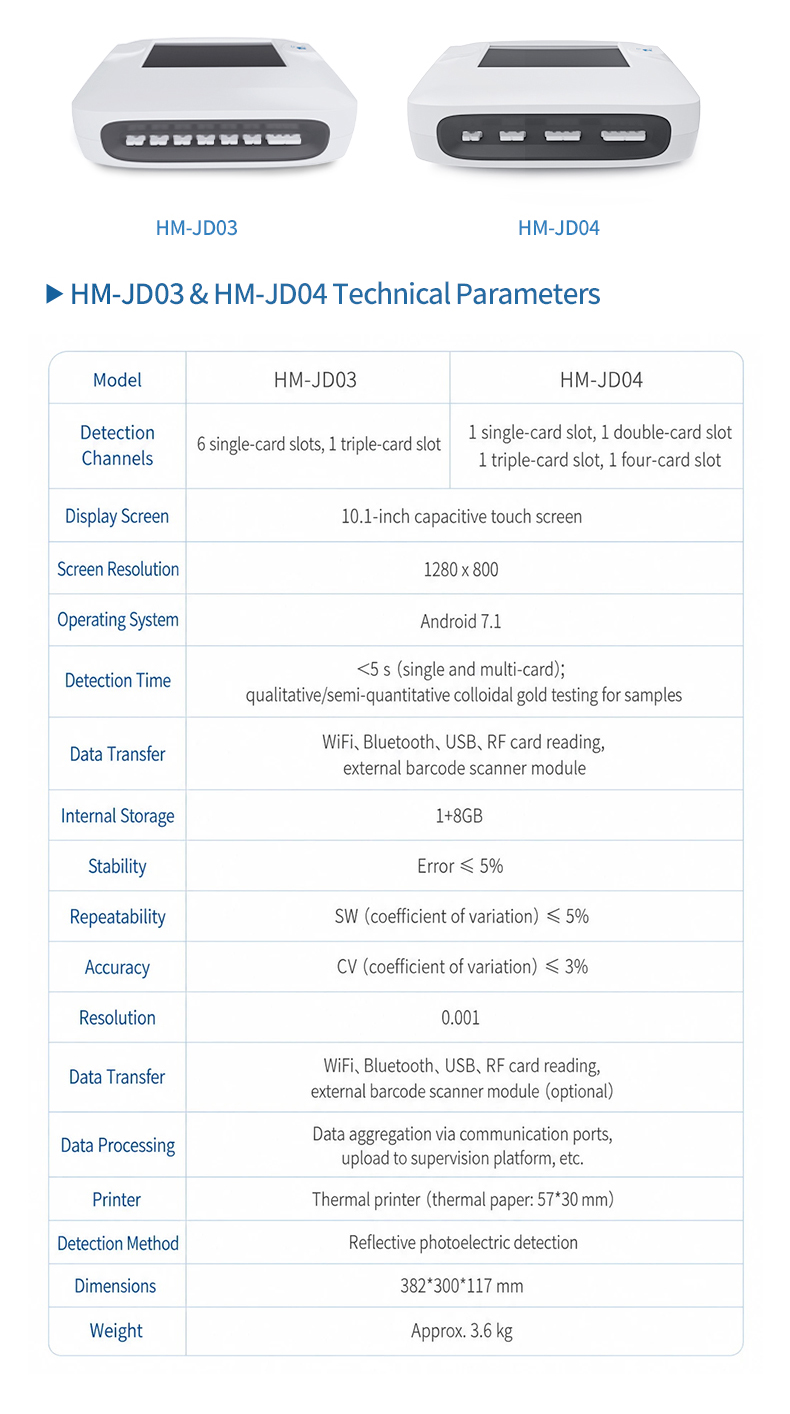
| Screen | 10.1-inch capacitive touchscreen, 1280×800 |
| Memory | 1+8GB |
| Operating System | Android 7.1 |
| Detection Method | Reflectance photometric |
| Language | Chinese / English |
| Storage Capacity | 10万+ |
| Accuracy | Error ≤5% |
| Stability | SW ≤5% |
| Repeatability | CV ≤3% |
| Resolution | 0.001 |
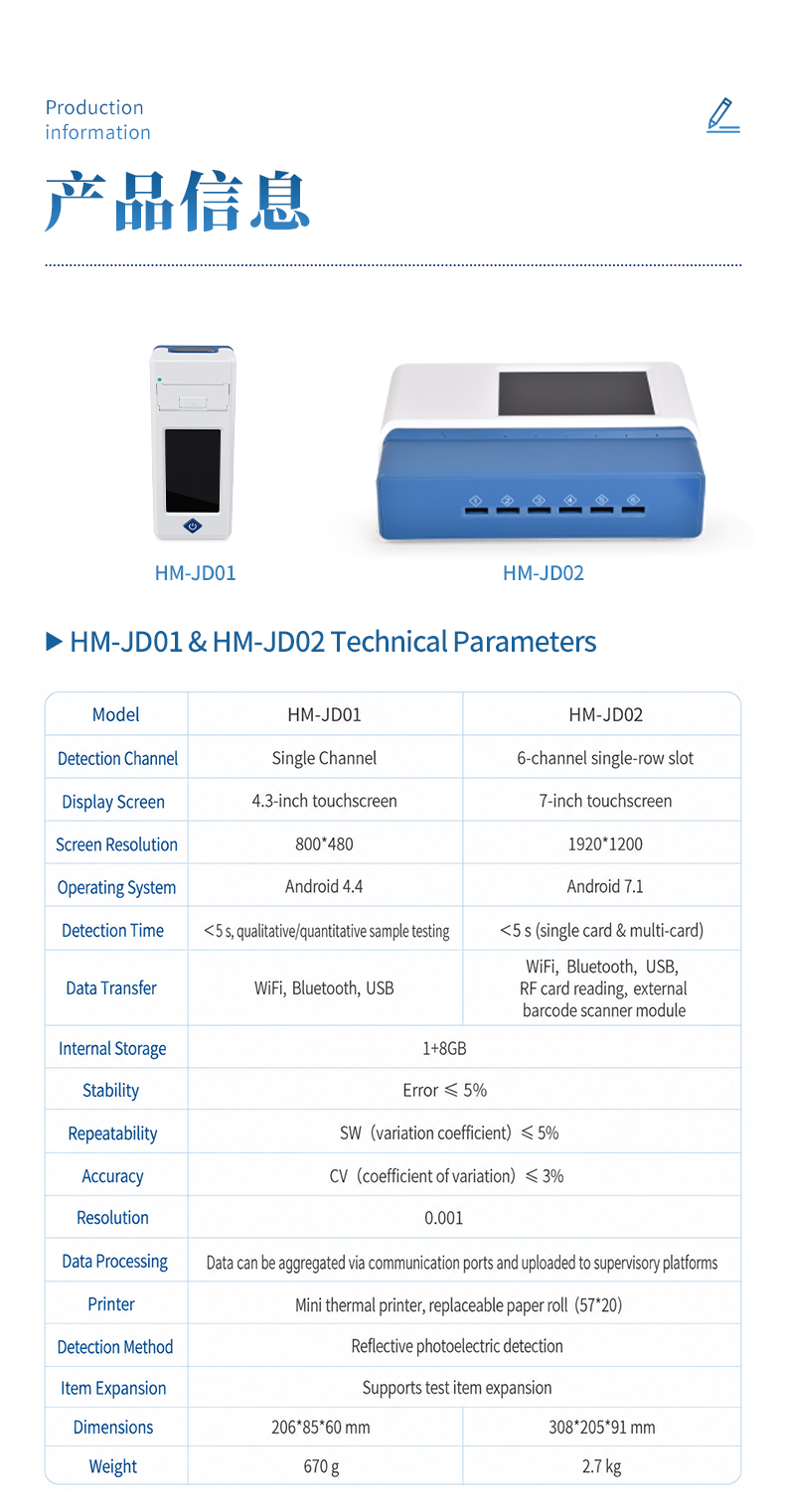
| Channels | 6 single-card slots (70mm × 20mm × 5.6mm) + 1 triple-strip slot (70mm × 40mm × 5.6mm) |
| Detection Time | <5 seconds (single and multi-strip cards) |
| Printer | Thermal (57×30mm) |
| Data Transfer | WiFi, Bluetooth, USB, RFID reader, external barcode scanner (optional) |
| Incubation Temperature | Ambient +5°C ~ 60°C |
| Interfaces | USB ×2, USB-B ×1, LAN ×1, DC 5.5/2.1mm |
| Power Input | AC220V ±20V, 50Hz ±1Hz |
| Power Output | DC12V, 5A |
| Operating Temperature | 0°C ~ 50°C |
| Operating Humidity | 0% ~ 90% |
| Dimensions | 382mm × 300mm × 117mm |
| Weight | Approx. 3.6kg |
FAQ
Q1: How does the 7-slot design improve batch screening throughput compared to standard multi-channel readers?
A: Standard multi-channel readers typically offer identical single-card slots, limiting simultaneous testing to the same card format. The HM-JD03's 7-slot architecture combines six single-card slots with one triple-strip card slot, enabling operators to load different card formats concurrently. In a food safety context, this means running six individual pathogen tests on single cards while simultaneously screening a 3-analyte combination panel on the triple-strip slot — all within a single run cycle. This mixed-format capability is particularly valuable when screening requires both broad coverage (individual tests) and comprehensive panels (combination cards) within the same batch.
Q2: What is the triple-strip card slot and what advantages does it offer?
A: The triple-strip card slot (70mm × 40mm × 5.6mm) accommodates combination test cards that integrate three separate immunochromatographic test strips on a single card. This format allows simultaneous detection of three different analytes — for example, Salmonella, E. coli O157:H7, and Listeria — from one sample application. The triple-strip slot reads all three strips in under 5 seconds, providing a 3-in-1 screening result that would otherwise require three separate single-card tests. For laboratories running comprehensive contaminant panels, this significantly reduces per-sample processing time and card handling steps.
Q3: Can the HM-JD03 handle both immediate and incubated detection modes across different slots?
A: Yes. The HM-JD03 supports both immediate detection and incubation detection modes. The integrated incubation module maintains temperatures from ambient +5°C to 60°C, accommodating assay protocols that require controlled reaction conditions. Operators can configure different detection modes for different test strips within the same batch run — for example, running an immediate-read antibiotic residue test alongside an incubated pathogen detection assay — enabling flexible workflow management tailored to each strip's protocol requirements.
Q4: How does the 5 million record storage benefit high-volume food safety laboratories?
A: High-volume food testing laboratories generating hundreds of test results daily require extensive data retention for traceability, trend analysis, and regulatory audits. The HM-JD03's 5 million record storage capacity eliminates the need for frequent data archiving or deletion, maintaining a comprehensive historical record accessible by date range query. This supports long-term trend analysis of contaminant patterns, batch-by-batch traceability for regulatory compliance, and retrospective data retrieval for audit purposes — all without external storage management overhead.
Q5: How does the HM-JD03 integrate with laboratory information management systems?
A: The HM-JD03 provides multiple LIMS integration pathways. The LAN (RJ-45) interface enables direct Ethernet connection for real-time batch data transmission to LIMS servers. USB-B supports PC tethering for instrument control through host software. Dual USB-A ports with U-disk export allow offline batch data transfer. WiFi and Bluetooth supplement wired connections for flexible integration. These multiple pathways ensure compatibility with diverse LIMS architectures commonly used in food safety testing environments.
Q6: What quality assurance features prevent invalid results during batch testing?
A: The HM-JD03 incorporates several quality assurance mechanisms for batch screening: card insertion judgment automatically verifies that each test strip is properly seated in its slot before initiating the read cycle, preventing false readings from misaligned strips; the built-in quality control function validates results across all active slots without manual intervention; detection curve verification cross-checks strip development against reference curves; and real-time self-diagnosis monitors critical component status before and during each batch run. Together, these features ensure that only valid, properly developed results are recorded and reported, even when processing multiple test types simultaneously.
Article address:https://www.hmfoodtesting.com/list_87/batch-gica-screening-lab-analyzer.html