 Current
location:
Current
location:
 +86
17853698681
+86
17853698681



Product Introduction
Community market stall operators, small food business owners, school cafeteria managers, and restaurant chain quality supervisors share a common food safety predicament: they operate at the front line of the food supply chain where adulterated ingredients most directly reach consumers, yet they lack the budget for professional laboratory services, the space for dedicated testing facilities, and the technical staff to operate complex analytical instruments. A wet market vegetable vendor who unwittingly sells formaldehyde-treated bok choy, a small noodle shop owner who purchases flour adulterated with sodium formaldehyde sulfoxylate from an unfamiliar supplier, a school kitchen that receives nitrite-contaminated processed meat—each represents a food safety incident waiting to happen, with consequences ranging from customer illness and reputational damage to regulatory penalties and business closure. These operators need a practical middle ground between doing nothing—relying entirely on supplier trust and visual inspection—and sending every ingredient batch to an external laboratory at costs that would consume their thin operating margins.
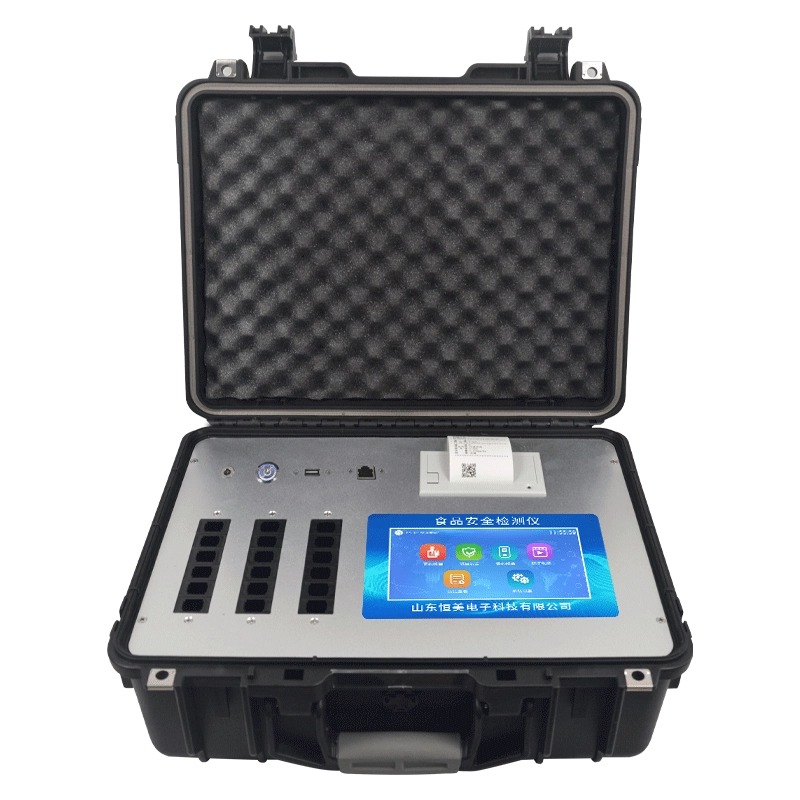
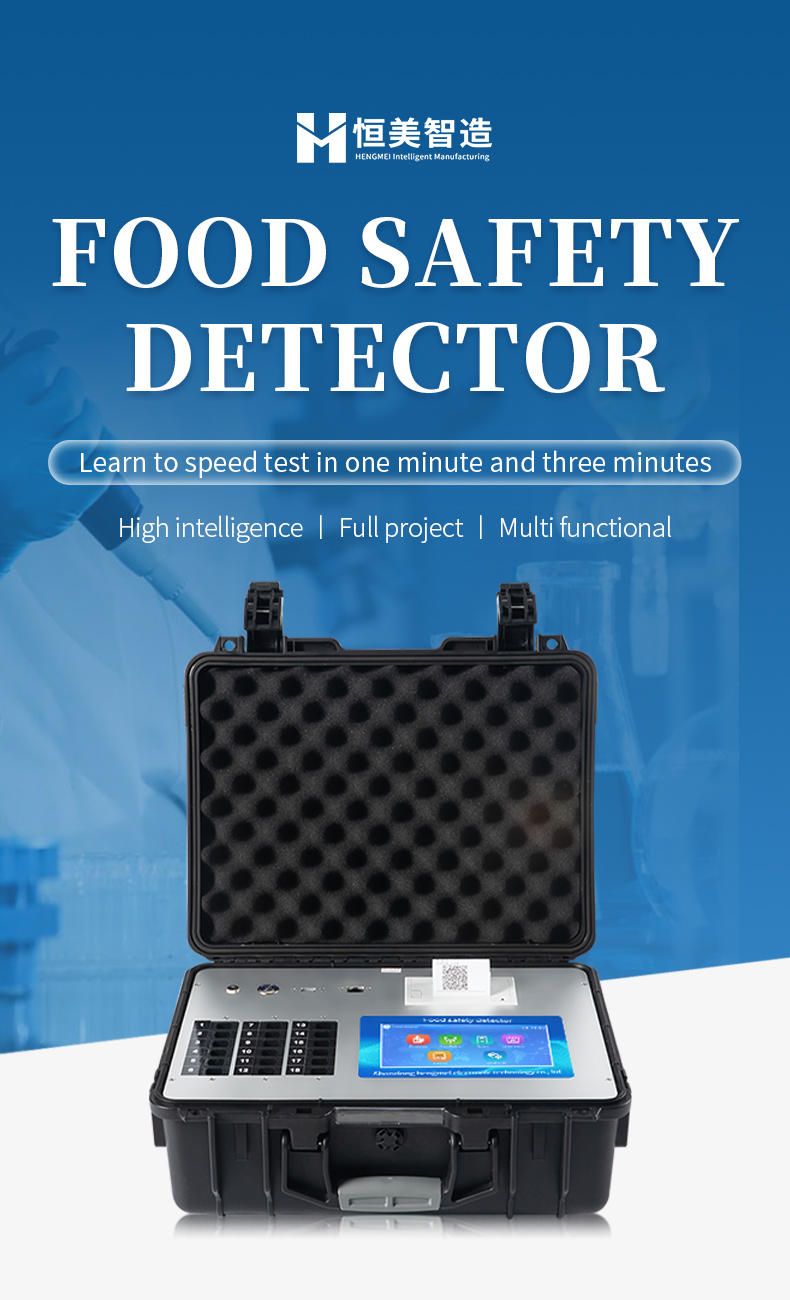
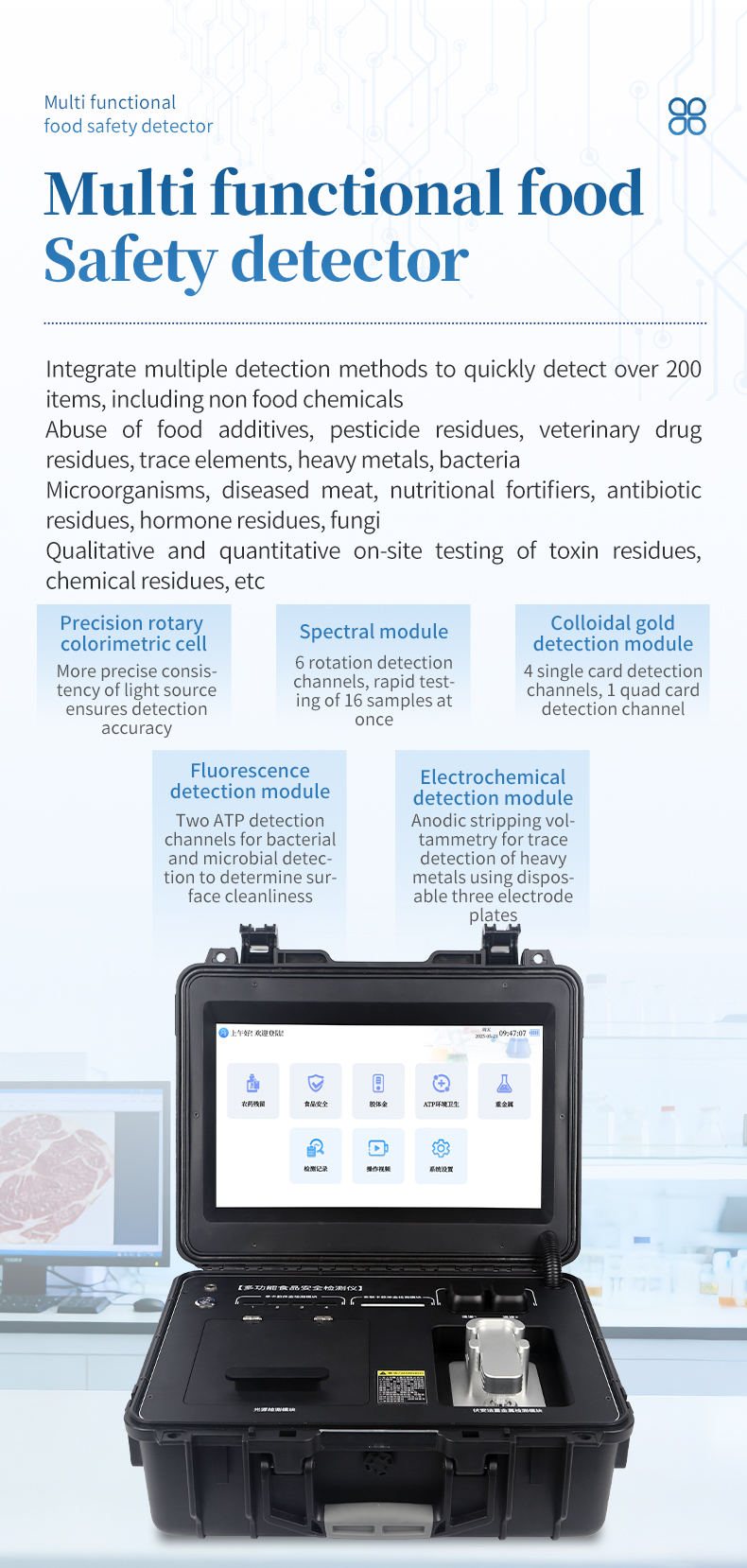
The HM-G1800 Compact Food Quality Screening Device, developed by HM Instruments (恒美智造), fills this operational gap by providing focused, essential-parameter food safety screening in a format designed for non-technical users working in space-constrained, non-laboratory environments. Unlike comprehensive multi-category instruments intended for central laboratories, the HM-G1800 concentrates on the adulteration parameters most frequently encountered in small-scale food operations: formaldehyde (used illegally as a preservative in vegetables, seafood, and noodles), nitrite (excessive use in processed meats), sulfur dioxide (overuse as a bleaching agent in dried fruits, vegetables, and starch products), sodium formaldehyde sulfoxylate (illegally added to flour and rice products as a whitening agent), milk protein adulteration, borax (added to noodles and meat products for texture), hydrogen peroxide (used illegally as a bleaching and preservative agent), nitrate accumulation, and lead contamination. These nine parameter categories represent the food safety risks most commonly documented in regulatory enforcement actions against small and medium food businesses across China. For guidance on establishing a practical food safety routine for small-scale operations, see our practical food safety screening guide for small food businesses and community markets.
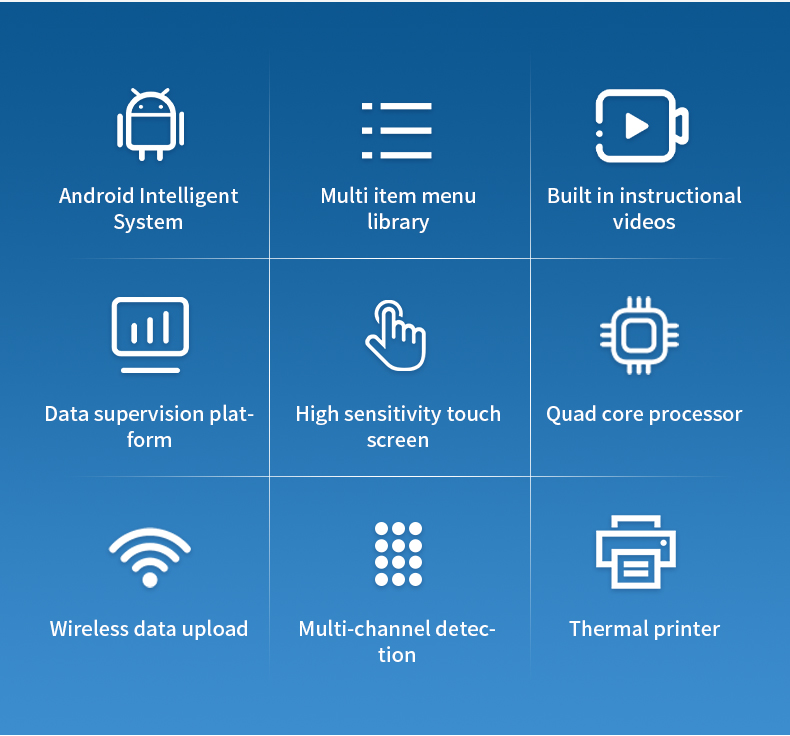
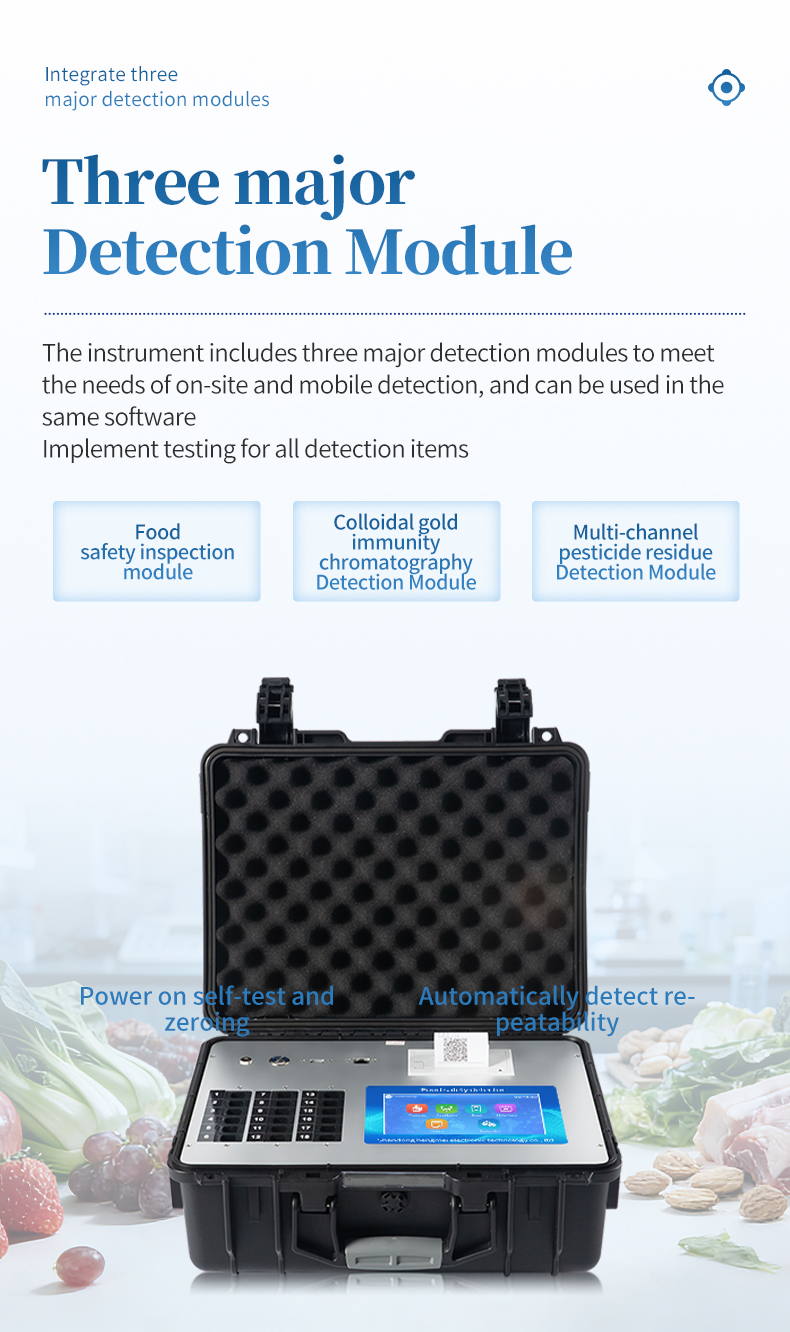
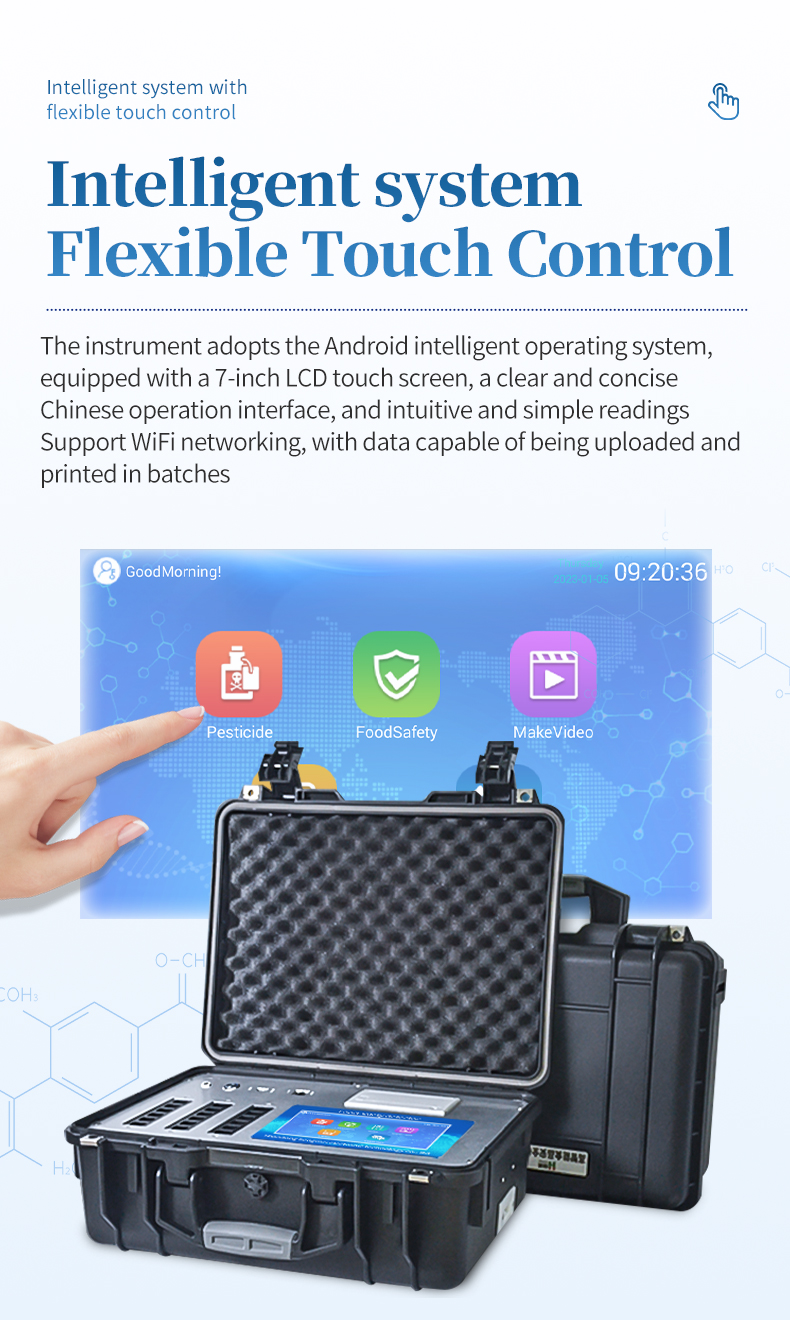
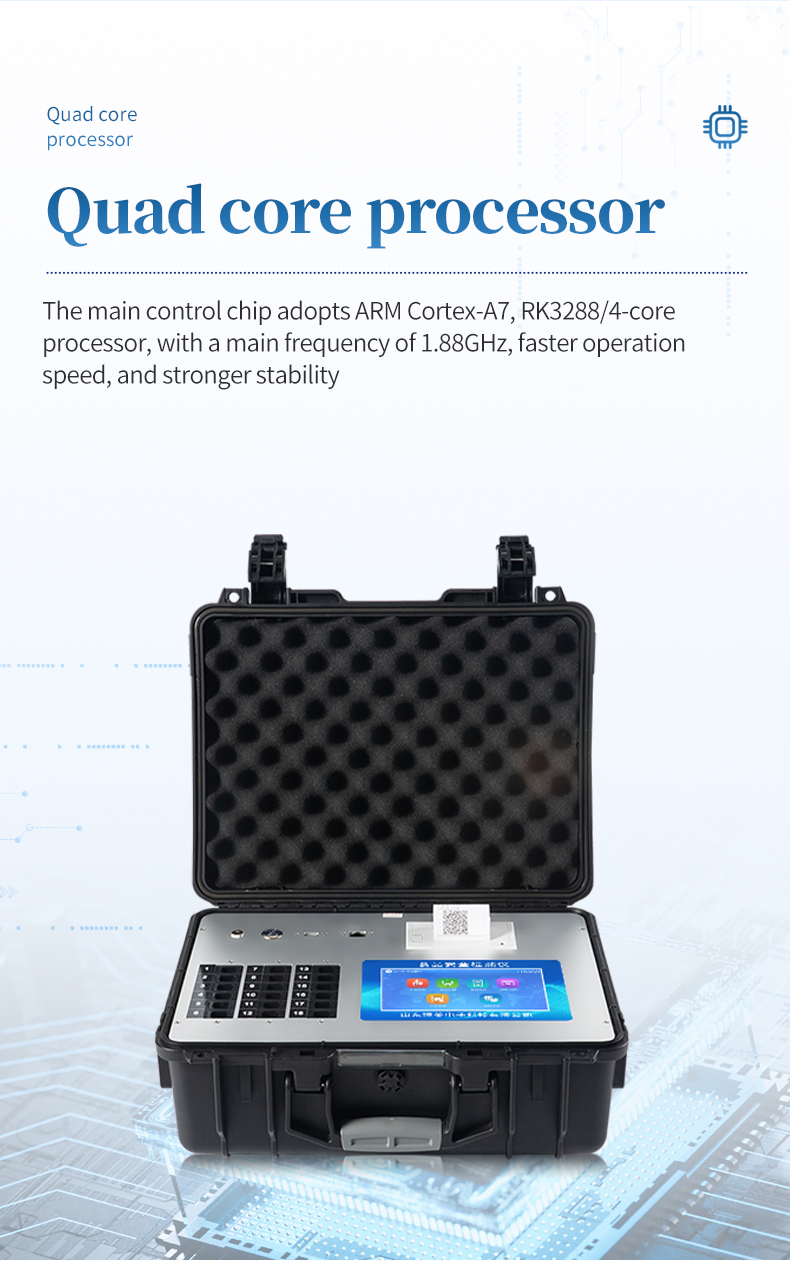
The instrument's design philosophy prioritizes operational simplicity without sacrificing analytical capability. The 7-inch touchscreen interface presents a streamlined workflow: select the food category, select the test parameter, follow the on-screen sample preparation guide (which displays step-by-step photographs or illustrations of the extraction process), load the prepared cuvette into one of the 18 detection channels, and read the result—displayed as concentration with a clear pass/fail indicator against the pre-configured regulatory threshold. The 4-wavelength cold light source (410 nm, 520 nm, 590 nm, 630 nm) with optical path switching to 64 equivalent wavelengths provides the same spectral measurement capability as higher-tier HM Instruments food analyzers, ensuring that the simplified user experience does not come at the cost of compromised measurement accuracy. The ARM Cortex-A7 RK3288 processor at 1.88 GHz handles the data processing, while the 200,000-record database stores results with full traceability—supporting the documentation needs of food safety inspections even at the community level.
Applications
- Community wet market vendor self-inspection: A vegetable, seafood, or noodle stall operator tests incoming goods for formaldehyde and sulfur dioxide before displaying them for sale, catching adulterated product before it reaches customers and protecting the stall's reputation with regular shoppers.
- Small food processing workshop quality check: A family-run tofu, noodle, or dried fruit workshop screens raw materials (flour, soybeans, fresh produce) and finished products for the most common adulterants—sodium formaldehyde sulfoxylate, borax, sulfur dioxide—before delivery to retail outlets.
- School cafeteria daily ingredient screening: A primary or secondary school kitchen manager tests fresh produce, meat, and processed ingredients upon delivery each morning, focusing on the parameters most relevant to child food safety: formaldehyde in vegetables, nitrite in processed meats, lead in grains.
- Restaurant chain supplier verification: A multi-location restaurant group deploys the HM-G1800 at its central kitchen or receiving warehouse to screen incoming ingredient shipments, verifying that supplier quality claims match measured values for critical adulteration parameters.
- Community food safety volunteer station: A neighborhood committee or consumer association operates a walk-in food testing point where residents can bring purchased food items for free screening of formaldehyde, nitrite, sulfur dioxide, and borax—building community trust through transparent testing.
- Small supermarket fresh food quality monitoring: A neighborhood supermarket fresh food section manager conducts daily spot-checks on produce, meat, and seafood displays, removing items that test above thresholds before they become the subject of customer complaints or regulatory action.
- Farmers' market management office rapid screening: A farmers' market administration office provides a shared HM-G1800 screening service for tenant stall operators, strengthening the market's overall food safety reputation and reducing administrative liability.
Key Features & Advantages
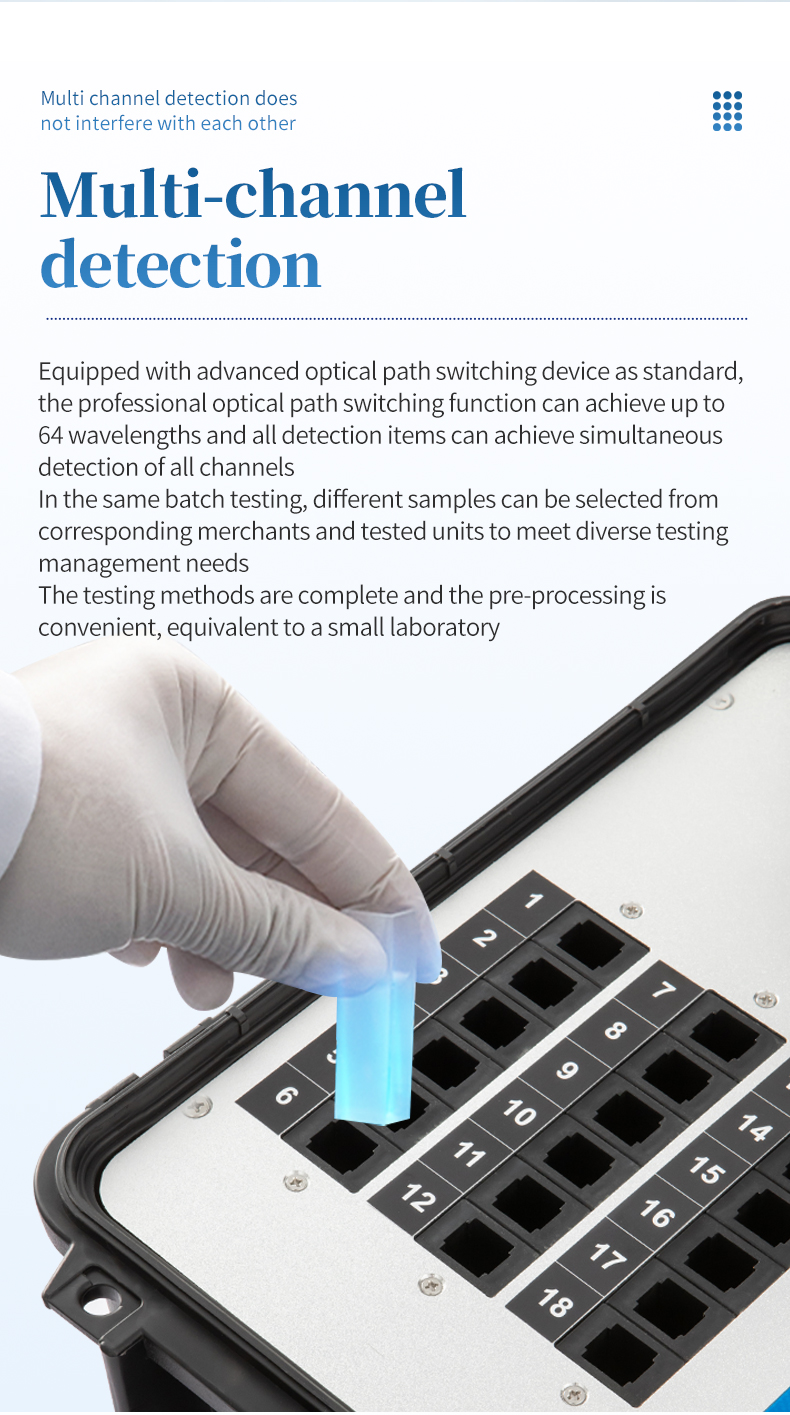
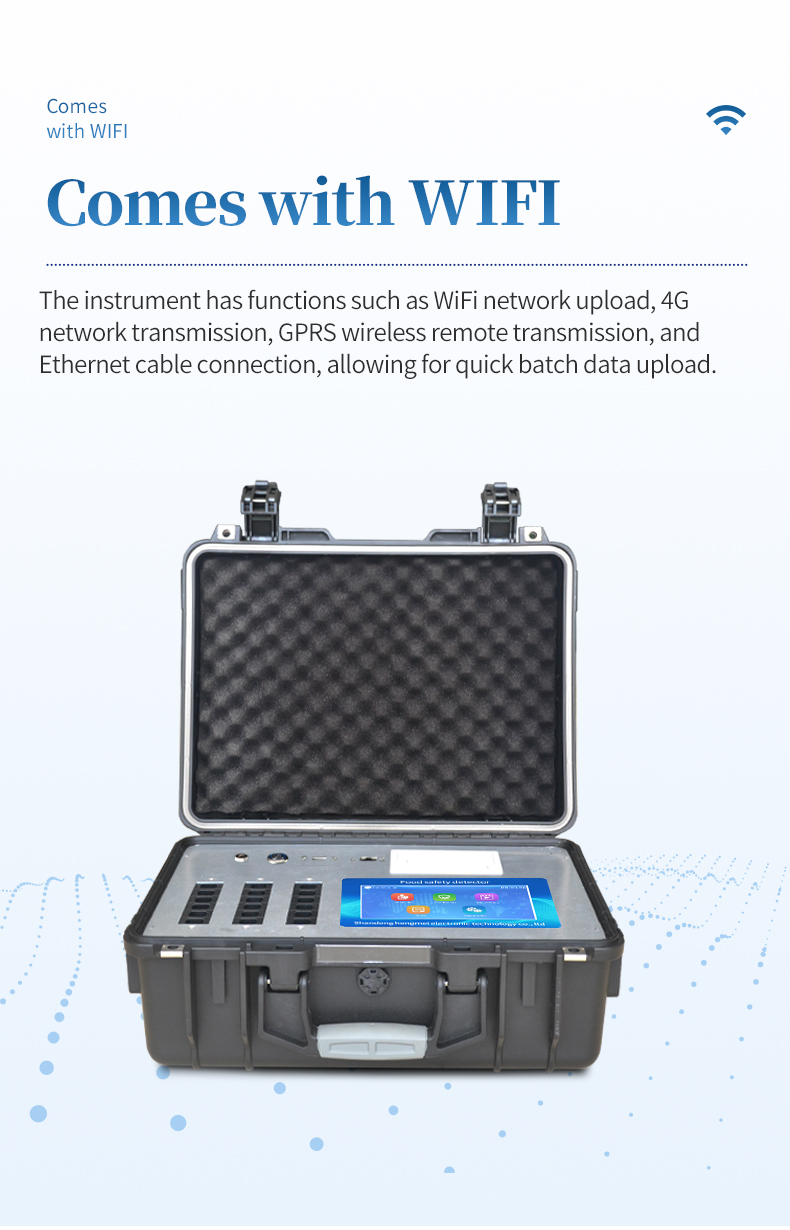
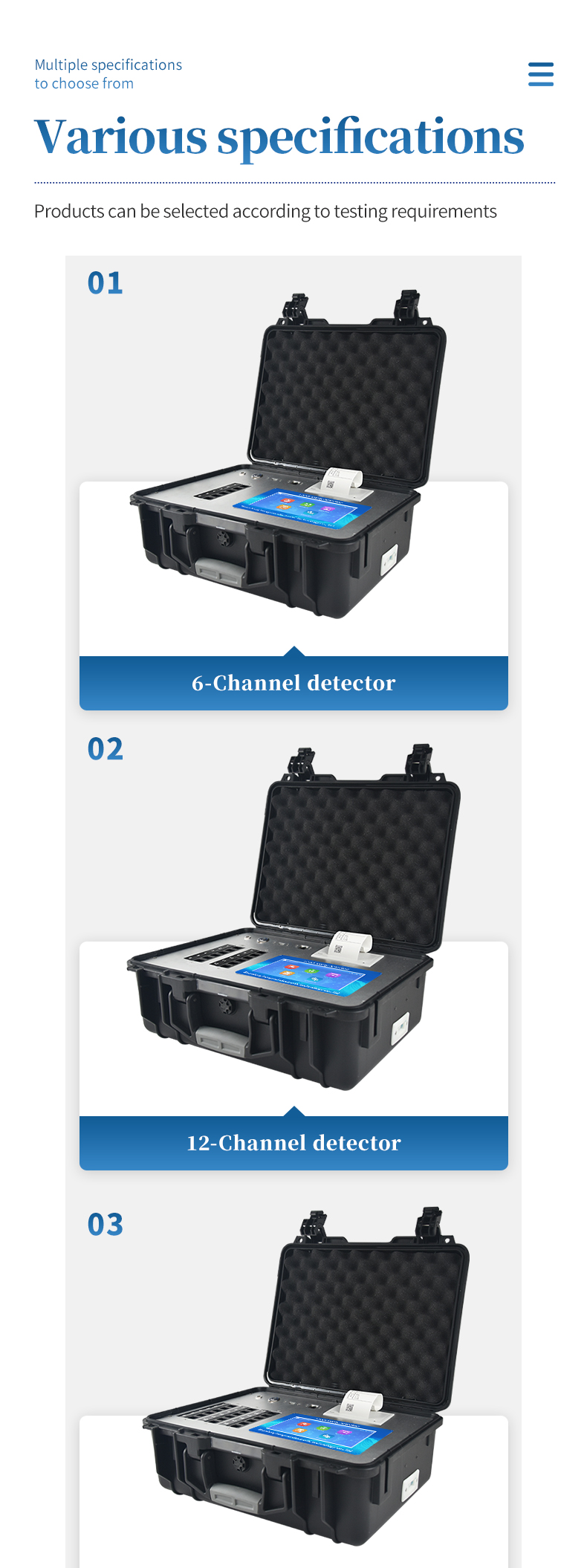
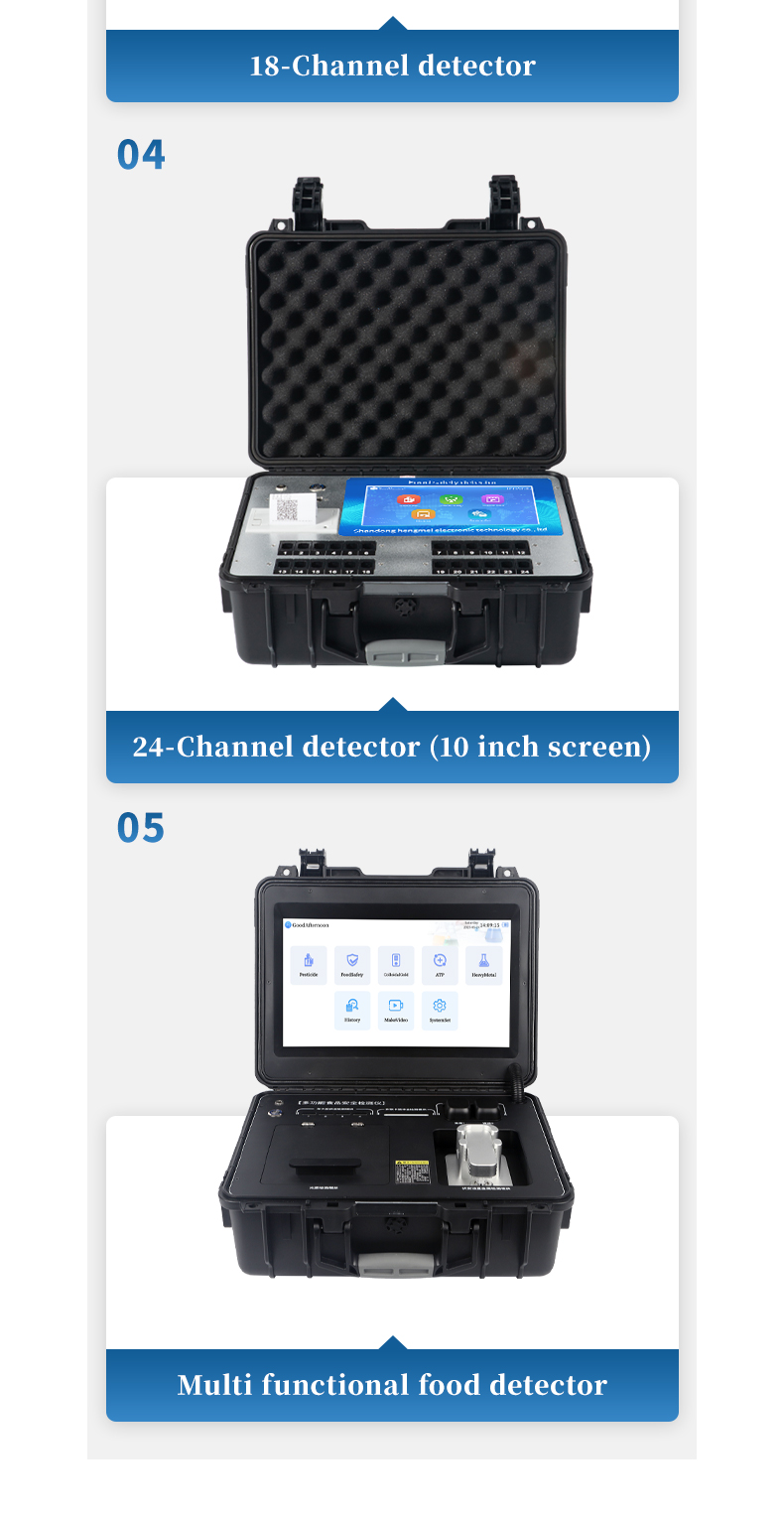
- 18 independent detection channels providing practical batch throughput for small-scale operations—sufficient to screen multiple samples simultaneously without the complexity of larger channel-count instruments.
- 4-wavelength cold light source (410/520/590/630 nm) with optical path switching to 64 equivalent wavelengths, delivering the same spectral measurement capability as professional-grade instruments in a compact format.
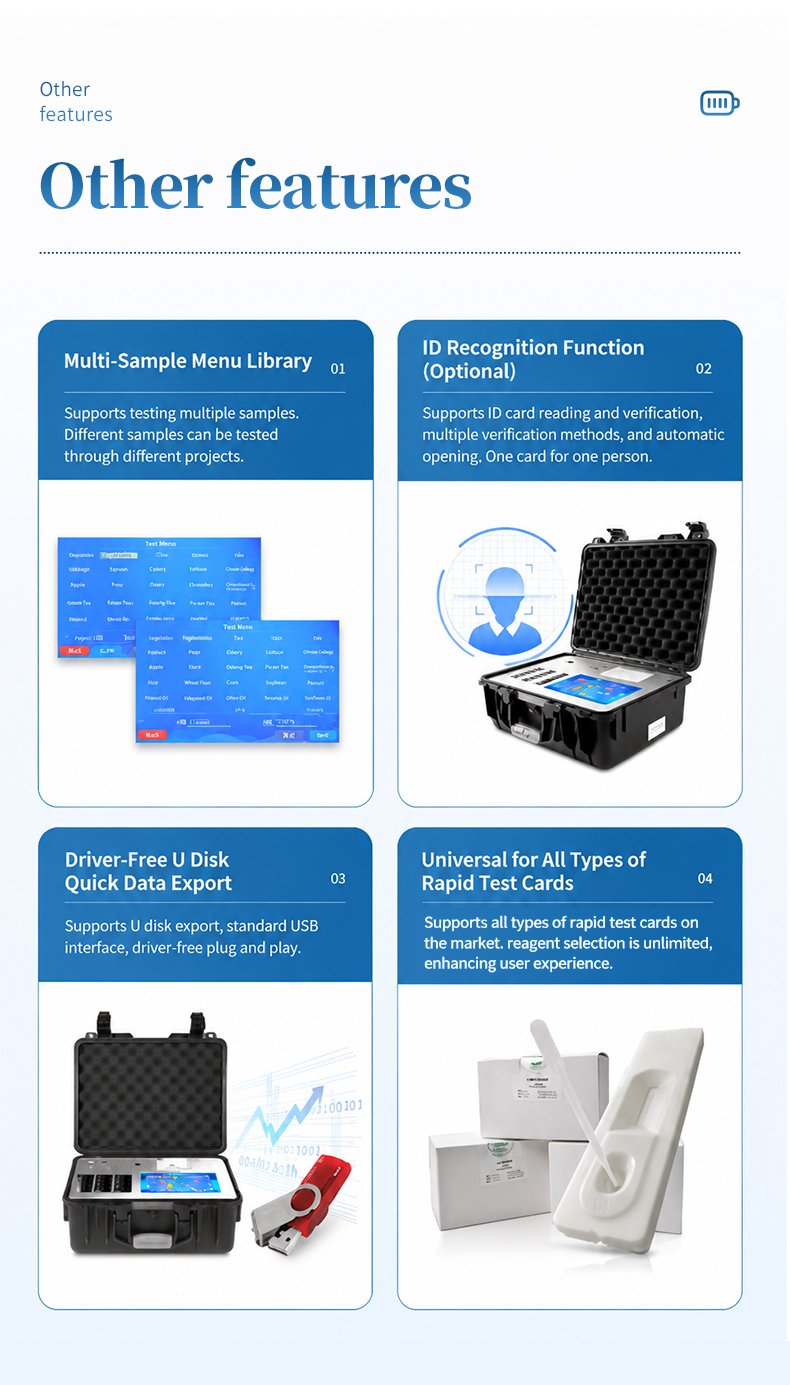
- 7-inch color touchscreen with guided operation workflow—each test parameter includes on-screen step-by-step sample preparation instructions with visual cues, enabling non-technical staff to perform testing after a brief familiarization session.
- ARM Cortex-A7 RK3288 quad-core processor at 1.88 GHz providing responsive instrument control and rapid concentration calculation—the operator simply follows prompts and reads the displayed result.
- Focused parameter set covering the nine adulteration categories most relevant to small food operations: formaldehyde (0.5 mg/kg detection limit, 2–26 mg/kg range), nitrite (0.5 mg/kg, 0.5–20 mg/kg), sulfur dioxide (0.018 g/kg, 0.03–1 g/kg), sodium formaldehyde sulfoxylate (0.2 mg/kg, 0.05–10 mg/kg), milk protein (0.01 g/100mL, 0.57–10 g/100mL), borax/boric acid (0.1 mg/kg, 0.43–5.96 mg/kg), hydrogen peroxide (0.05 mg/kg, 7–130 mg/kg), nitrate (0.5 mg/kg, 84.77–1,612.03 mg/kg), and lead (0.05 mg/kg, 0.22–3.08 mg/kg).
- 200,000-record onboard database automatically capturing test date, time, sample ID, parameter, result, and pass/fail status—providing documentation that can be shown to customers or regulatory inspectors as evidence of routine self-inspection.
- Built-in 6 Ah lithium battery with AC/DC dual power capability, supporting both countertop operation near a power outlet and mobile inspection at receiving areas, storage rooms, or display counters without needing to relocate product samples.
- Pre-configured regulatory threshold values for each parameter, with clear green/red pass/fail indicators on the result screen—eliminating the need for operators to interpret numerical results against regulatory standards.
- Compact benchtop footprint (43 × 35 × 19 cm, 5.2 kg net weight) requiring minimal counter space—the instrument fits on a standard market stall table or a small kitchen preparation surface without disrupting daily operations.
- Simple maintenance requirements suited to low-usage scenarios: daily blank calibration at startup (performed automatically), standard reference verification at the beginning of each testing session, and minimal consumable replacement schedule for the 58 mm thermal printer paper and reagent kits.
- USB 2.0 data export enabling periodic backup of test records to a computer for long-term record keeping, or sharing results with regulatory inspectors, customers, or parent committees without needing network connectivity.
- Standardized reagent kits with pre-measured extraction buffers and color-developing agents, minimizing the need for operators to handle concentrated chemicals or perform volumetric measurements—each kit includes instructions in both Chinese and English.
- Operating temperature (5–40 ℃) and humidity (15–80% RH non-condensing) ranges compatible with non-air-conditioned market stall, kitchen, and storage room environments where small food businesses typically operate.
- Packaged weight of 8.6 kg including the instrument, power adapter, starter reagent kit for the nine core parameters, cuvettes, thermal printer paper, and quick-start guide—providing everything needed to begin testing immediately after unpacking.
Technical Specifications
| Parameter | Specification |
|---|---|
| Model | HM-G1800 |
| Detection Channels | 18 channels, independent reading |
| Light Source | 4-wavelength cold light source (410/520/590/630 nm), optical path switching up to 64 equivalent wavelengths |
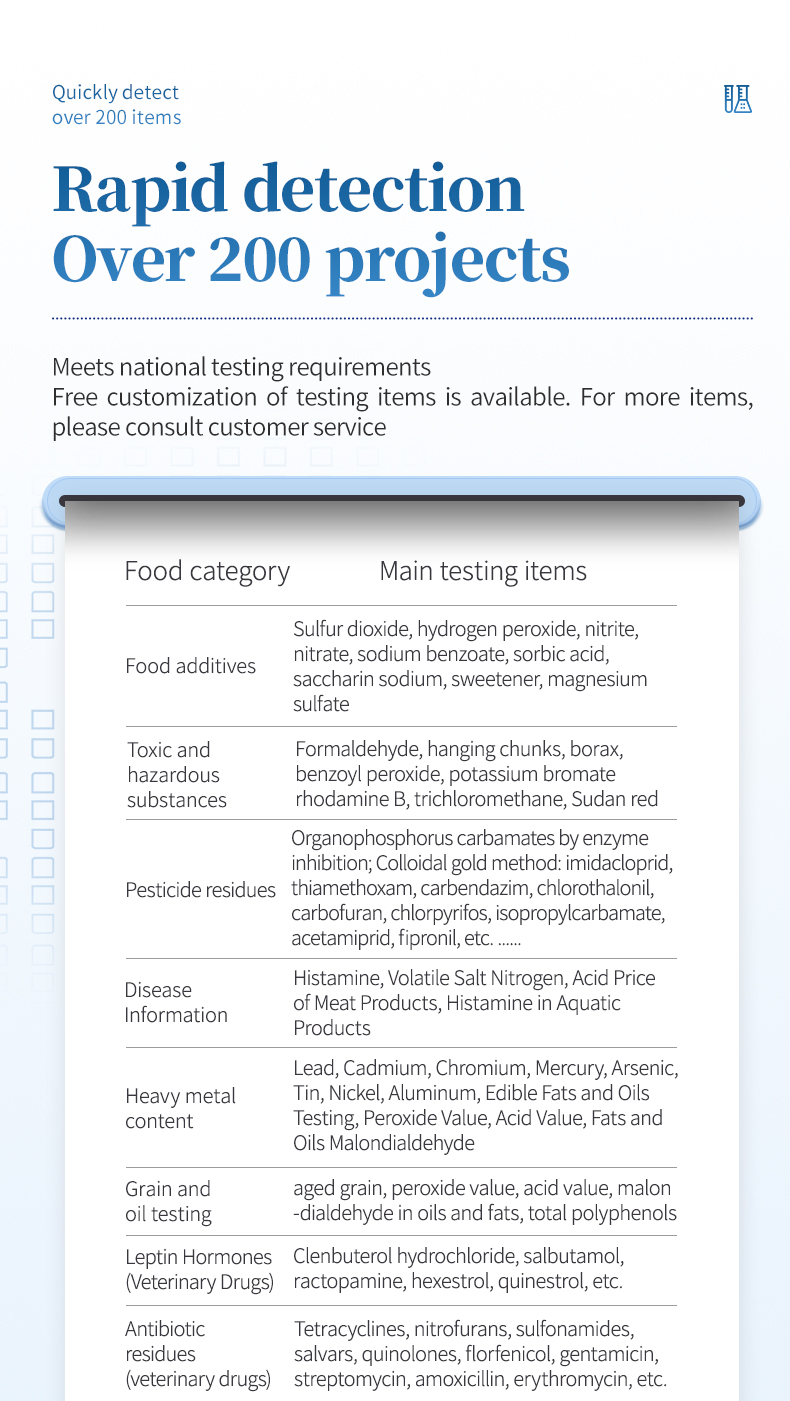
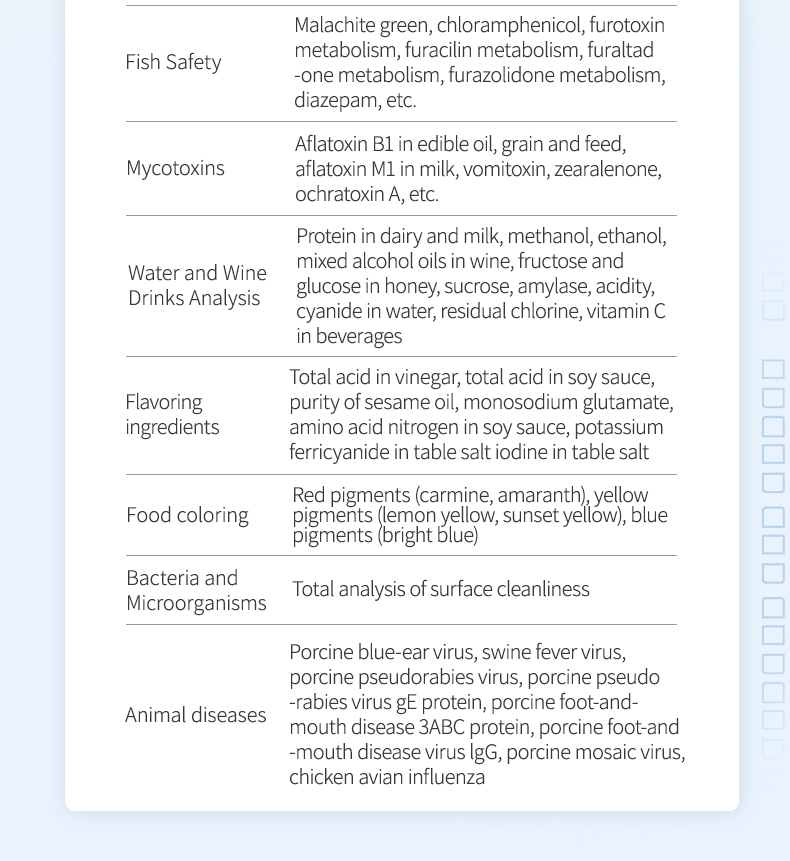
| Detectable Parameters | Formaldehyde, nitrite, sulfur dioxide, sodium formaldehyde sulfoxylate, milk protein, borax/boric acid, hydrogen peroxide, nitrate, lead (plus 200+ additional parameters available through the extended test library) |
| Processor | ARM Cortex-A7 RK3288 quad-core, 1.88 GHz |
| Display | 7-inch color touchscreen |
| Data Storage Capacity | 200,000 records |
| Power Supply | AC 100–240V 50/60Hz; DC with built-in 6 Ah rechargeable lithium battery |
| Battery Runtime | Approximately 6 hours continuous field operation |
| Data Export | USB 2.0 (supports external flash drive) |
| Printer | Built-in 58 mm thermal printer |
| Dimensions (L × W × H) | 43 × 35 × 19 cm |
| Net Weight | 5.2 kg |
| Packaged Weight | 8.6 kg |
| Operating Temperature | 5 ℃ to 40 ℃ |
| Operating Humidity | 15% to 80% RH (non-condensing) |
| Language Support | Chinese, English |
Detection Limits and Ranges — Core Small Business Parameters
| Test Item | Detection Limit | Detection Range |
|---|---|---|
| Formaldehyde | 0.5 mg/kg | 2 — 26 mg/kg |
| Nitrite | 0.5 mg/kg | 0.5 — 20 mg/kg |
| Sulfur Dioxide | 0.018 g/kg | 0.03 — 1 g/kg |
| Sodium Formaldehyde Sulfoxylate | 0.2 mg/kg | 0.05 — 10 mg/kg |
| Milk Protein | 0.01 g/100mL | 0.57 — 10 g/100mL |
| Boric Acid / Borax | 0.1 mg/kg | 0.43 — 5.96 mg/kg |
| Hydrogen Peroxide | 0.05 mg/kg | 7 — 130 mg/kg |
| Nitrate | 0.5 mg/kg | 84.77 — 1,612.03 mg/kg |
| Heavy Metal — Lead | 0.05 mg/kg | 0.22 — 3.08 mg/kg |
The HM-G1800 is specifically designed for operators without formal laboratory training. The 7-inch touchscreen presents a guided workflow that leads the user through each step sequentially: select food type (vegetables, meat, flour products, seafood, dairy, etc.), select test parameter, and then follow the on-screen sample preparation guide. This guide displays step-by-step instructions with illustrations—for example, for formaldehyde testing in vegetables: "Step 1: Weigh 5 g of sample and cut into small pieces. Step 2: Add 10 mL of extraction solution from Bottle A. Step 3: Shake for 2 minutes, then let stand for 5 minutes. Step 4: Transfer 2 mL of the clear upper liquid to a cuvette. Step 5: Add 2 drops of reagent from Bottle B. Step 6: Insert cuvette into any available channel and press Start." The operator does not need to understand photometric principles, calibration curves, or concentration calculations—the instrument handles all of these automatically and displays the result as a simple numerical value with a green checkmark (pass) or red cross (fail) indicator against the regulatory threshold. Most operators become proficient after a single 30-minute familiarization session. The instrument also includes built-in error detection: if a cuvette is inserted incorrectly, if the reagent has expired (based on lot tracking), or if the measurement falls outside the calibrated range, the instrument displays a clear troubleshooting message rather than an ambiguous error code.
The HM-G1800's nine core parameters—formaldehyde, nitrite, sulfur dioxide, sodium formaldehyde sulfoxylate, milk protein, borax, hydrogen peroxide, nitrate, and lead—were selected based on analysis of regulatory enforcement data from China's market supervision authorities, which consistently identify these as the most frequently detected adulterants in small and medium food business operations. Formaldehyde is illegally used to preserve fresh vegetables, seafood, and noodles, giving them an artificially fresh appearance while posing carcinogenic risk. Nitrite is used in processed meats for color fixation but excessive levels cause methemoglobinemia, particularly dangerous for children. Sulfur dioxide is used as a bleaching agent in dried fruits, vegetables, and starch noodles; overuse leaves residues that trigger asthmatic reactions in sensitive individuals. Sodium formaldehyde sulfoxylate (diaobai kuai) is illegally added to flour, rice noodles, and tofu as a whitening and texturizing agent. Borax is added to noodles and meatballs for a bouncy texture but is a banned substance due to cumulative toxicity. Hydrogen peroxide is used as an illegal bleaching and preservative agent in various food products. Nitrate accumulation in leafy vegetables indicates over-fertilization or improper storage. Lead contamination in grains and produce may originate from soil or processing equipment. Milk protein adulteration (e.g., melamine or urea addition to simulate higher protein content) has been a documented food safety issue. These nine parameters cover the adulteration risks most likely to be encountered in the supply chains serving community markets, small food businesses, and institutional cafeterias—and represent the testing that delivers the highest food safety return on investment for operators with limited resources.
The HM-G1800's compact dimensions (43 × 35 × 19 cm) and 5.2 kg weight allow it to be set up on any stable, level surface with access to a standard electrical outlet—a market stall counter, a kitchen preparation table, a small desk in a storage room, or a dedicated shelf in a manager's office. The minimum recommended setup area is approximately 60 × 60 cm, which accommodates the instrument itself plus workspace for sample preparation. Setup requirements include: a clean, dry, vibration-free surface; access to AC power (the instrument operates on 100–240V, compatible with standard outlets worldwide); a small supply of clean water for rinsing sample preparation tools; a dedicated waste container for used cuvettes and reagent residues (standard laboratory waste disposal practices apply); and storage space for the reagent kit (approximately the size of a shoebox) at room temperature away from direct sunlight. No plumbing, fume hood, compressed gas, or temperature-controlled environment is required—the instrument operates reliably at ambient temperatures of 5–40 ℃ and humidity of 15–80% RH, conditions found in most non-air-conditioned market and kitchen settings. If the location lacks reliable AC power (e.g., an outdoor farmers' market stall), the built-in 6 Ah battery provides approximately 6 hours of cordless operation on a full charge. The instrument can be left in place as a permanent fixture or packed into its carrying case at the end of each day for secure storage—the optical system retains calibration through routine transport.
Cost per test on the HM-G1800 consists of two components: consumable reagent kit cost and instrument depreciation. The reagent kits for the nine core parameters are sold as individual parameter-specific kits, each containing pre-measured extraction buffer, color-developing reagent, and cuvettes sufficient for a defined number of tests (typically 50 or 100 tests per kit, depending on the parameter). At current pricing, the consumable cost per individual parameter test ranges from approximately $0.50 to $2.00, depending on the parameter and kit size purchased—formaldehyde and nitrite kits are generally at the lower end, while heavy metal (lead) kits are at the higher end due to more complex reagent chemistry. For a small food business testing 3–5 parameters on 2–3 samples per day, the daily consumable cost would be approximately $5–$15. For a school cafeteria testing one sample per day for formaldehyde (vegetables), nitrite (processed meat), and sulfur dioxide (dried ingredients), the daily consumable cost would be approximately $3–$6. Amortizing the instrument's $1,200 purchase price over a three-year useful life with 250 operating days per year yields an instrument cost of approximately $1.60 per day. Total cost per test day for a typical small business—including both consumables and instrument depreciation—is therefore in the range of $5–$17, substantially less than the cost of sending a single sample to an external laboratory for the same multi-parameter analysis (typically $30–$80 per sample in China). The economic case is strongest for operators who would otherwise test infrequently or not at all due to external laboratory cost barriers.
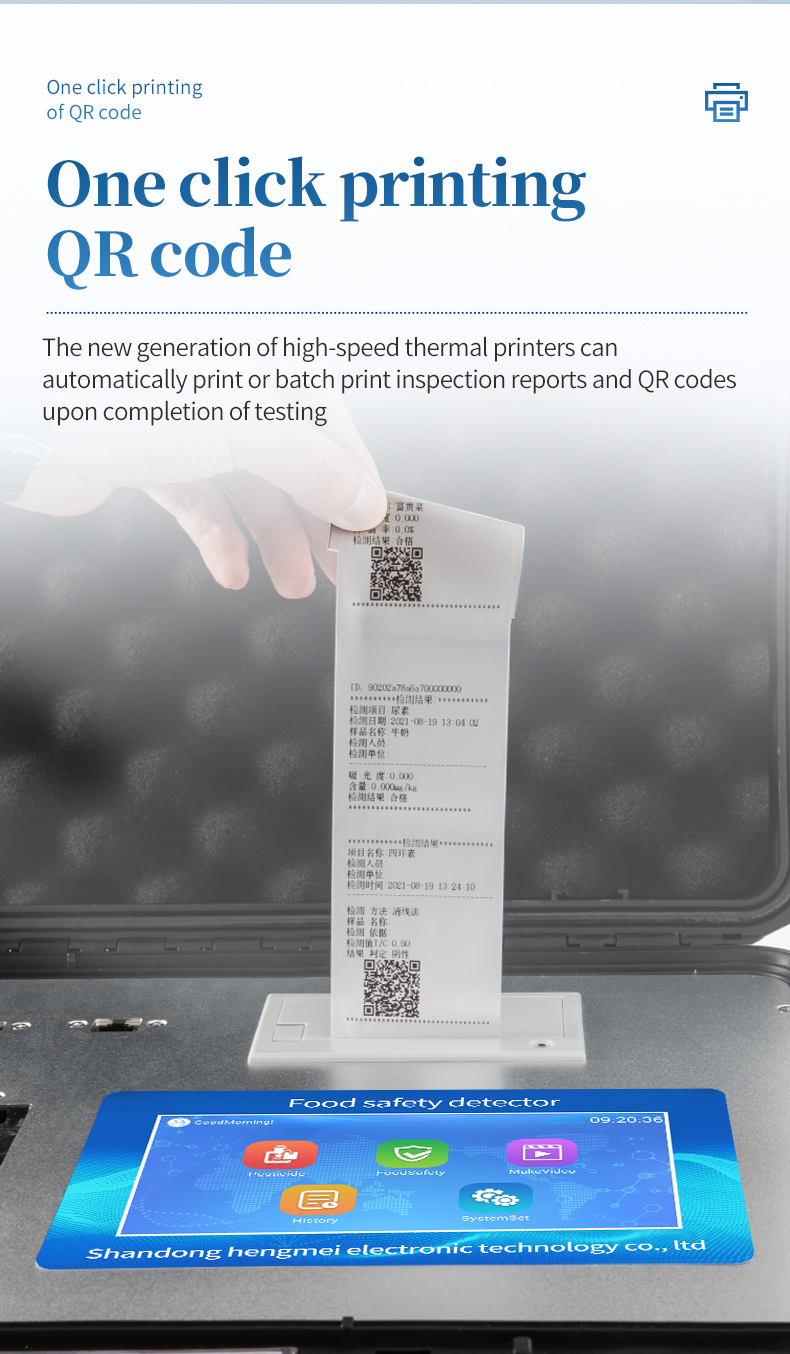
The HM-G1800 is calibrated to detect the following common adulteration scenarios encountered by small food businesses: formaldehyde-preserved vegetables (bok choy, bean sprouts, mushrooms that remain unnaturally crisp and bright after days on display), formaldehyde-treated seafood (shrimp, squid, fish that appear firmer and fresher than their actual age), sulfur dioxide-bleached dried goods (bright white dried lily flowers, excessively pale dried mushrooms, unnaturally white starch noodles), sodium formaldehyde sulfoxylate in flour products (steamed buns, rice noodles, tofu with an unnaturally white interior), borax in noodles and meat products (excessively elastic or bouncy texture that does not soften with cooking), nitrite-excessive processed meats (bright pink cured meats with nitrite levels above the 30 mg/kg regulatory limit), hydrogen peroxide-treated food products (bleached chicken feet, tripe, or seafood with chemical odor), and lead-contaminated grains or produce. Upon obtaining a positive (fail) result, the operator should follow a defined escalation protocol: (1) immediately segregate the affected product batch to prevent further sale or use; (2) repeat the test on a fresh sample from the same batch to confirm the finding is not a sampling or procedural error; (3) if confirmed, document the result (the instrument automatically records the test with timestamp and sample ID, and can print a report via the built-in thermal printer); (4) contact the supplier with the documented result to arrange product return or disposal; (5) report the finding to the local market supervision authority if the adulterant is a prohibited substance (formaldehyde, sodium formaldehyde sulfoxylate, borax) or if the level of a regulated substance significantly exceeds the legal limit; (6) increase testing frequency on subsequent shipments from that supplier. For borderline results near the regulatory threshold, the sample should be sent to an accredited laboratory for confirmatory analysis before taking business or regulatory action.
The HM-G1800 is designed for low-to-moderate usage patterns typical of small food businesses, where the instrument may sit idle for several days between testing sessions and does not require the continuous-operation maintenance protocols of instruments in high-throughput laboratories. The recommended maintenance schedule for infrequent use includes: (1) before each testing session, run the automatic blank calibration (executed by pressing a single button on the startup screen, takes approximately 2 minutes)—this compensates for any minor optical drift during idle periods; (2) at the beginning of each testing session, run a standard reference verification using the provided check standard for the parameter being tested—this confirms the instrument's calibration remains valid and takes approximately 5 minutes; (3) clean the exterior surfaces and touchscreen with a soft, slightly damp cloth weekly to remove dust and food residue that may accumulate in kitchen or market environments; (4) check reagent kit expiration dates monthly and replace any expired kits—most kits have a 12-month shelf life when stored at room temperature away from direct sunlight; (5) inspect the cuvette wells for debris or residue monthly and clean if necessary using the provided cleaning swabs and distilled water; (6) run the full wavelength accuracy verification using the provided holmium oxide filter every 6 months, or whenever the instrument has been transported between locations; (7) replace the thermal printer paper roll when the red warning stripe appears on the paper edge. If the instrument will not be used for an extended period (more than one month), store it in its carrying case in a cool, dry location, and charge the battery to approximately 50% before storage to optimize lithium battery longevity. The instrument does not require annual professional servicing under typical low-usage conditions—the solid-state optical components and fanless processor cooling design minimize wear-related maintenance needs.
While the HM-G1800 provides reliable screening capability for day-to-day food safety verification, there are specific situations where escalation to an accredited professional laboratory is necessary or advisable: (1) confirmatory analysis following a positive screening result that the operator intends to use as the basis for legal or contractual action against a supplier—screening results establish reasonable suspicion but formal laboratory reports (typically using HPLC, GC-MS, LC-MS/MS, or ICP-MS methods) carry greater evidentiary weight in disputes; (2) testing for parameters outside the HM-G1800's core nine-parameter set, such as specific pesticide active ingredients (the instrument screens organophosphates and carbamates by enzyme inhibition rate but does not identify individual compounds), specific mycotoxins requiring immunoaffinity clean-up, or microbiological parameters (the HM-G1800 is a chemical analyzer and cannot test for bacterial contamination); (3) export certification requirements that mandate testing by a laboratory accredited to ISO/IEC 17025 and recognized by the importing country's competent authority; (4) participation in formal proficiency testing programs where the organizing body requires results from specified reference methods; (5) initial baseline testing when establishing a relationship with a new supplier—a comprehensive professional laboratory analysis of the first shipment establishes a benchmark profile that subsequent routine HM-G1800 screening can monitor for deviations; (6) any situation where the operator needs to demonstrate due diligence to a third party (insurer, investor, franchisor) who requires independent verification rather than self-testing results. The HM-G1800 and professional laboratory testing are complementary: the instrument enables affordable, frequent, on-site screening that catches problems early in day-to-day operations, while professional laboratory testing provides the definitive analytical depth and legal evidentiary weight needed for high-stakes decisions and formal compliance demonstration.
Article address:https://www.hmfoodtesting.com/spaq2/community-market-food-screening-device.html