

 Current
location:
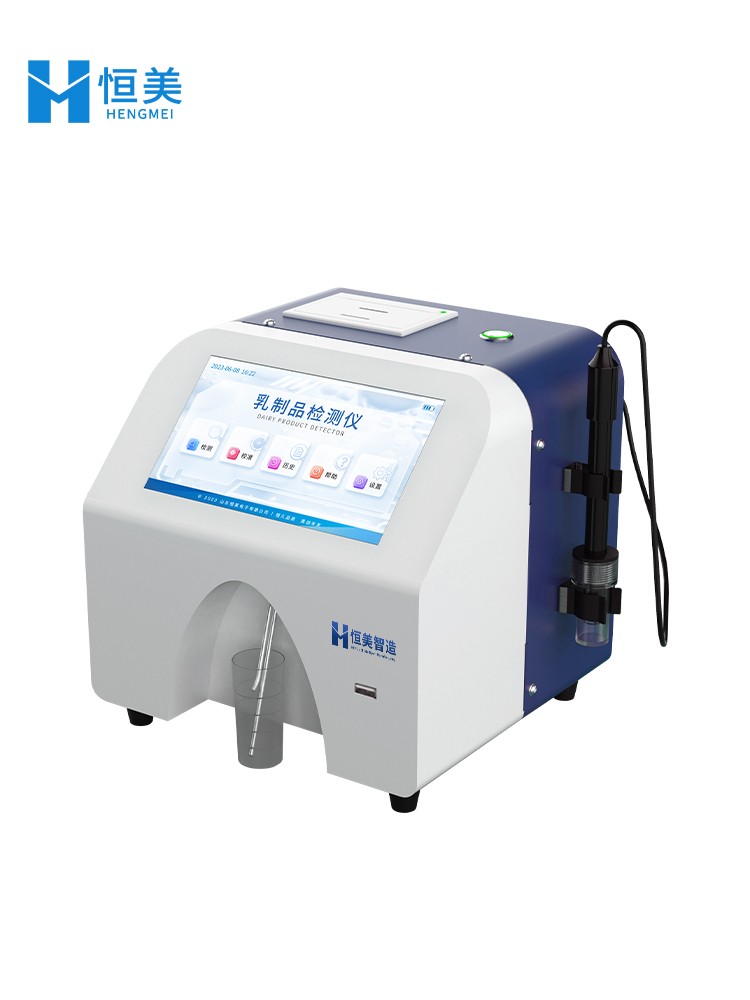
Consistent sampling and clean fluid paths support repeatable milk analyzer results. HM-RF1 lists an ultrasonic sensor, a peristaltic pump and an automatic cleaning function. Keep the sample identity, milk type and cleaning sequence connected to each analytical batch.
HM-RF1 is part of the HENG MEI Intelligent Manufacturing range supplied by Shandong Hengmei Electronic Technology Co., Ltd.
How the measurement works
HM-RF1 uses ultrasonic sensing for multi-parameter analysis of liquid dairy samples. It measures composition-related quantities together with density and temperature. A suitable calibration and consistent sample handling connect the instrument response to the milk type being tested.
Set up the analytical workflow
- Identify the milk lot and prepare a representative sample following the operating procedure.
- Use the calibration and sample conditions appropriate to that milk type.
- Measure the sample and review any unexpected result against a suitable reference check.
- Run the prescribed cleaning sequence and retain the batch record.
Technical configuration
| Parameter | Specification |
|---|---|
| Model | HM-RF1 |
| Display | 7-inch touchscreen |
| protein range | 2–15% |
Relate a percentage to a stated reporting basis
A protein value of 3.2% on a mass basis corresponds to 3.2 g per 100 g of sample, or 32 g per kilogram. A comparison with a value expressed per liter also requires density and compatible reporting conditions. Keep the basis visible when using a composition result for intake evaluation or production calculations.
Use composition and cleaning records together
HM-RF1 supports a 2–15% protein range, automatic cleaning, thermal printing and Wi-Fi reporting. Keep the fluid path clean between the sample groups specified by the procedure. Investigate an unexpected composition pattern using a representative repeat sample and the appropriate reference check, while retaining the original intake record.
Manage a short milk intake window
During a busy intake period, sample identity and consistent handling are central to usable milk results. Associate each container with the delivery lot before measurement, and use the calibration suitable for that milk type. Organize reference checks and cleaning so the fluid path is ready for the next group of samples. Review abrupt changes in several composition values together with the sample condition and instrument check. Preserve the original reading and any repeat or reference result. A clear intake worksheet lets purchasing and quality teams connect the reported composition to the corresponding delivery and subsequent decision.
Match the calibration to the collection station
Define the milk types and expected composition before comparing configurations. Set the reference-check procedure for each routine product and agree on the reporting basis. Sample identification, intake-lot linkage and a practical cleaning sequence are important where many suppliers deliver milk in a short period.
Investigate unexpected results
| Observed issue | Checks and follow-up |
|---|---|
| Results drift across a batch | Review cleaning, sample condition and reference-check performance. |
| Two milk types give inconsistent comparisons | Check calibration selection and the reporting basis. |
| A sample produces an unexpected pattern | Review mixing, sample identity and the independent reference method. |
Keep a usable analytical record
Retain these details with the result so the preparation, measurement and subsequent review can be reconstructed.
- Supplier or intake lot
- Milk type and calibration
- Sample condition and result basis
- Reference checks and cleaning sequence
Technical questions from operators
Is a composition analyzer sufficient for every milk quality decision?
Define the required composition, microbiological and residue tests separately within the quality plan.
Why does cleaning belong in capacity planning?
The sample path needs the prescribed cleaning sequence between batches and at shutdown.
Use the required controls and the method settings for each sample group, and preserve the original observations alongside the accepted result and review action.
Address of this article:https://www.hmfoodtesting.com/article/milk-analyzer-sampling-and-cleaning-workflow.html
 Return to List