
 Current
location:
Current
location: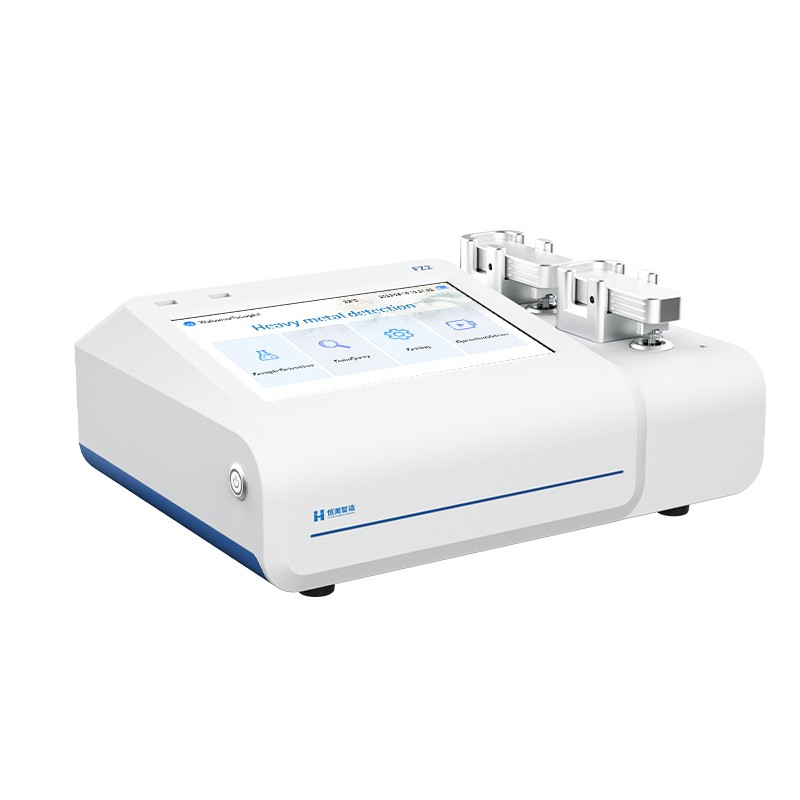
 +86
17853698681
+86
17853698681


Product Introduction
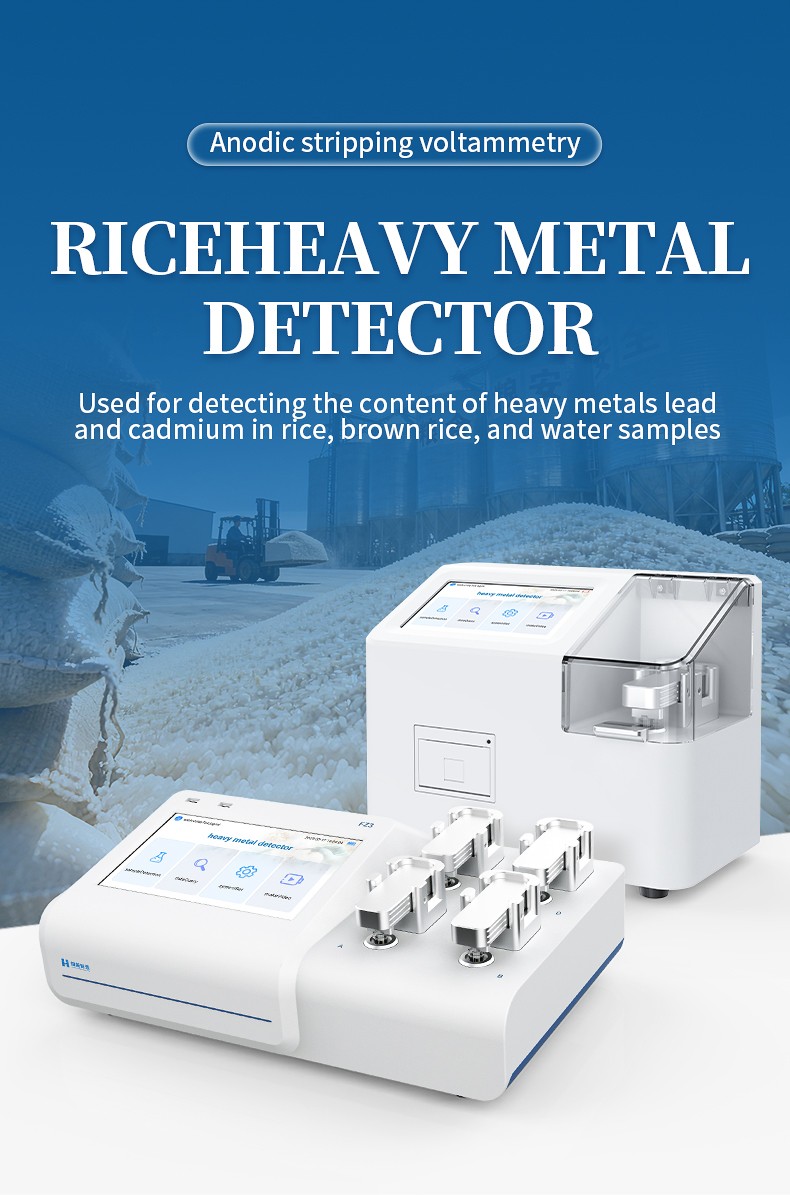
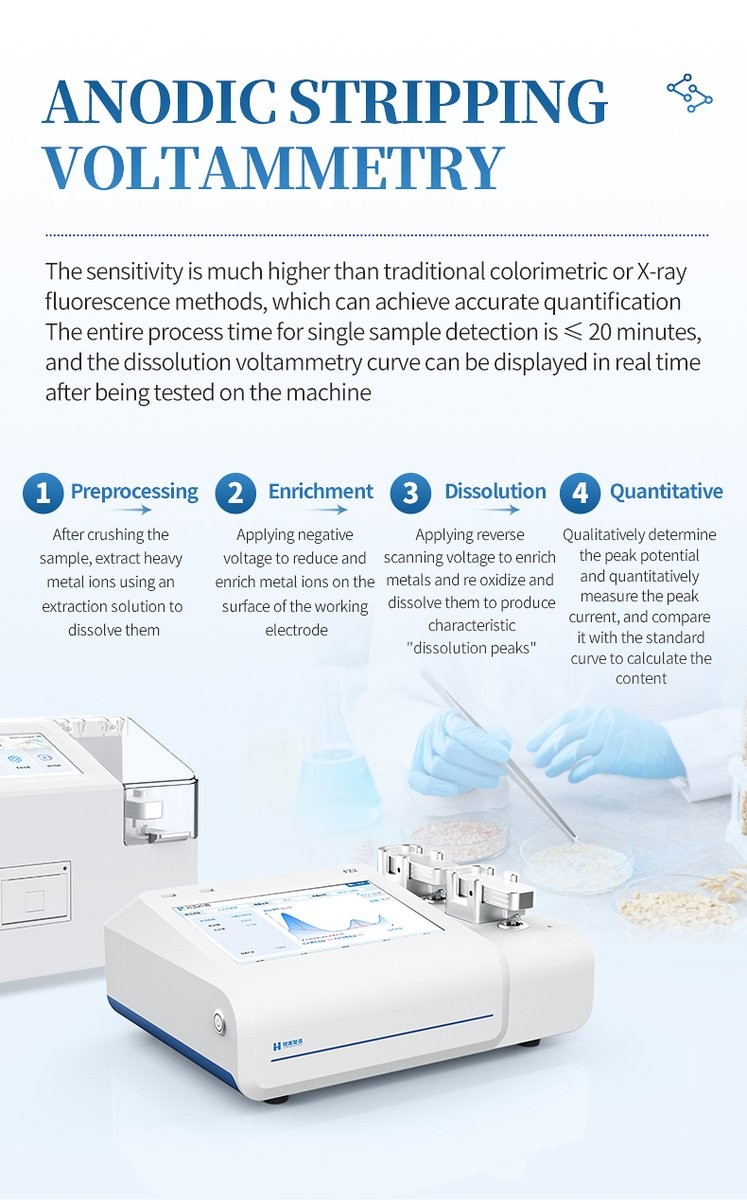
During regional harvest campaigns, commercial grain silos, purchasing elevators, and food manufacturing enterprises experience massive logistical pressure. Fleets of trucks transport hundreds of tons of paddy rice, wheat, and corn daily. Bottlenecks at quality inspection gates cause costly demurrage and trucker dissatisfaction, yet compromising on heavy metal testing risks accepting contaminated crops that violate GB 2762-2022 safety limits. The HM-FZ2-LS Dual-Channel Heavy Metal Analyzer is purposely engineered to resolve this throughput challenge. By housing two fully isolated, independently driven electrochemical measurement channels inside a ruggedized chassis, the instrument enables continuous asynchronous screening—allowing an operator to insert and test a second sample while the first channel is mid-cycle. Backed by sensitive anodic stripping voltammetry (ASV) and digestion-free sample prep, the HM-FZ2-LS doubles testing productivity without requiring hazardous laboratory chemicals or slow external lab turnaround.
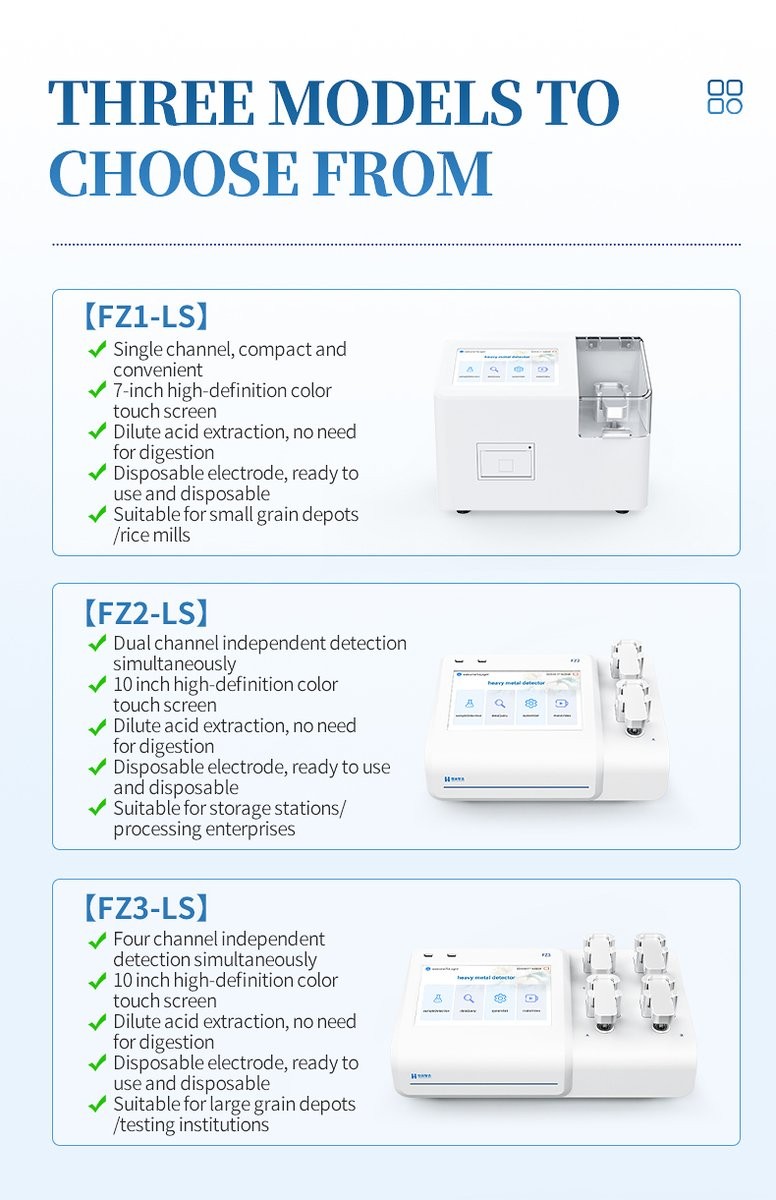
For central grain reserve headquarters requiring four concurrent testing channels, see our flagship four-channel grain heavy metal analyzer.
Applications
Grain Purchasing Elevators & Stations: High-throughput screening of incoming grain trucks during peak harvest procurement seasons.
Large Rice and Flour Milling Complexes: Concurrent testing of raw grain intakes and in-process product streams across continuous manufacturing shifts.
Port and Logistics Grain Hubs: Rapid loading/unloading cargo inspection for bulk grain vessels, railcars, and containerized cereal shipments.
Feed Manufacturing Operations: Pre-batching screening of cereal grains and milling by-products to comply with animal feed heavy metal regulations.
Municipal Food Inspection Stations: Multi-analyst testing in local quarantine laboratories handling elevated daily sample quotas.
Key Features & Advantages
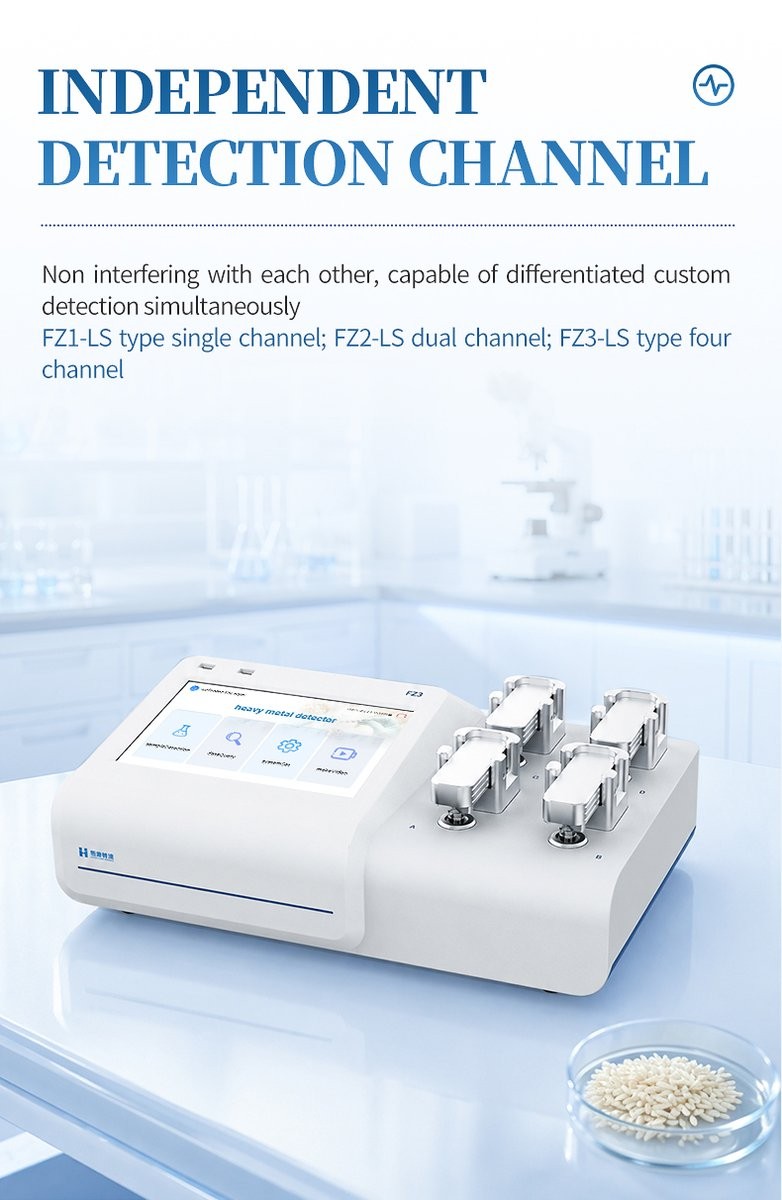
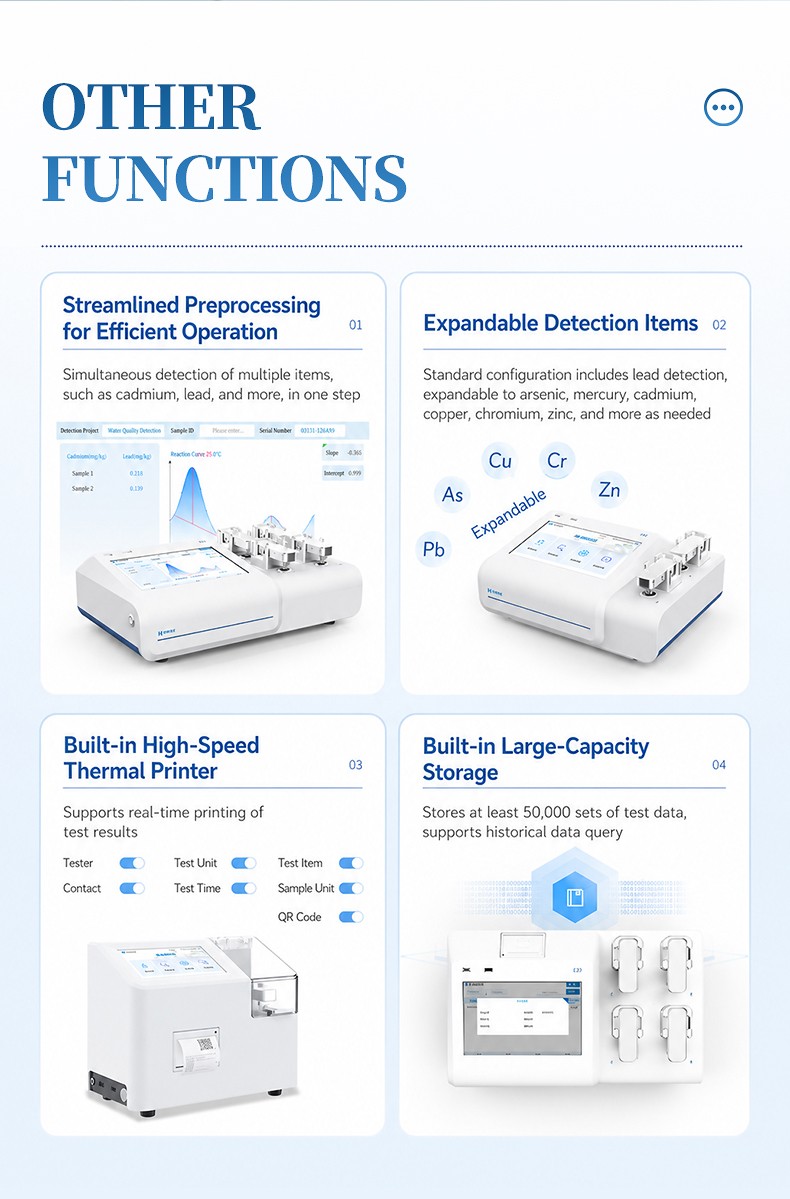
Dual Independent Measurement Engines: Two completely autonomous potentiostat channels run asynchronous testing routines without electronic crosstalk.
Continuous Pipeline Testing: Start Channel B at any point during Channel A’s cycle to maintain non-stop analytical productivity.
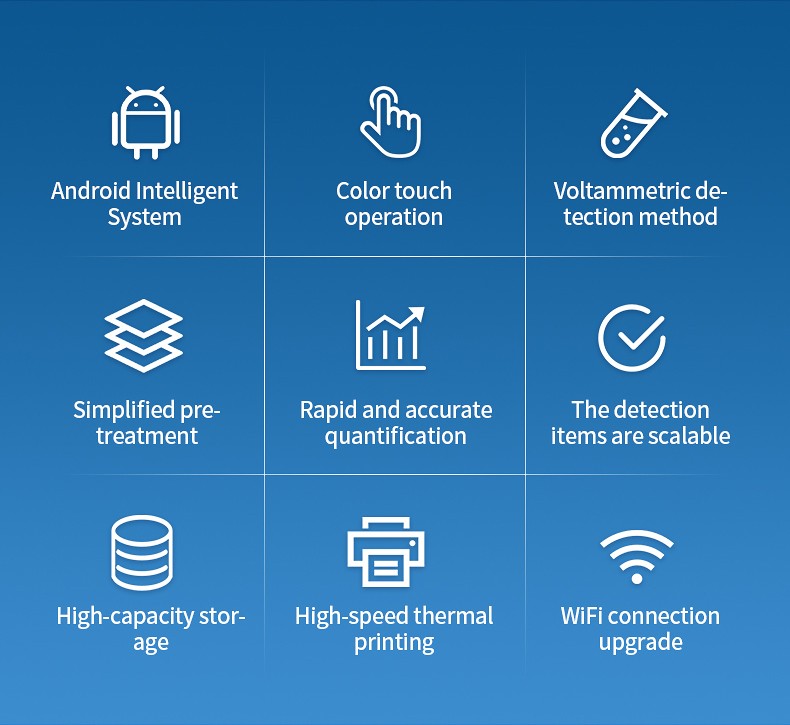
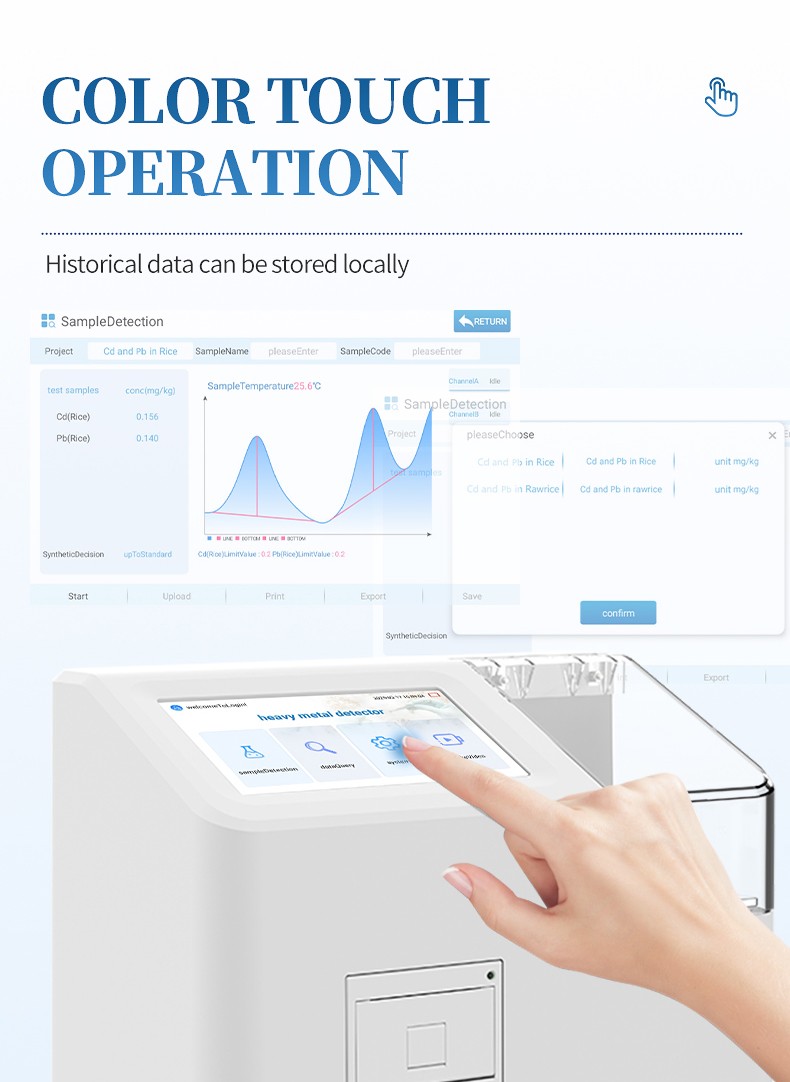
Expansive 10-Inch Android Console: Full-color high-definition screen shows dual channel states, dynamic curves, and calculated concentrations simultaneously.
Rapid Ambient Extraction: Eliminates boiling acid microwave digestion; target metals extract into mild buffer in under 10 minutes.
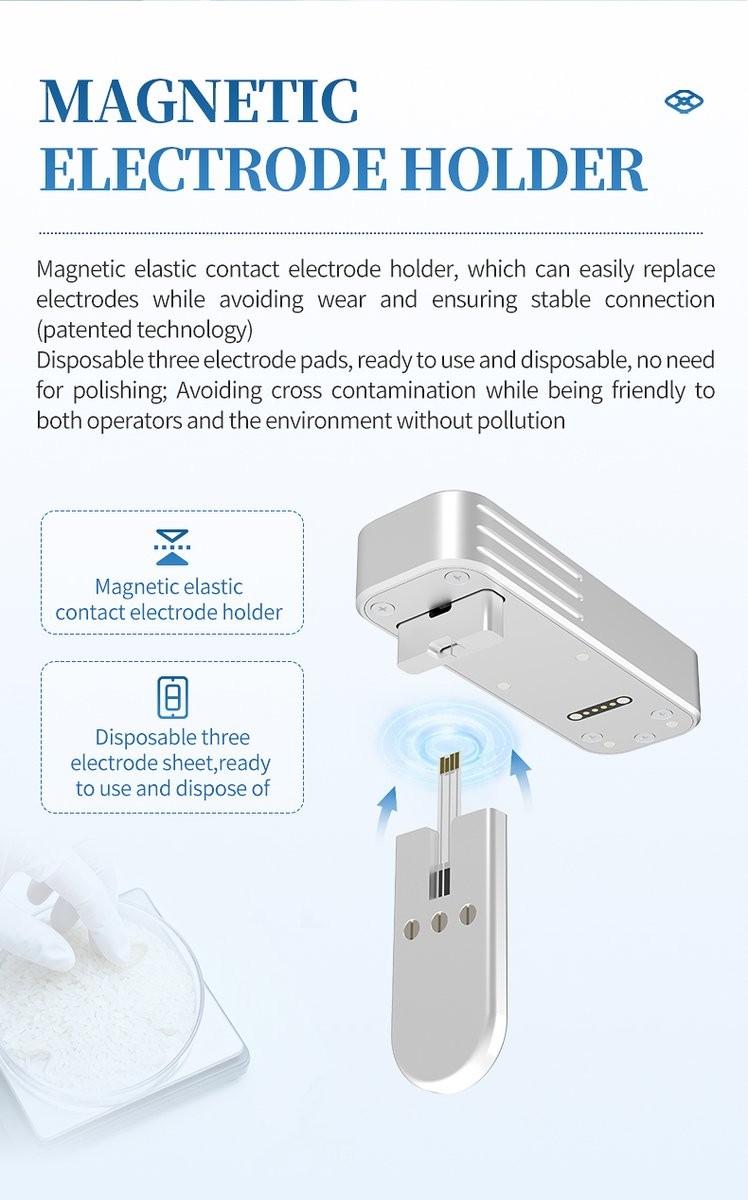
Dual Patented Magnetic Holders: Magnetic elastic contacts ensure zero mechanical abrasion, stable low resistance, and swift strip insertion.
Disposable Screen-Printed Sensors: Ready-to-use three-electrode strips eliminate manual polishing, toxic mercury, and cross-sample memory effects.
High-Capacity 20,000 mAh Battery: Heavy-duty built-in power bank supports continuous field operation throughout extended acquisition shifts.
Integrated Dual-Format Thermal Printer: Instant physical vouchers print individualized channel reports with timestamps and anti-counterfeit QR codes.
Massive Database Memory: Stores over 50,000 test logs locally with multi-parameter search, Excel export, and Wi-Fi cloud archiving.
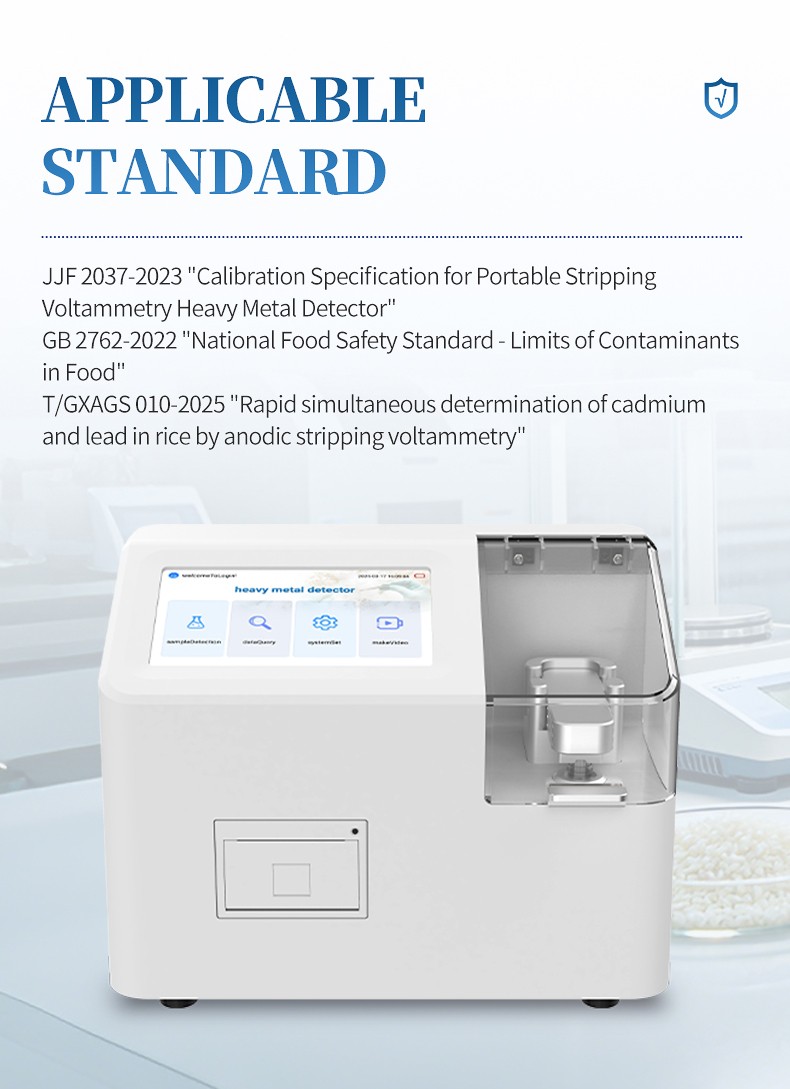
Strict Regulatory Compliance: Designed and calibrated in full accordance with JJF 2037-2023 and GB 2762-2022 standards.
Multi-Element Capability: Pre-calibrated for cadmium and lead in grain, expandable to arsenic, mercury, copper, and zinc.
OTA Wireless Cloud Upgrades: Embedded Wi-Fi provides over-the-air firmware maintenance, standard curve updates, and remote diagnostic support.
Technical Specifications
| Specification Category | Technical Parameter |
|---|---|
| Detection Principle | Anodic Stripping Voltammetry (ASV) with preconcentration and stripping phases |
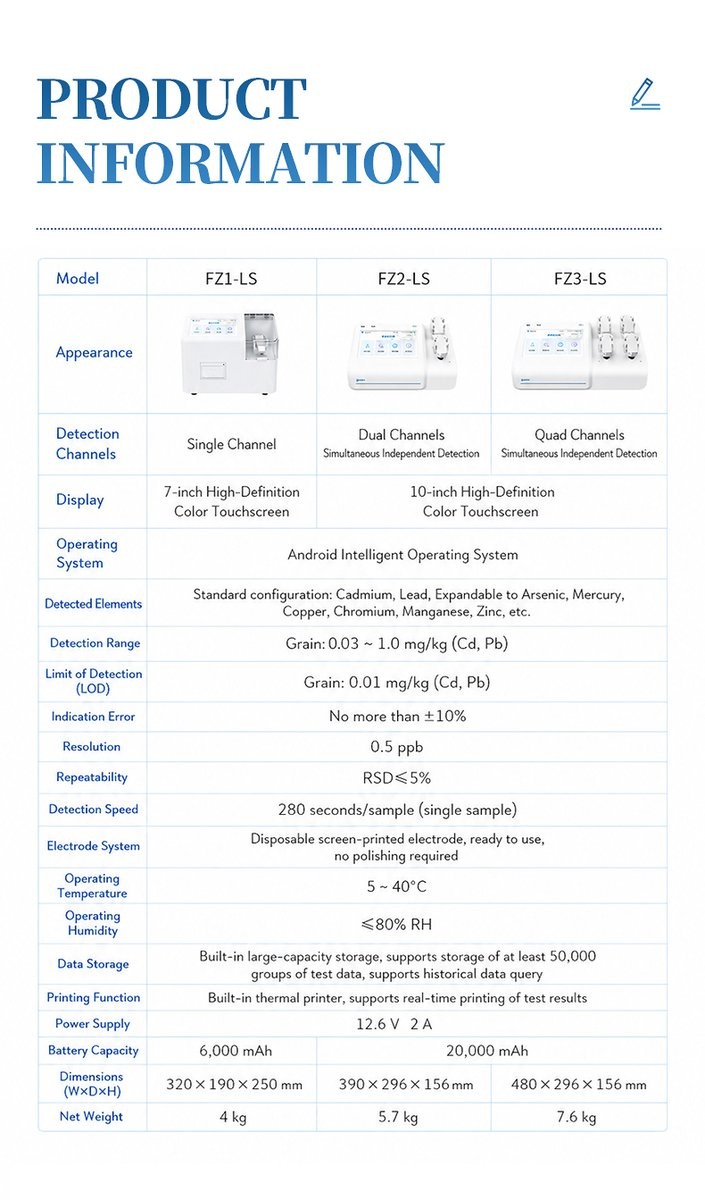
| Analytical Channels | Dual Channels (independent simultaneous or asynchronous operation) |
| Target Contaminants | Standard: Cadmium (Cd), Lead (Pb); Expandable: As, Hg, Cu, Cr, Zn |
| Calibration Range (Grain) | 0.03 ~ 1.0 mg/kg (Cd, Pb in cereal matrices) |
| Limit of Detection (LOD) | 0.01 mg/kg (Cd, Pb) |
| Instrument Error | Within +/-10% indication error |
| Electrochemical Resolution | 0.5 ppb |
| Measurement Precision | RSD <= 5% |
| Instrument Scan Duration | 280 seconds per sample testing run |
| Sample Extraction Time | <= 15 minutes (room-temperature dilute acid extraction, no acid digestion) |
| Electrode Architecture | Disposable screen-printed three-electrode strips (ready to use, no manual polishing) |
| Electrode Connector Mount | Patented magnetic elastic contact holder ensuring wear-free electrical coupling |
| Operating Console & System | 10-inch HD full-color touchscreen, Android system |
| Data Interfaces | Wi-Fi and USB, supporting LIMS synchronization and OTA cloud firmware updates |
| Data Storage Capacity | Non-volatile onboard storage >= 50,000 complete test logs |
| Report Generation | Built-in high-speed thermal printer with timestamps and verification QR codes |
| Power System & Battery | 20,000 mAh lithium battery pack, DC 12.6V 2A |
| Environmental Range | Operating temperature: 5 ~ 40 deg C, Humidity: <= 80% RH |
| Form Factor & Weight | 390 mm x 296 mm x 156 mm, 5.7 kg |
| Regulatory Standards | JJF 2037-2023, GB 2762-2022, T/GXAGS 010-2025 |
FAQ
Q: How does the dual-channel asynchronous operation work in practice?
A: Each of the two channels on the HM-FZ2-LS possesses its own independent potentiostat circuitry, electrode connector, and processor thread. An operator can load sample 1 into Channel A and start the run. While Channel A completes its 280-second deposition and stripping cycle, the operator can prepare and insert sample 2 into Channel B and trigger analysis immediately. The 10-inch touchscreen monitors both active channels side-by-side, displaying distinct curves and calculated results independently without timing clashes.
Q: Why is the HM-FZ2-LS preferred over benchtop atomic absorption for purchasing stations?
A: Benchtop atomic absorption spectrometers (AAS) require a climate-controlled laboratory, toxic acetylene and nitrous oxide gas cylinders, expensive exhaust ducting, and trained analytical chemists. Furthermore, wet acid digestion takes 2 to 4 hours per sample. The HM-FZ2-LS runs on safe ambient-temperature extraction reagents without digestion hoods, costs a fraction of an AAS, fits on any standard desk, and delivers quantitative results in under 20 minutes with minimal training.
Q: What battery runtime can operators expect from the 20,000 mAh pack?
A: The built-in 20,000 mAh industrial-grade lithium battery provides up to 8 to 10 hours of continuous dual-channel analytical operation, including screen illumination, processing, and intermittent thermal printing. This easily covers a complete 8-hour grain acquisition shift at remote silos or temporary open-air grain receiving stations where AC power outlets may be unavailable.
Q: Can Channel A and Channel B test different heavy metals simultaneously?
A: Yes. While both channels commonly run concurrent cadmium/lead screenings on different grain truckloads, the software permits customized element selections per channel. For instance, Channel A can be configured to screen cadmium in polished rice while Channel B performs a specialized lead protocol on wheat or corn, offering unprecedented analytical flexibility.
Q: How does the instrument prevent data tampering in commercial grain acquisitions?
A: The HM-FZ2-LS features an encrypted Android database architecture. Operators cannot modify historical numerical readings, curve baselines, or timestamps once an analysis is finalized. Each test record automatically binds operator credentials, batch identifier, raw voltammogram, and final concentrations. When printed or uploaded via Wi-Fi, the system generates a unique verification hash to ensure indisputable traceability.
Article address:https://www.hmfoodtesting.com/voltammetric-heavy-metal-analyzer/dual-channel-grain-safety-analyzer.html