 Current
location:
Current
location: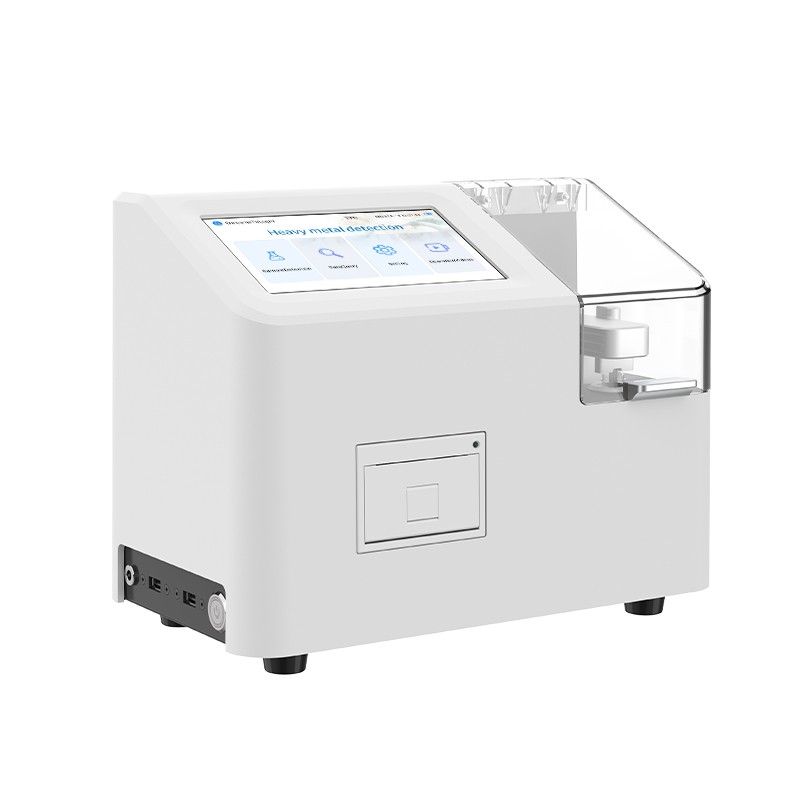
 +86
17853698681
+86
17853698681

Product Introduction
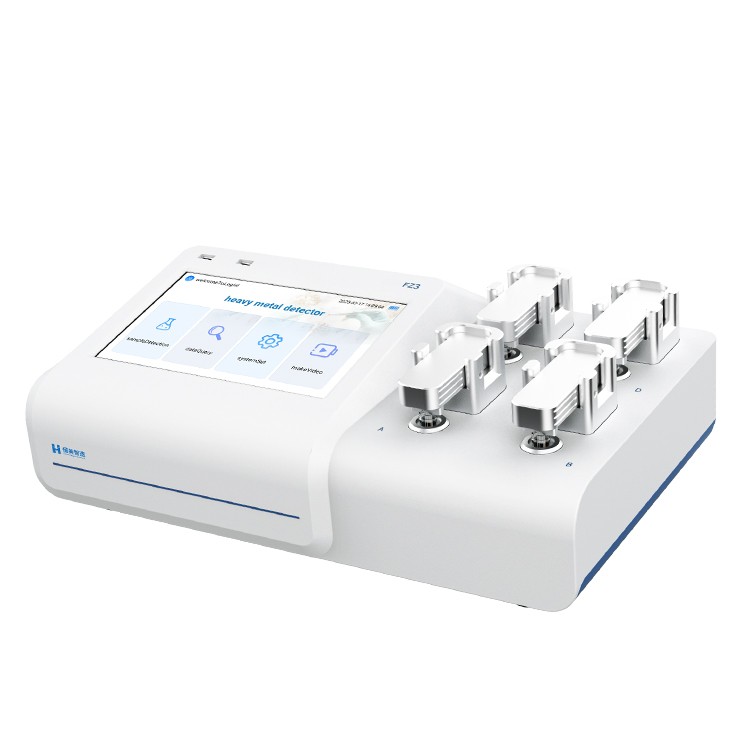
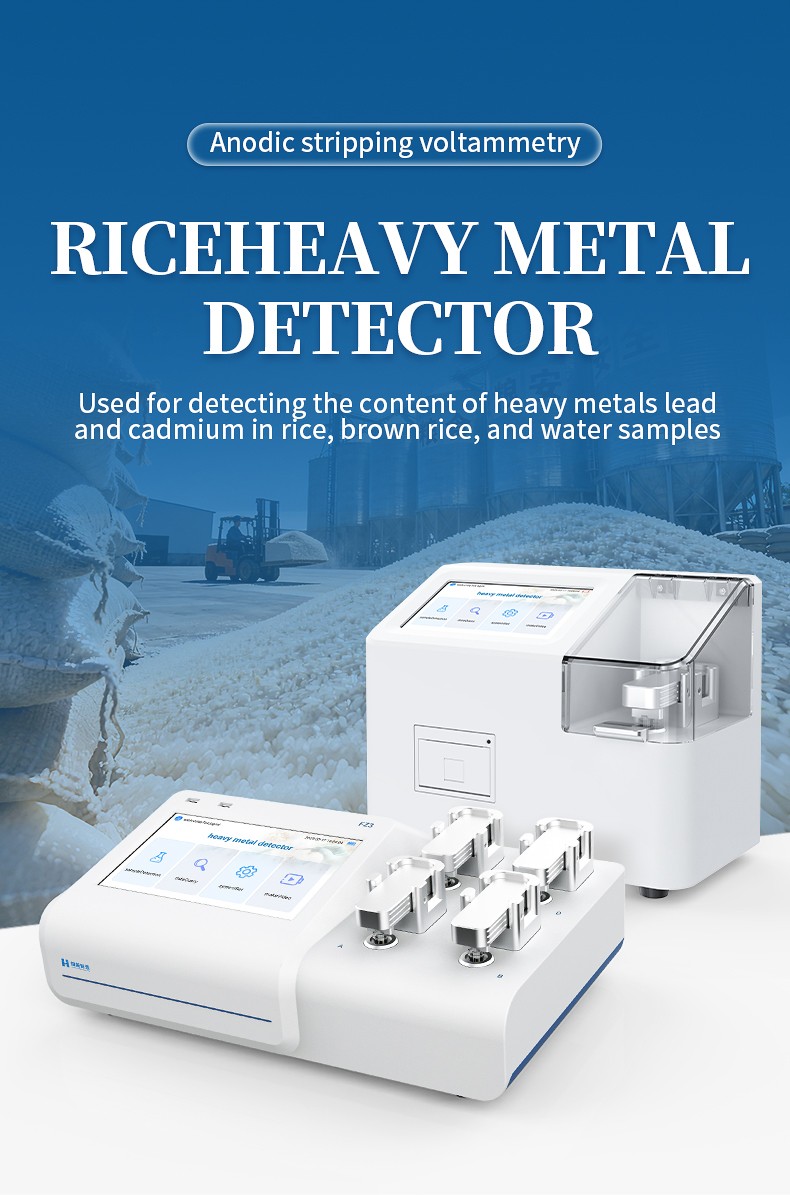
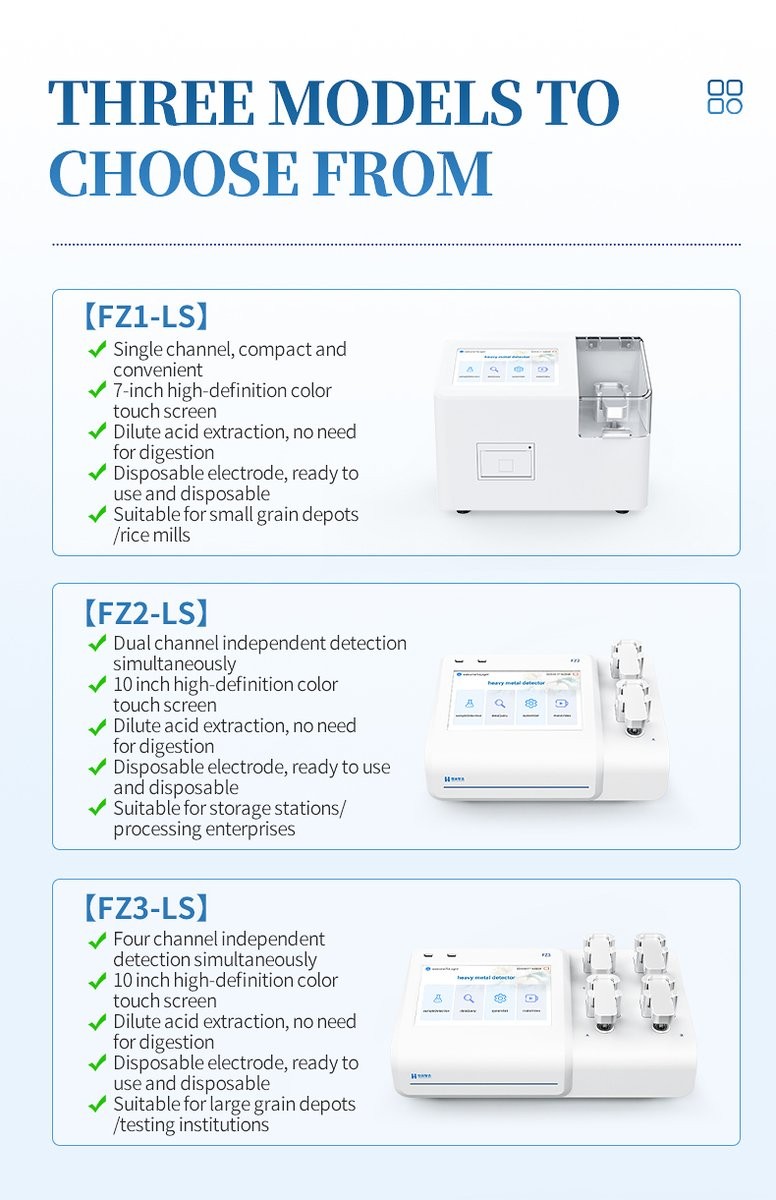
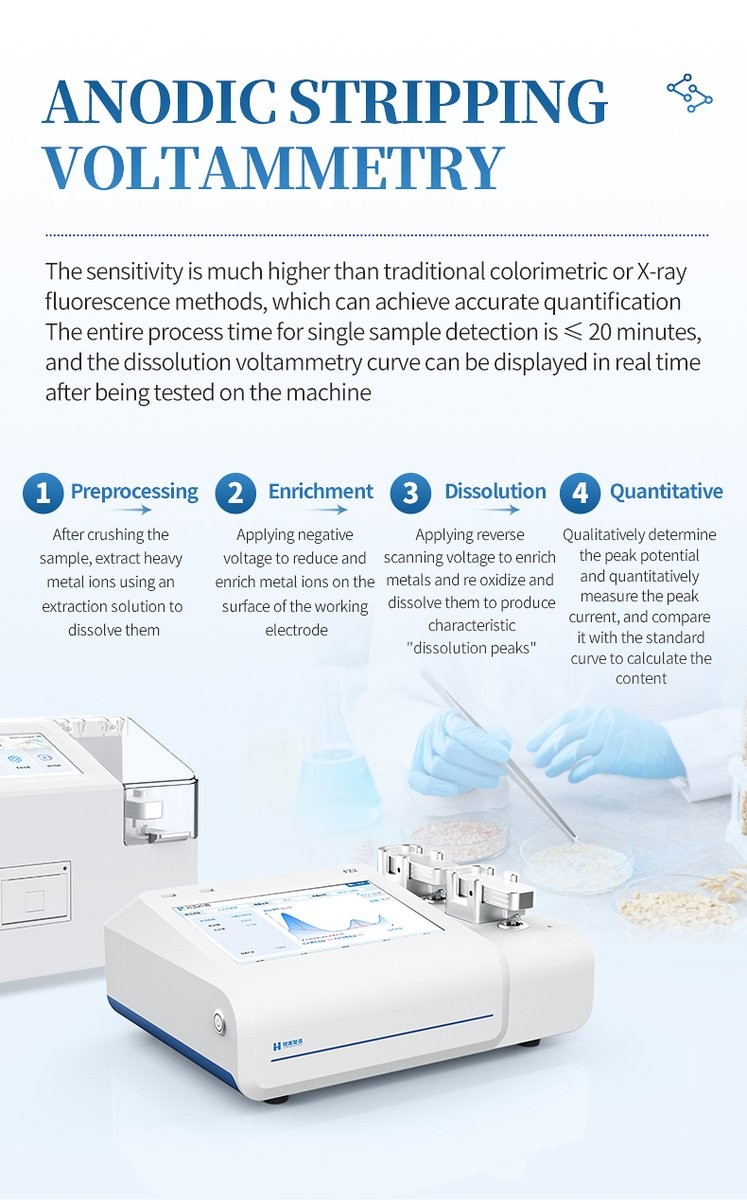
Commercial rice mills, flour processors, and agricultural grain depots face stringent regulatory mandates regarding toxic heavy metal contaminants—particularly cadmium (Cd) and lead (Pb)—under food safety standards such as GB 2762-2022. Traditional analytical methods like graphite furnace atomic absorption spectrometry (GFAAS) and inductively coupled plasma mass spectrometry (ICP-MS) require elaborate laboratory infrastructure, specialized chemists, hazardous concentrated nitric/perchloric acid digestion, and turnaround times measured in days. When grain trucks arrive at acquisition gates, waiting days for laboratory results is commercially impractical. The HM-FZ1-LS Portable Grain Heavy Metal Detector overcomes this critical operational barrier. Utilizing anodic stripping voltammetry (ASV) and disposable screen-printed sensors, it enables operators with basic training to perform accurate, quantitative screening directly in receiving yards or plant laboratories in under 20 minutes. Its lightweight 4.0 kg design and built-in rechargeable battery make reliable heavy metal compliance testing accessible and cost-effective for everyday mill operations.
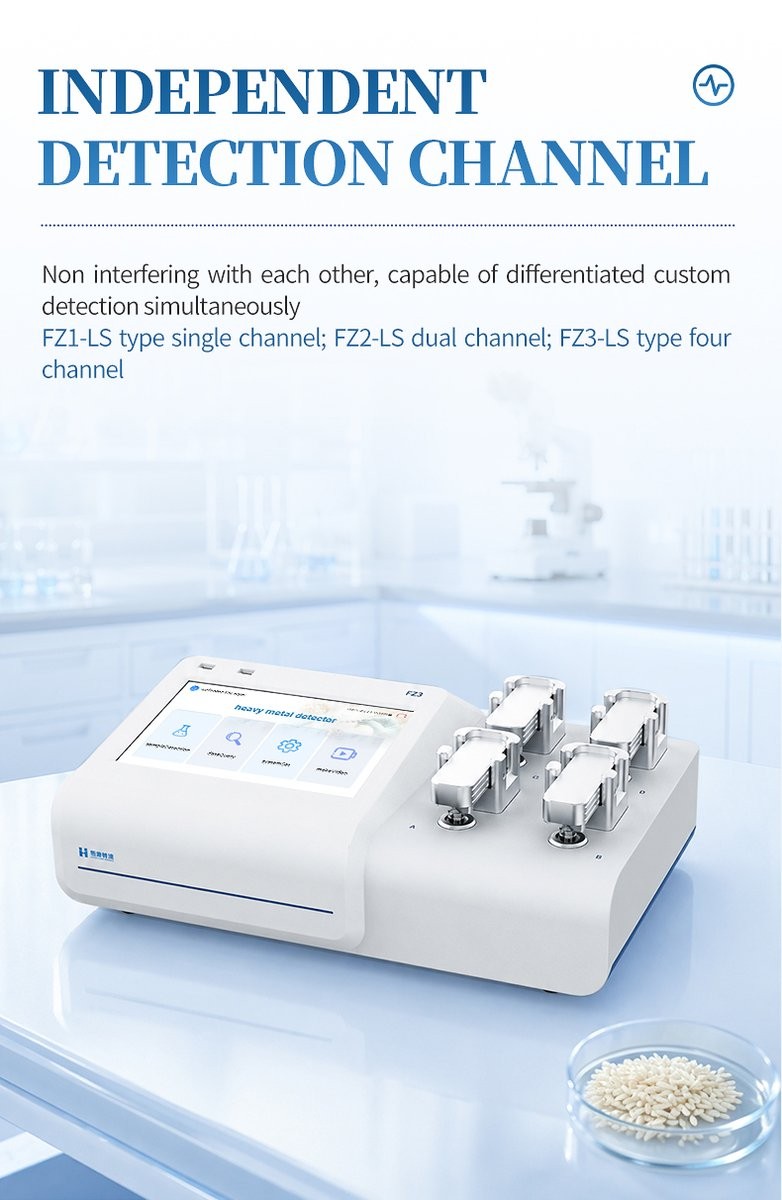
When inbound shipments surge during peak harvest, upgrade to our high-throughput four-channel grain heavy metal detector to test multiple batches simultaneously.
Applications
Commercial Rice Processing Plants: Rapid inspection of raw paddy before intake, unpolished brown rice during hulling, and finished white rice before bagging.
Flour Mills and Cereal Processors: Quantitative verification of incoming wheat, maize, and processed grain fractions for compliance with contaminant limits.
Grain Purchasing Points: Immediate gate-side screening of truckload consignments to prevent adulterated or contaminated crops from entering storage.
Agricultural Cooperatives & Farms: Pre-harvest field grain testing and soil-crop heavy metal transference assessments to guide safe grain marketing.
Food Safety Regulatory Teams: Mobile on-site rapid screening of agricultural produce in farmer markets, wholesale distribution centers, and supermarkets.
Key Features & Advantages
Digestion-Free Chemical Extraction: Replaces dangerous high-temperature acid baths with room-temperature dilute extraction in minutes.
20-Minute End-to-End Speed: From grain crushing to quantitative receipt printing takes under 20 minutes, preventing grain transport bottlenecks.
Sub-Ppb Detection Sensitivity: 0.5 ppb instrument resolution easily captures trace cadmium and lead well below national maximum residue limits.
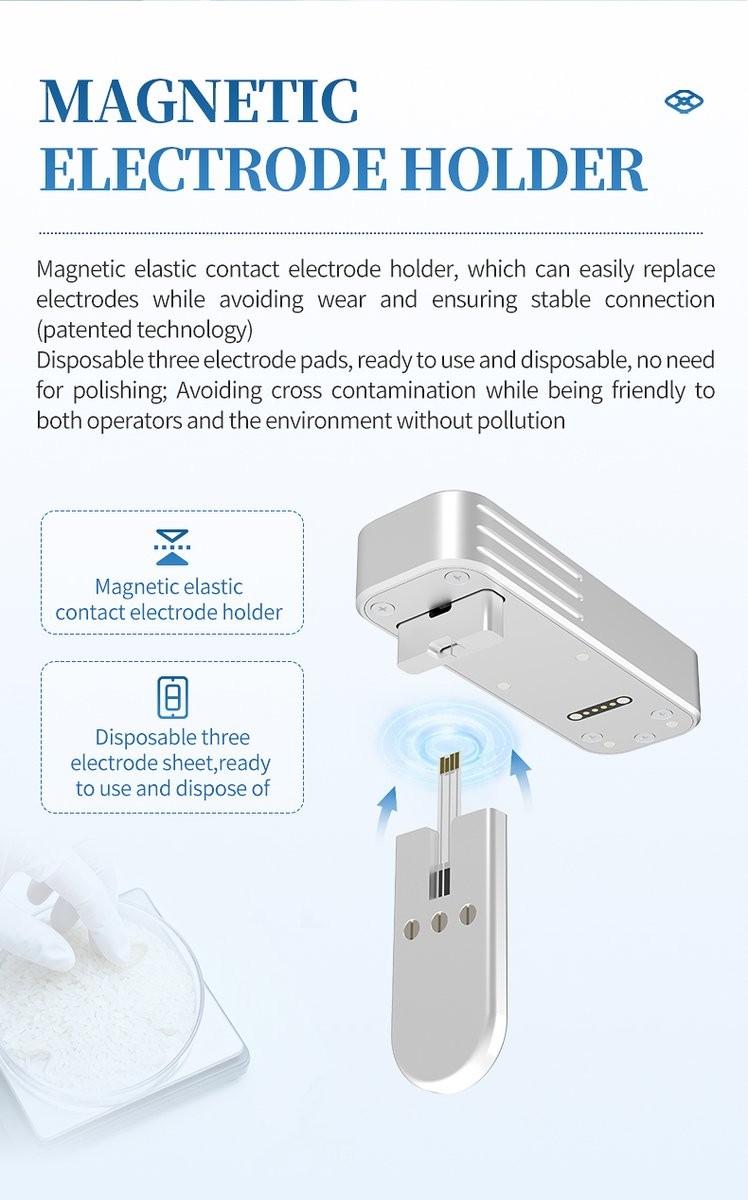
Disposable Screen-Printed Strips: Zero cross-contamination with no hazardous mercury drops or manual electrode polishing required.
Patented Magnetic Locking Mount: Magnetic elastic contacts eliminate connector pin distortion and deliver stable microampere response curves.
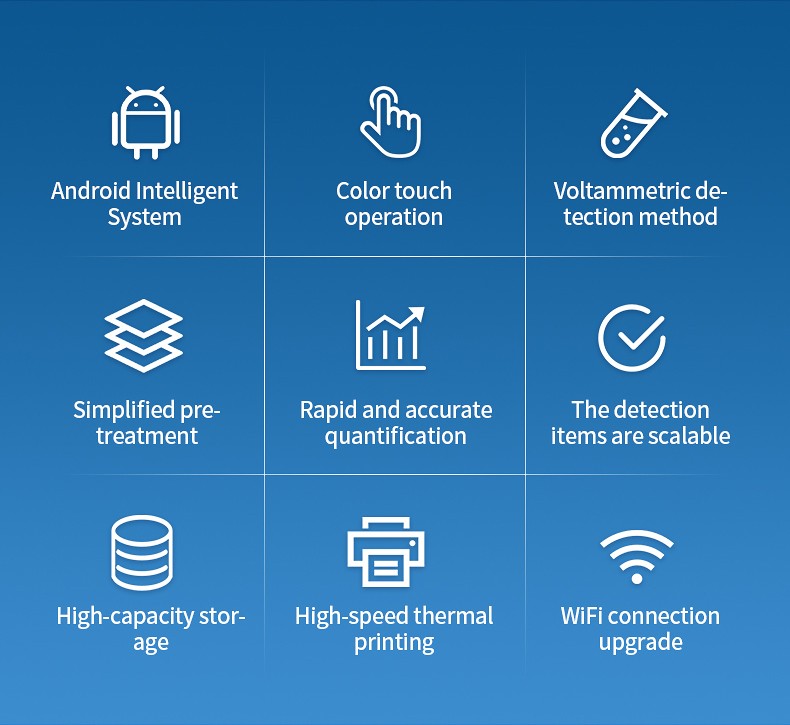
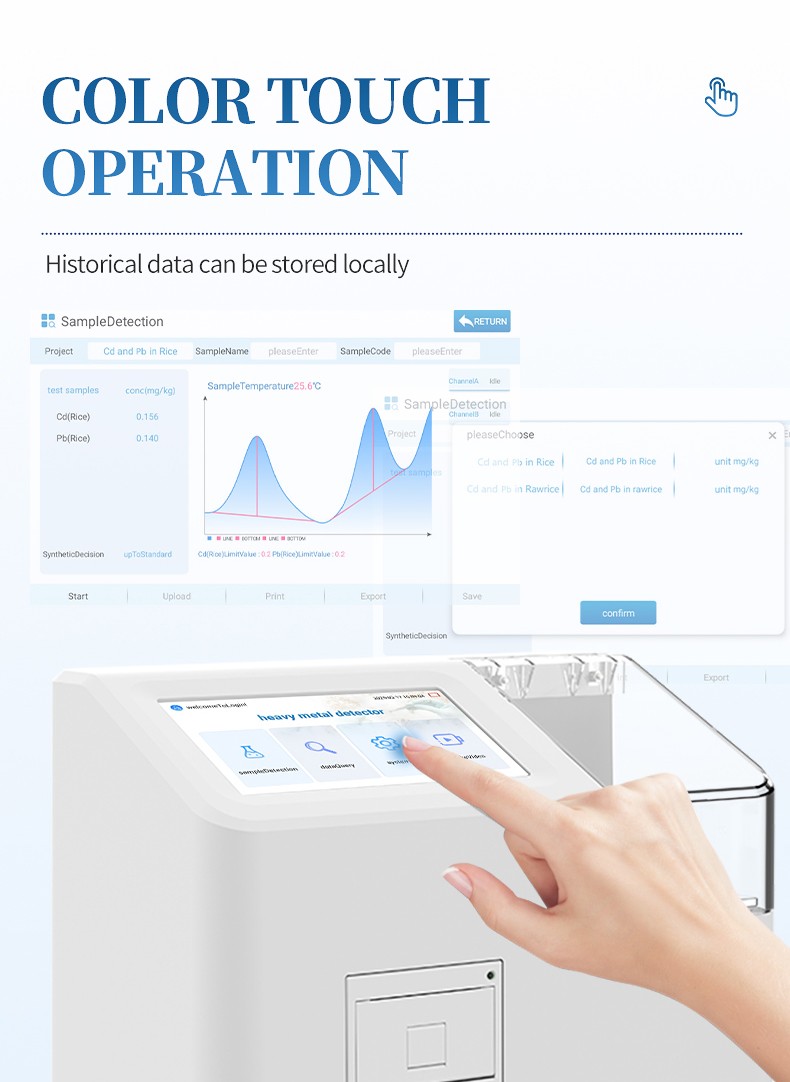
7-Inch Android Touch Command: Visual workflow guides operators step-by-step through calibration, sampling, and curve interpretation.
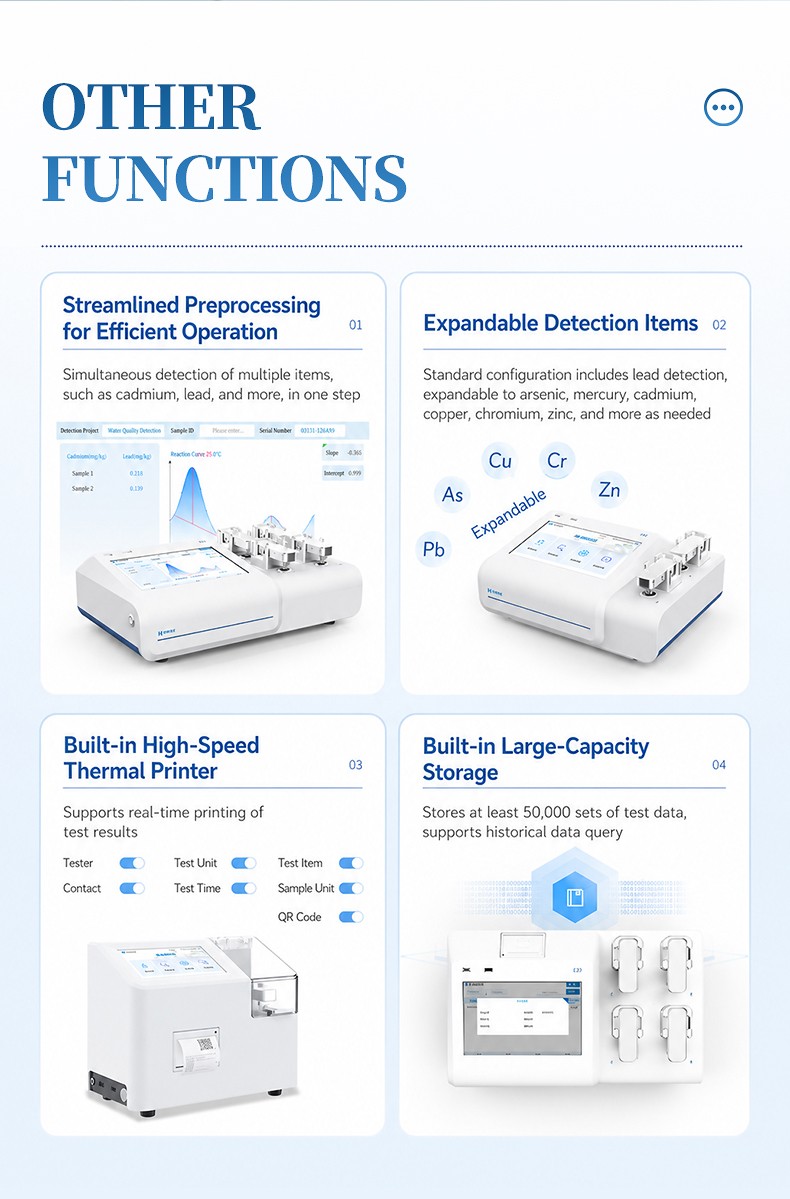
On-Demand Thermal Receipt Printing: Built-in thermal printer produces tamper-resistant receipts displaying timestamp, batch ID, and QR code.
Over 50,000 Offline Memory Records: Dedicated flash memory securely stores test results, transferable via USB drive or Wi-Fi network.
Battery-Powered Mobile Flexibility: 6,000 mAh rechargeable lithium cell supports field operations away from stationary electrical outlets.
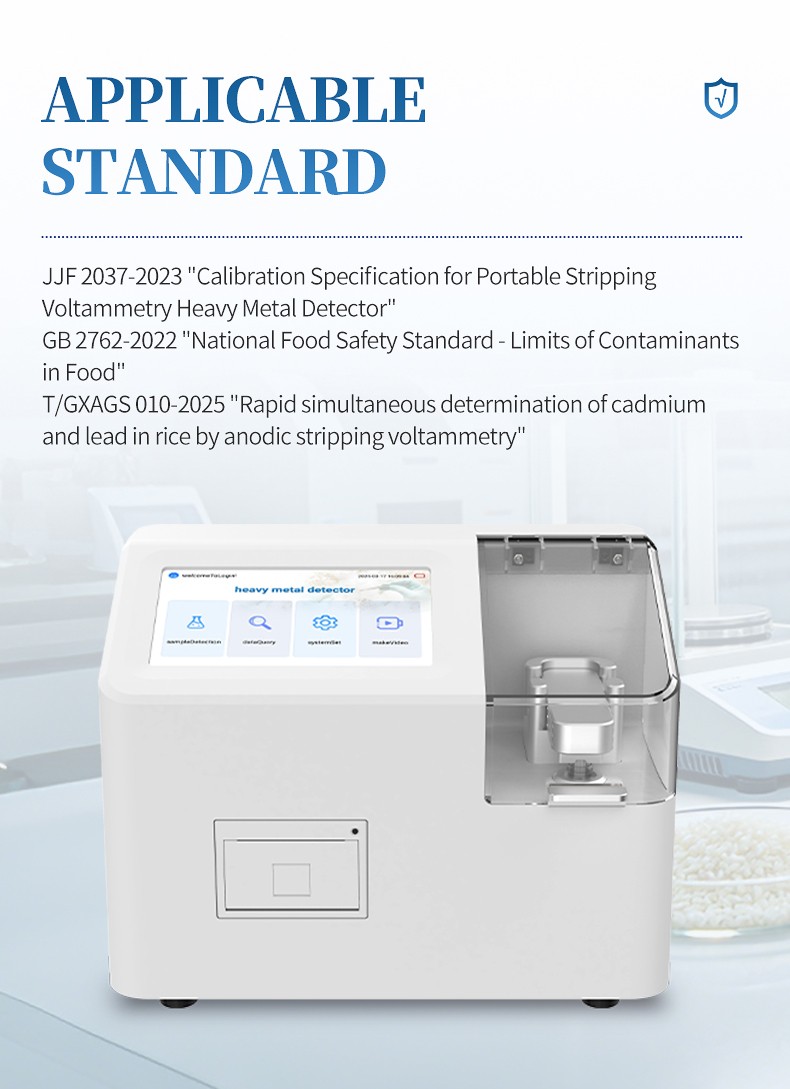
Compliant with JJF 2037-2023: Fully calibrated in accordance with national technical specifications for portable voltammetric instruments.
Multi-Element Upgrade Path: Pre-configured electronic architecture allows software expansion to arsenic, mercury, copper, and zinc testing.
OTA Cloud Firmware Updates: Connect via Wi-Fi for automatic firmware enhancements, algorithm improvements, and remote technical diagnostics.
Technical Specifications
| Specification Category | Technical Parameter |
|---|---|
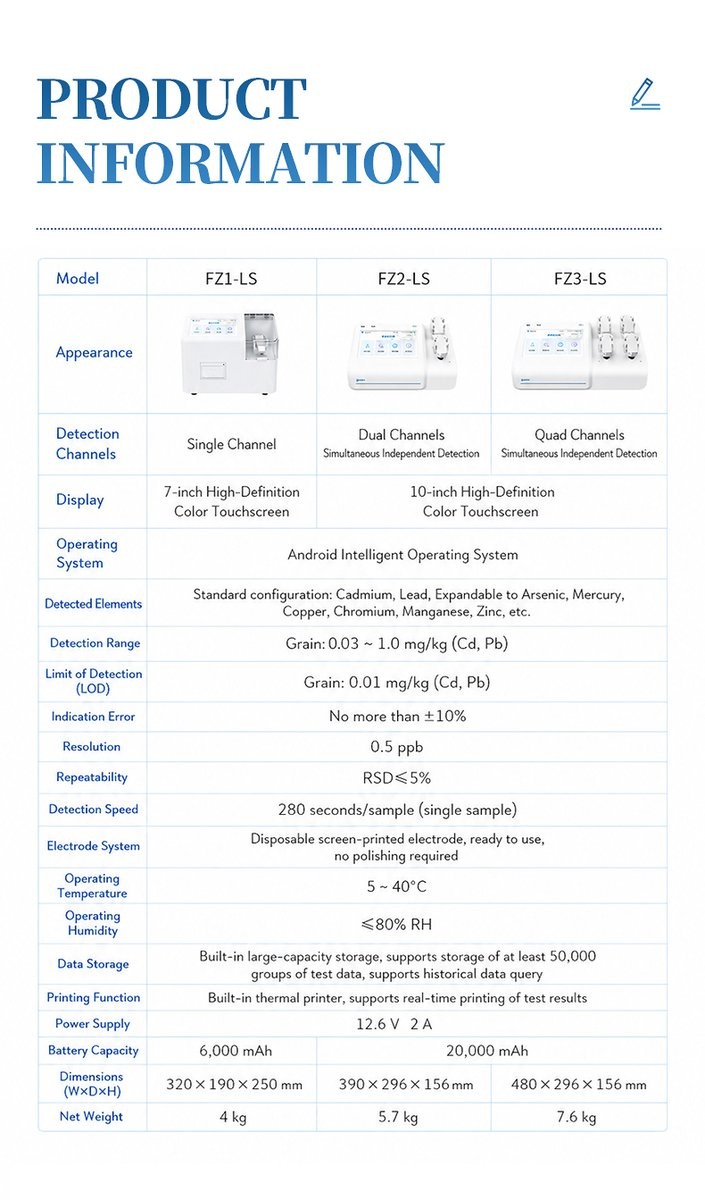
| Detection Principle | Anodic Stripping Voltammetry (ASV) with preconcentration and stripping phases |
| Analytical Channels | Single Channel |
| Target Contaminants | Standard: Cadmium (Cd), Lead (Pb); Expandable: As, Hg, Cu, Cr, Zn |
| Calibration Range (Grain) | 0.03 ~ 1.0 mg/kg (Cd, Pb in cereal matrices) |
| Limit of Detection (LOD) | 0.01 mg/kg (Cd, Pb) |
| Instrument Error | Within +/-10% indication error |
| Electrochemical Resolution | 0.5 ppb |
| Measurement Precision | RSD <= 5% |
| Instrument Scan Duration | 280 seconds per sample testing run |
| Sample Extraction Time | <= 15 minutes (room-temperature dilute acid extraction, no acid digestion) |
| Electrode Architecture | Disposable screen-printed three-electrode strips (ready to use, no manual polishing) |
| Electrode Connector Mount | Patented magnetic elastic contact holder ensuring wear-free electrical coupling |
| Operating Console & System | 7-inch HD full-color touchscreen, Android system |
| Data Interfaces | Wi-Fi and USB, supporting LIMS synchronization and OTA cloud firmware updates |
| Data Storage Capacity | Non-volatile onboard storage >= 50,000 complete test logs |
| Report Generation | Built-in high-speed thermal printer with timestamps and verification QR codes |
| Power System & Battery | 6,000 mAh lithium battery pack, DC 12.6V 2A |
| Environmental Range | Operating temperature: 5 ~ 40 deg C, Humidity: <= 80% RH |
| Form Factor & Weight | 320 mm x 190 mm x 250 mm, 4.0 kg |
| Regulatory Standards | JJF 2037-2023, GB 2762-2022, T/GXAGS 010-2025 |
FAQ
Q: How does anodic stripping voltammetry achieve accurate quantification without acid digestion?
A: Anodic stripping voltammetry (ASV) operates in two sequential electrochemical phases: a preconcentration phase where target metal ions (Cd2+, Pb2+) are reduced and concentrated onto the working electrode at a negative potential, followed by a positive stripping scan where the metals are re-oxidized into solution. Because our mild chemical extraction efficiently leaches free and loosely bound heavy metal ions into a specialized supporting electrolyte, the extreme enrichment factor of the deposition step provides part-per-billion sensitivity without boiling samples in concentrated nitric acid.
Q: What is the typical test time and sample throughput for the HM-FZ1-LS?
A: The entire analytical cycle takes under 20 minutes from raw grain intake to final result. Sample preparation involves simple milling (1-2 minutes) and room-temperature shake extraction with filtration (8-10 minutes). Once loaded onto the HM-FZ1-LS, the automated electrochemical enrichment, stripping scan, and calculation cycle takes exactly 280 seconds. A single operator can comfortably analyze 3 to 4 independent grain batches per hour with immediate thermal receipt printing.
Q: Can the HM-FZ1-LS detect heavy metals in grains other than rice?
A: Yes. While specifically calibrated for rice and brown rice in accordance with national safety mandates, the HM-FZ1-LS features pre-programmed analytical modes for wheat, barley, maize (corn), sorghum, and finished grain products like flour and rice noodles. The software incorporates matrix-specific calibration coefficients ensuring rigorous accuracy across various cereal grain matrices.
Q: How does the patented magnetic electrode holder improve testing reliability?
A: Conventional electrochemical instruments utilize friction-based mechanical card edge connectors that degrade rapidly under dust and repeated insertions, causing erratic contact resistance and fluctuating baseline noise. The HM-FZ1-LS utilizes a patented magnetic elastic contact mount where neodymium magnets guide the sensor strip into precise alignment while gold-plated spring pins deliver constant contact pressure without abrasive friction, ensuring long-term measurement consistency.
Q: What ongoing maintenance and consumable costs are associated with the HM-FZ1-LS?
A: Operational costs are exceptionally low compared to spectroscopic methods. Consumables consist solely of disposable screen-printed three-electrode strips, extraction reagent kits, standard calibration solutions, and thermal printing paper. There are no expensive argon or acetylene gases, hollow cathode lamps, or quartz torch replacements. Routine maintenance requires only keeping the sensor stage clean and performing periodic software calibration checks using certified standard solutions.
Article address:https://www.hmfoodtesting.com/voltammetric-heavy-metal-analyzer/rice-cadmium-lead-rapid-detector.html