

 Current
location:
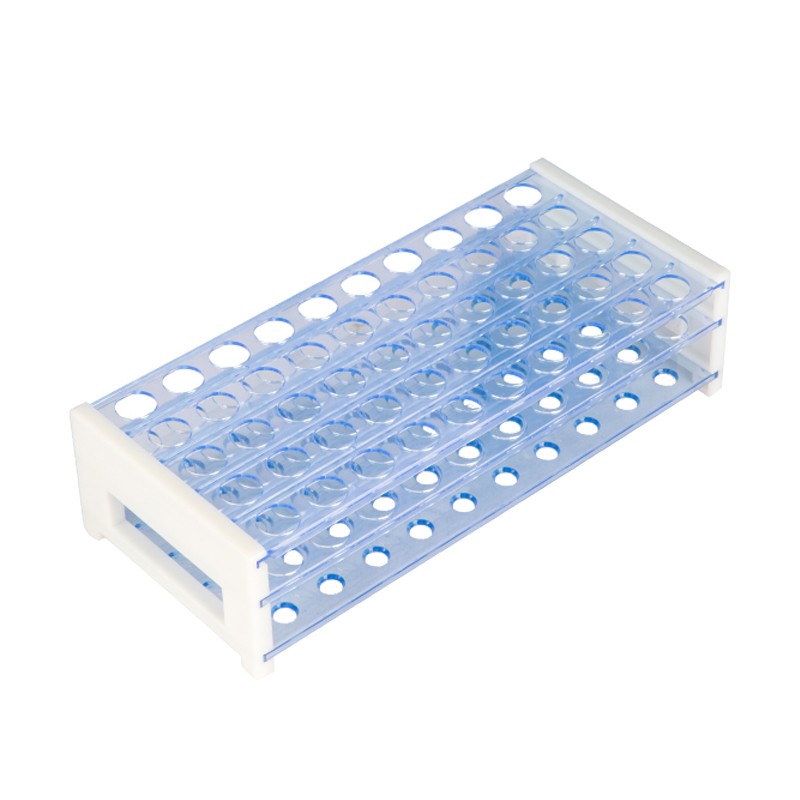
To prevent food testing mix-ups, preserve the link between each original sample, every labeled tube, and the result entered in the laboratory record. A tube rack can make that link easier to maintain when its position map matches the worksheet. Reagent identification, lot records, and clear handling of repeats matter just as much. Together, these controls let a reviewer reconstruct what happened after the bench has been cleared.
Make rack positions visible in the test record
Adopt a consistent position convention for the tube rack and show it on the worksheet. Agree on where the first position sits when the rack faces the operator. If the rack lacks printed coordinates, use an orientation mark that staff can readily see and clean according to the bench procedure. Staff should be able to step away, return to the bench, and identify the first position without relying on how they remember leaving the rack.
Put a sample identifier on each container in addition to recording its rack position. Rack positions help organize a test batch, while the identifier travels with the container when it is removed. Use labels that remain legible under the conditions of your established method. Check that identifiers can be read with the tubes in place and that labels leave enough room for staff to recognize control positions and repeats. If similar sample numbers occur regularly, use the full identifier where space permits.
Plan controls and repeats before samples move
Assign control locations in the batch record when setting up the run. The method determines which controls are needed, what their results should show, and how to handle a failed control. Give the controls identifiers that are easy to distinguish from ordinary samples, and record any associated lot details as your quality system requires. If a control is moved during the run, update the record so a second person can follow the sequence without having to reconstruct it from memory.
Provide a separate record field for repeat measurements. If a repeat is required, keep it linked to the sample and the original attempt. The reason for the repeat and the person authorizing it should be clear enough to support review. Decide whether the procedure calls for repeating the measurement, preparing another test portion, or requesting another sample. These actions answer different questions, and the worksheet should capture which action was actually taken.
Keep the identity chain through interruptions
Imagine a batch with eight samples and two control locations. The first four samples have completed a handling step when the operator is called away. A marker on the worksheet showing the last completed position lets the operator resume with the fifth sample after confirming the batch is still within its applicable handling conditions. If the record only says that the batch has started, the operator has to rely on appearances or memory to decide where to resume.
Define a pause point for each stage of the workflow and record the stage when leaving the bench. Keep a designated space for samples waiting for the next step and a different space for completed tubes. Avoid combining work from two unrelated batches in the same rack unless the layout and record make the separation obvious. When handing a batch to another operator, have both staff members reconcile the physical containers with the worksheet and confirm the next action.
If a tube becomes detached from its label or appears in an unexpected rack slot, flag the affected result and stop transferring material associated with that position. Reconcile the worksheet with records created before the discrepancy and follow the laboratory's policy for unresolved identification. An uncertain result can cause problems long after the batch has been finished if it enters a customer report or a supplier performance log under the wrong sample number.
Trace reagent lots to the batches in which they were used
Store each reagent so staff can identify the product, lot, expiry date, and any in-use date required by the method or supplier instructions. Keep the original identifiers available if the bench procedure uses a secondary container. When a batch is prepared, record the lot in a field tied to the particular reagent or component. A single free-text note becomes difficult to interpret when several bottles or test components have different lots.
When changing lots, record the date and the first batch that used the new lot. Follow the established acceptance checks and retain their results with the lot history. If a trend appears after the change, the review team can compare affected and unaffected batches using actual dates and lot records. The same information helps determine which batches need review if a supplier sends a notice covering a particular lot.
Review what the physical accessories can tell you
Examine how the rack holds each tube type used on the bench. A tube that tilts or sits loosely may be hard to identify or handle consistently. A tight rack may make staff pull sharply on containers or rub their labels off. Confirm that labels remain readable from the normal viewing angle and that staff can remove one tube at a time without disturbing neighboring positions. If staff regularly turn the rack to read labels, make sure the position convention stays clear after rotation.
Set aside accessories that are damaged or contaminated according to the bench procedure. Check that the rack can be cleaned and inspected in the areas that contact tubes or retain spills. Where the workflow calls for dedicated accessories for particular stages, make the allocation visible on the bench. If a new rack layout improves tube access but changes the order of the positions, update the record template at the same time so the physical and written workflows stay aligned.
Investigate a discrepancy while evidence is still available
Start with the smallest set of results that might be affected, and look for evidence that expands or narrows it. For example, a discrepancy found at one rack position may involve the adjacent samples if their labels or handling sequence cannot be reconciled. A questionable control or reagent lot may require examining a whole run or multiple runs. Retain the relevant paperwork, instrument records, sample identifiers and supply identifiers before tidying the bench or issuing a corrected report.
Record the observed discrepancy separately from the suspected cause. A worksheet that says two tubes were found in reversed positions is more useful than a note blaming an operator without evidence. Document which results were put on hold, how acceptable identities or results were established, and what changed in the process. If the problem recurs, review whether the rack orientation, identifier format, transfer sequence or handover step makes the same error easy to repeat.
Check the record from a second reader's perspective
Ask a colleague to pick one result and follow it backward through the records. They should be able to find the sample identifier, test batch, relevant control status and reagent lot. If the result was repeated, they should be able to see which measurement was reported and why. Then have them start with a recorded reagent lot or batch and find the related samples. These two checks test whether the records support both routine review and follow-up investigations.
For laboratories selecting a tube rack or other food testing accessories, HENG MEI Intelligent Manufacturing is the brand of Shandong Hengmei Electronic Technology Co., Ltd. Compare the accessory with the actual containers, bench layout and sample records your staff use. A rack that fits the tubes and presents the identifiers clearly can support a workflow in which each result remains traceable from the first label through final review.
Address of this article:https://www.hmfoodtesting.com/article/how-to-prevent-mix-ups-with-food-testing-reagents-and-accessories-heng-mei-intelligent-manufacturing.html
 Return to List