

 Current
location:
A wholesale market inspection point is a throughput business with a compliance obligation. Consignments arrive early, leave within hours, and the inspection point has to decide which ones to hold before they are sold on. The instrument is one part of that; sample intake, preparation capacity and the reporting routine decide whether the testing programme keeps up with the market.
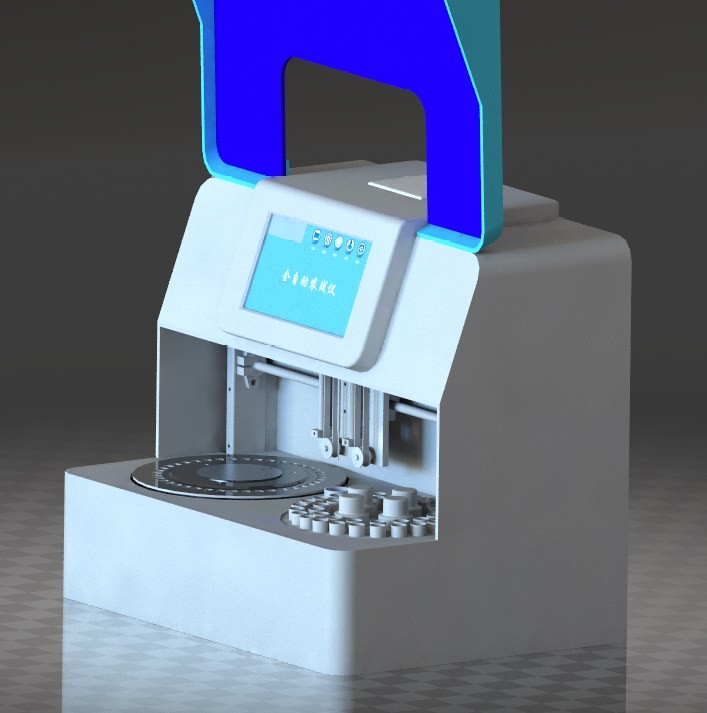
This article describes how to organise a market testing point around a 40-position automatic analyser. It is written by the engineering team at HENG MEI Intelligent Manufacturing for station managers who have to make a daily schedule work.
Start from the arrival pattern, not the instrument
Markets do not deliver samples evenly. In most wholesale produce markets, the peak arrives between 2 and 6 a.m. and the trading window closes by mid-morning. A testing point that starts at 8 a.m. with a queued backlog has already missed the decision point for that day's consignments.
The practical consequence is that capacity planning belongs to the peak hours, not the daily total. If 120 consignments arrive in a four-hour window and each consignment needs one composite sample, the station needs a preparation and analysis capability of about 30 samples per hour during that window — which usually means two preparation benches feeding one analyser, not a faster analyser alone.
| Stage | Time per sample | Bottleneck? |
|---|---|---|
| Intake, identity, logging | 1–2 min | Only if paper-based |
| Composite sampling and chopping | 3–5 min | Usually the real bottleneck |
| Extraction and filtration | 2–3 min | Scales with preparation staff |
| Instrument cycle | 42 s per test | Rarely limiting at 40 positions |
| Recording and reporting | 1 min | Automatic with export |
The table makes the operational point: automation in the analyser buys time only if preparation capacity exists to feed it. Two preparation staff and one analyser will outrun one preparation staff and two analysers.
Organising the 40 positions
A 40-position analyser is not forty sample results. Positions are consumed by controls and repeats, and the batch should be built deliberately.
- Blank and control at the start of every batch. Two positions. Without them the batch has no baseline and no proof that the reagents were active.
- Sample positions in arrival order. Loading in arrival order means the earliest consignments are released first, which matches the trading sequence.
- Reserve two to four positions for repeats. Near-threshold samples need a second run, and discovering that after the batch is full means waiting a full cycle.
- A full batch of 40 takes about 28 minutes at 42 seconds per test. That is the planning unit for the shift, not the sample.
Intake discipline
Traceability at a market point is decided in the first two minutes. A sample number written after preparation cannot be linked back to a consignment, and a result that cannot be linked is unusable for enforcement.
A workable intake routine uses three identifiers: consignment number from the market's own system, supplier name, and vehicle or lot reference. The sample bag carries all three before it reaches the preparation bench. Where the market already runs a digital consignment register, the instrument's exported result should use the same identifier so that records join up without manual matching.
Decision rules and holds
The station needs a written rule with three outcomes, not two.
| Result | Station action | Who decides release |
|---|---|---|
| Below threshold | Release; record value against the consignment | Station inspector |
| Near threshold | Repeat in the next batch; hold the consignment meanwhile | Station inspector, with repeat result |
| Above threshold | Hold; sample referred for chromatographic confirmation | Market authority with laboratory result |
The hold decision is the sensitive one. A station that holds consignments on a single near-threshold reading will lose the cooperation of suppliers quickly, and one that never holds will lose the confidence of the authority. The near-threshold repeat rule exists to make both outcomes defensible.
Reporting and data flow
Market testing generates records that other people use: the market operator, the regional regulator, and sometimes a downstream buyer. Three properties make those records usable.
- Consistent identifiers across intake, instrument and report.
- Timestamps from the instrument, not from a clerk at the end of the shift.
- Export in a format the receiving system accepts, so results are not re-typed.
The HM-QN40 carries its own workstation software with network upload and a built-in thermal printer, so a result can leave the station as a printed slip for the supplier and as an uploaded record for the authority. Stations that must report into a regional platform should confirm the upload format with that platform before installation, not after.
Staffing and shift pattern
A station handling 120 consignments in a four-hour window typically needs three roles: an intake clerk, one or two preparation technicians and an inspector who interprets results and decides holds. The analyser does not remove any of those roles; it removes the need for the inspector to stand at a bench waiting for a reaction.
For smaller stations, a 12-channel bench detector with one preparation technician can handle roughly 20–40 samples in a morning, which is the right scale for a district market rather than a regional hub. Matching format to volume is covered in the capacity planning guide.
Maintenance that keeps the morning running
- End-of-shift clean. Cuvettes, reagent probes and the waste container. A crystallised probe fails at 3 a.m., not at a convenient time.
- Reagent stock check. Reagent positions accept domestic reagent formats; keep a spare set on site because a delivery delay stops the station.
- Temperature verification. The reaction is held at 37 ± 0.1 °C; verify with the control before the first batch each day rather than trusting the display.
- Weekly review of near-threshold results. A rising proportion usually indicates reagent ageing or a preparation change, both of which are cheaper to fix early.
How HENG MEI supports station-level operations
HENG MEI Intelligent Manufacturing supplies the 40-position analyser in this workflow alongside 12-channel bench detectors and portable field units, so a regional network can standardise reagents, thresholds and reporting while matching format to each site's volume. Where a station also screens veterinary drug residues, the same analyser platform and preparation bench extend to those kits.
To plan a station, tell our sales contact the consignments per peak window, the samples per consignment, the number of preparation staff and the reporting platform in use. Those four figures determine the format and the bench layout more reliably than the instrument's sample capacity alone.
Contact: Grace, Sales Contact, graceliu@hmdzkj.cn, +86 17853698681 (Tel / WhatsApp / WeChat).
Address of this article:https://www.hmfoodtesting.com/article/market-inspection-point-batch-workflow-residue-screening.html
 Return to List