

 Current
location:
Use total volatile basic nitrogen together with product identity, storage history and the applicable freshness criteria. A TVB-N result is most useful when the reviewer can trace which portion was taken, how it was prepared and how long it was held before testing.
Keep the sample comparable
Collect and handle each portion through the laboratory’s sampling and preparation procedure. Document whether the material is raw, thawed or processed, along with relevant storage conditions. If you are comparing shipments, keep preparation and reporting conditions consistent. Establish acceptance criteria for blanks, controls and duplicates before processing a batch.
Follow up on disagreement
When duplicate results diverge, check sample homogeneity, weighing, transfer and timing. Review cold-chain information and the original lot identity before taking another sample. Keep a retest linked to the original result. A single freshness marker provides one part of the quality decision, which may also require sensory review or separate microbiological testing under the site procedure.
Send the decision-maker a complete record
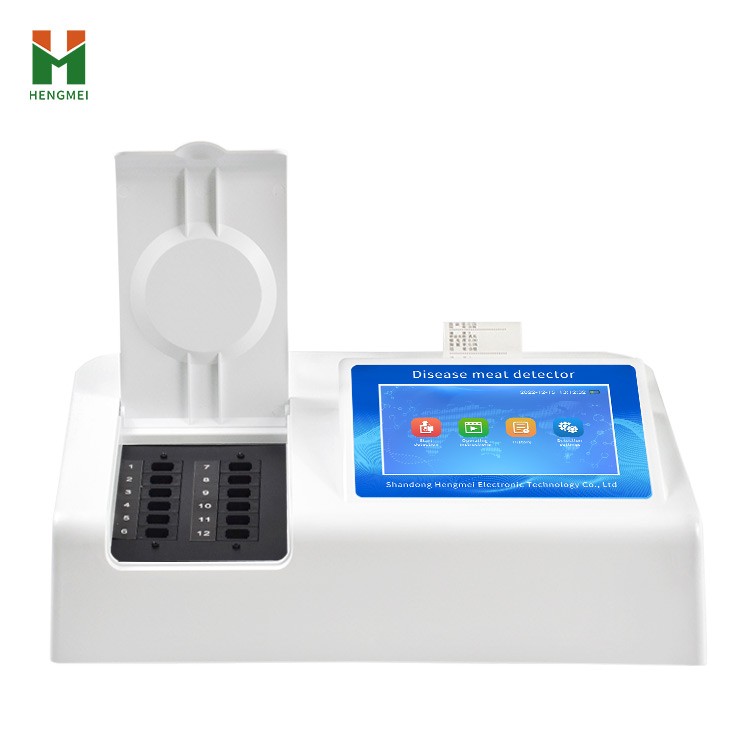
Report the sample identification, meat category, method, result unit and follow-up action. For HM-YJ12 from HENG MEI Intelligent Manufacturing, select preparation and reporting arrangements that suit the intake or storage programme in which TVB-N will be used.
Shandong Hengmei Electronic Technology Co., Ltd.
Review cold-chain history with replicate results
Sample temperature and time between collection and preparation influence how useful a freshness result is for investigating a lot. Record the state of the original product and time of thawing where applicable. If replicate values differ, check sample homogeneity and preparation before averaging. Distinguish samples from different packages from duplicate preparations of the same homogenate. The first can reveal lot variability and the second can help identify variation in analysis. Where the site also needs microbiological assessment, retain the portions required by that procedure.
Check the calculation before reporting
Eight lots measured in duplicate require 16 preparations. Adding a blank and two control preparations brings the batch to 19. If the preparation bench can handle six vessels per batch, plan four batches and allocate controls according to the actual procedure.
Troubleshooting and result review
Why do two portions from one meat sample disagree?
Check how the portions were homogenized, their storage history and treatment before measurement. Review the controls and retain both readings in the lot record.
Keep the original result and control readings with the repeat. Record the cause investigated and the disposition of the lot so the next reviewer can reconstruct the decision.
Prepare the batch and establish the decision basis
Before measuring meat freshness, review the incoming list for chilled meat, thawed stock and permitted processed products. Match every item to the approved method and assign an identifier that stays with the prepared portion through transfer and measurement. Agree on the applicable category-specific freshness criterion and TVB-N reporting basis and confirm who may release the result. Prepare a tray or worklist that distinguishes routine samples, controls and repeats. A complete batch plan also tells the operator which specimens can be run together and where the sample or original package must be retained for later review.
Set out representative fresh and aged materials and duplicate prepared portions and keep controls identifiable through preparation. Confirm the instrument programme, current reagent or reference material identity and the test conditions before loading samples. Record collection time, storage temperature and thawing history. With a time-dependent procedure, start each group only when the operator can complete reading within the defined window. Keep an observation field for changes during preparation, such as unusual sample appearance, transfer problems or a departure from the planned handling conditions.
Follow the sample through preparation and measurement
| Check | Evidence to retain |
|---|---|
| Before preparation | Confirm sample identity, matrix and suitability for the applicable category-specific freshness criterion and TVB-N reporting basis. |
| During preparation | Preserve the sample ID and record collection time, storage temperature and thawing history. |
| Before interpretation | Review representative fresh and aged materials and duplicate prepared portions first and identify a duplicate difference larger than the method permits. |
| At report review | Check the method, original reading, result basis and any follow-up prompted by lot heterogeneity, inconsistent homogenization or changes during sample storage. |
When an aliquot is prepared or transferred, record the receiving container or position. If two results need comparison, check whether they came from two independently prepared portions or two readings of the same prepared portion. These observations help locate variation at different stages of the work. Keep original values and preserve any separate sample mass, volume, units and correction factors. If the instrument already applies a factor automatically, record that setting with the reading so the reviewer can reproduce the reported value.
Decide whether to stop, repeat or confirm
When you see a duplicate difference larger than the method permits, pause the affected result and assess the controls and handling first. Review the timing and operator notes before adding another measurement. If the problem is systematic, such as reagent condition or a failed preparation control, identify all samples affected since the last acceptable check. Follow the batch procedure for recovery and retain the original results. When an individual specimen is unsuitable, record why the specimen was rejected or resampled, and keep it tied to the incoming lot record.
To investigate lot heterogeneity, inconsistent homogenization or changes during sample storage, review sample preparation and instrument conditions in order. A repeat of the same prepared portion can help assess repeatability of the reading. A fresh preparation can explore weighing, transfer or preparation variation. Select the type of repeat according to the problem and document the reason before starting. Where the decision requires a separate confirmatory method, prepare the retained portion for that method and preserve identification through the transfer. A valid unexpected result should remain visible through investigation and disposition.
Release a report that can be reviewed later
Write the result with the sample and lot identity, the method and its relevant units, and any exception or repeat decision. Report collection time, storage temperature and thawing history in the worksheet when those details affect interpretation. Retain the control response and associate it with the samples that shared it. The report should enable a supervisor to determine whether the method covered the material examined and whether the applicable decision criteria were met. Use consistent units and record how any calculation was applied before comparing a result with a purchase or process specification.
For repeated batches, review trends in sample preparation supplies, storage and repeat analysis along with the rate of invalid tests, repeat work and delayed decisions. This can identify whether delays arise from preparation, measurement, consumables or report review. Train another operator to reconstruct a past batch from the original information and investigate a duplicate difference larger than the method permits. Where a step cannot be reconstructed, improve the record at the point where the work takes place. The resulting worksheet is useful for training, follow-up with suppliers and review of process changes.
Review the first results after a method change
When a new reagent lot, preparation procedure or instrument setting is introduced, review its effect on meat freshness before comparing the results with earlier batches. Keep records from both working conditions, including representative fresh and aged materials and duplicate prepared portions. Choose material near the decision level as well as routine specimens so changes can be assessed where the results matter. Document the reason for the change and who accepted the revised sequence.
During the transition, compare raw readings and preparation notes rather than relying only on the final outcome. Check collection time, storage temperature and thawing history and make sure any comparison uses the same units and sample basis. If the results no longer support the applicable category-specific freshness criterion and TVB-N reporting basis, hold the affected interpretation for method review and retain the original record.
Address of this article:https://www.hmfoodtesting.com/article/using-tvb-n-to-review-meat-freshness.html
 Return to List