

 Current
location:
Current
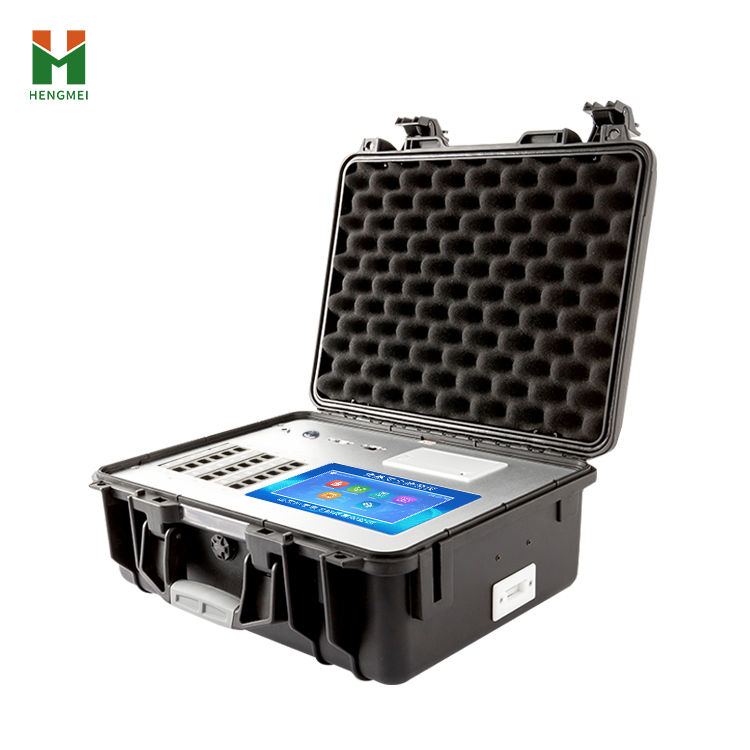
location:The portable food safety detector integrates various complex detection functions in traditional laboratories into a portable device, which is equivalent to a portable "mobile laboratory". It can quickly qualitatively and quantitatively analyze more than 200 safety indicators in food on site, becoming a key technical equipment for achieving "source prevention, process management, and risk control" in food safety.
Technical principles
This high-performance portable food safety detector is not based on a single technology, but innovatively integrates multiple mature detection methods to meet the detection needs of different types of pollutants. Its core technology modules mainly include the following three types:
1. Spectrometric module (used for physical and chemical indicators and some additives)
This is the most basic detection module of the instrument. The principle is Lambert Beer's law: matter selectively absorbs light of specific wavelengths. The instrument is equipped with a high-precision, multi wavelength (such as 410nm, 520nm, 590nm, 630nm) optical system. During detection, the sample undergoes a color reaction with a specific reagent, and the intensity of the color is directly proportional to the concentration of the target substance (such as sulfur dioxide, nitrite, peroxide value, etc.). The instrument can calculate the content by measuring the absorbance of the solution. This method is fast, low-cost, and very suitable for on-site large-scale screening.
2. Enzyme inhibition rate method module (for residues of organophosphorus and carbamate pesticides)
This module is designed specifically for rapid screening of pesticide residues. The principle is that organophosphorus and carbamate pesticides can specifically inhibit the activity of cholinesterase. By detecting the changes in absorbance (i.e. inhibition rate) before and after the reaction between the enzyme and its substrate, the overall residue of such pesticides in the sample can be quickly determined. The higher the inhibition rate, the greater the possibility of pesticide residue exceeding the standard. This is an efficient initial screening method.
3. Colloidal gold immunochromatographic detection module (used for specific veterinary drugs, toxins, and prohibited additives)
This module has high technical content and is used to detect specific molecules such as clenbuterol, antibiotics, aflatoxins, etc. Its core is the specific immune response of antigen antibody. After the gold labeled antibody on the detection card binds to the target substance in the sample, a reaction occurs on the detection line (T line) and quality control line (C line). The innovation of the instrument lies in its track based automatic transmission scanning and built-in camera photography function. It automatically scans the detection card, analyzes the color intensity of T/C lines through image recognition algorithms, presents CT coordinate curves, and achieves automatic recognition of CT lines, completely avoiding subjective errors in human eye interpretation. The results are objective and traceable.
By integrating these three technology modules, this portable food safety detector achieves broad-spectrum and rapid detection capabilities from conventional physical and chemical indicators to trace and specific pollutants.
Technical advantages and performance parameters
Intelligence and ease of use: Android intelligent operating system, efficient UI interactive interface; Built in operation video; Identity recognition startup function. Intuitive operation, low learning cost, just like using a smartphone. The built-in video is an online training expert that effectively prevents misoperation and meets standardized management requirements.
Detection accuracy and objectivity: high-precision optical sensors; Colloidal gold module CT line automatic recognition; The result judgment line can be modified, and data will not be lost when power is cut off. Ensure the accuracy and reproducibility of the test results. The colloidal gold detection results are automatically interpreted by the instrument, which is objective and fair, and can serve as a preliminary basis for law enforcement or management.
Efficient throughput and networking capability: Multi channel design, capable of detecting different projects simultaneously; New generation high-speed thermal printer; Support WiFi/4G/wired multiple ways to connect and upload data to the monitoring platform. Improve on-site inspection efficiency and issue inspection reports with QR codes in real time. Real time data upload facilitates big data analysis and risk warning for regional food safety.
Portability and adaptability: integrated portable design; Compatible with all colloidal gold cards on the market; Capable of recalibrating and restoring factory settings. Truly meet the needs of mobile detection, available for immediate use. Users are not limited by brand when choosing detection cards, with strong autonomy and effective control of long-term usage costs.
The portable food safety detector has successfully extended its complex laboratory analysis capabilities to every critical node in the food supply chain through its multifunctional, intelligent, and portable design. Its efficient, accurate, and convenient characteristics make it an important technical tool for building a modern food safety governance system.
Address of this article:http://www.hmfoodtesting.com/article/170.html
 Return to List