

 Current
location:
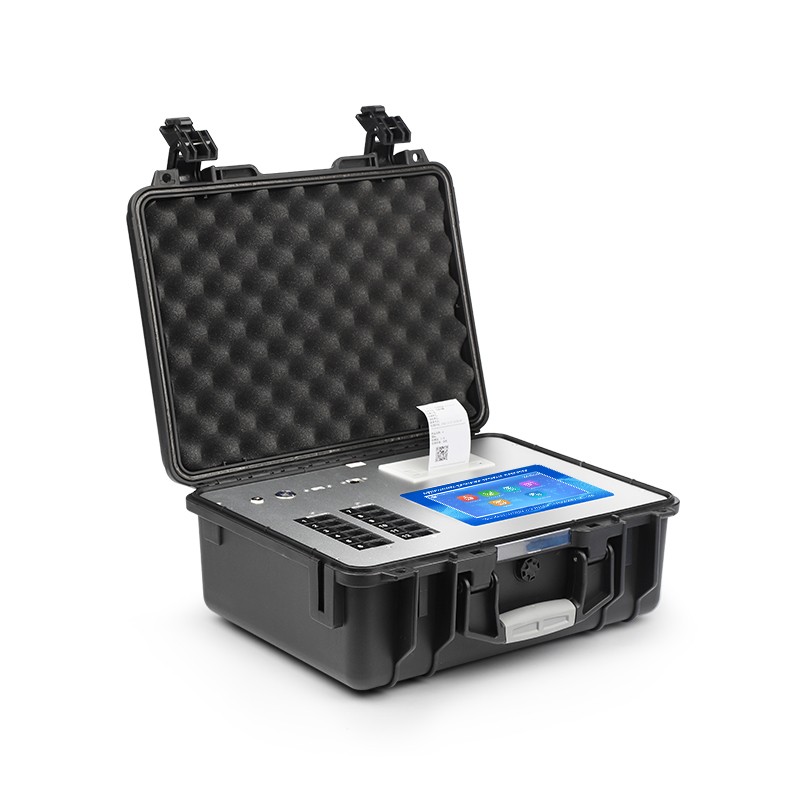
A food distribution center can use pesticide and veterinary drug residue screening to identify selected incoming lots that need further review. A practical solution connects the detector to purchasing records, a documented sampling plan, method controls and a clear confirmation pathway. The center must specify which foods and substances are covered, how a lot is held and who can release it after review.
Map the incoming products and decisions
List the produce and animal-derived foods received at the center, their suppliers and the destination markets. Identify the substances covered by the center's risk plan and the relevant customer or legal requirements for each product. Different foods and substances have different limits or restrictions. Keep a current reference for the applicable market and assign someone to review changes when a product or destination is added.
Decide what the screening result will trigger. A center may use a result to prioritize a confirmatory test, place an identified lot on hold or request more information from a supplier under its quality agreement. An official compliance decision may require a specific method and authorized laboratory. Define the result status and the person responsible for each action before routine screening starts.
Separate lots and preserve identity
At receiving, link each sample to a delivery, supplier, food product and lot identifier. If a truck carries material from several sources, the sampling plan should explain how those lots are distinguished. Record collection time, sampling location and collector as required by the procedure. Label the container as it is collected and retain the same reference when preparing a test portion or referring material to a laboratory.
A rack position is useful for arranging samples during a shift, but it is not a substitute for the label on an individual container. Reconcile the physical samples with the receiving list before testing. If a label is damaged or a lot cannot be identified confidently, hold the affected decision and follow the center's exception procedure. Measuring an unidentified sample does not resolve which delivery it represents.
Select tests for the foods and substances
For each proposed kit, review the documented targets, sample matrices, decision threshold, cross-reactivity and operating conditions. Pesticide and veterinary drug residues cover many substances. A single test or detector configuration should be assessed against the actual target list rather than assumed to cover the whole category. Where the center needs results near a particular limit, check whether the method is suitable for that level and matrix.
Evaluate representative samples from the center's suppliers and product types. Include relevant variations in color, composition and processing where these can affect the method. Agree on a comparison laboratory, the materials to be evaluated and acceptance criteria before the trial. Record differences in sample handling as well as results. Use the findings to decide which tests can be deployed on site and which products should be referred directly to a laboratory.
Prepare a shift plan with controls
At the start of the shift, verify that the equipment, approved test materials and required controls are available and within their approved use period. List the expected samples and control positions. Staff should know the current method version and have a way to record the reagent or kit lot. Follow the method instructions and the center's quality plan for setup, controls, cleaning and review.
Before reporting a result, check the control status and the sample identifier. If a control fails, hold the affected results and follow the documented investigation. Record the scope of the review, the action taken and who authorizes a repeat. If the team changes shifts during a batch, reconcile the worksheet and samples and record which step is next. This lets the second operator continue using the record rather than relying on memory.
Connect the result to the receiving system
Enter the result with the product, lot, method, date, operator and status. Use the method's reported units and interpretation. A threshold-based screening response should be recorded in the form defined by the method. If the test has a numerical output, document the calculation and unit required by the procedure. Check that the receiving system uses the same lot identifier as the laboratory record.
For example, a center may receive ten produce lots from five suppliers in a morning. If a screening response for one lot meets the center's referral criterion, the receiving team should be able to identify that lot without placing the other nine on hold by mistake. The quality manager applies the established hold rule, records the reason and arranges the next test. The rule and its scope depend on the center's agreements and applicable requirements.
Arrange confirmatory testing
Agree with the receiving laboratory in advance on the substance list, food matrices, reporting requirements, sample quantity and transport conditions. The laboratory should identify the information needed to link its result to the original shipment. When a referral is made, record the field or screening identifier, the laboratory request identifier and the time of handover. Preserve the initial screening record alongside the final report.
If the confirmation sample is newly collected, document its relationship to the original sample and lot. A second sample can represent another part of the shipment and may not be identical to the first. The responsible quality team should interpret both results using the sampling plan and the applicable decision rule. Communicate the outcome to receiving and purchasing staff with the lot identity and the specific action authorized.
Investigate recurring issues with context
Review findings by supplier, product, substance and test method. Include the number of lots tested so that a count of findings is not interpreted without the corresponding level of screening. Note changes in supplier, season, sampling plan or method. A newly introduced test can change the number of issues detected even when the underlying supply conditions have not yet been established.
Use the records to direct supplier discussions and future sampling. An isolated finding may lead to a review of one lot, while a repeated pattern may justify a broader supplier assessment under the purchasing agreement. Keep observed facts, laboratory reports and supplier responses in the case record. The quality manager can then review whether the original screening plan needs adjustment.
Match staffing and supplies to arrivals
Estimate peak arrivals, sample preparation and review time, control use and expected referral workload. An instrument's nominal capacity does not include all receiving and reporting tasks. Run a representative pilot with the intended staffing and record where samples wait. Order consumables according to expected use and supplier storage instructions, and maintain a traceable inventory by lot and expiry date.
HENG MEI Intelligent Manufacturing is the brand of Shandong Hengmei Electronic Technology Co., Ltd. When discussing a pesticide and veterinary drug residue detector for a distribution center, provide the product list, target substances, operating schedule and decision requirements. Confirm the exact detector, test materials and supported matrices so the proposed configuration fits the center's documented food safety program.
Keep decisions available across shifts
Provide receiving staff with a current list of lots awaiting review and identify who can authorize release. At shift change, reconcile that list with the laboratory record and the physical location of each held lot. Include the time of referral and expected contact at the laboratory so an unresolved case remains visible. Record the final decision and its supporting report in the purchasing or quality system.
Address of this article:https://www.hmfoodtesting.com/article/residue-detector-solutions-for-food-distribution-centers-heng-mei-intelligent-manufacturing.html
 Return to List