
 Current
location:
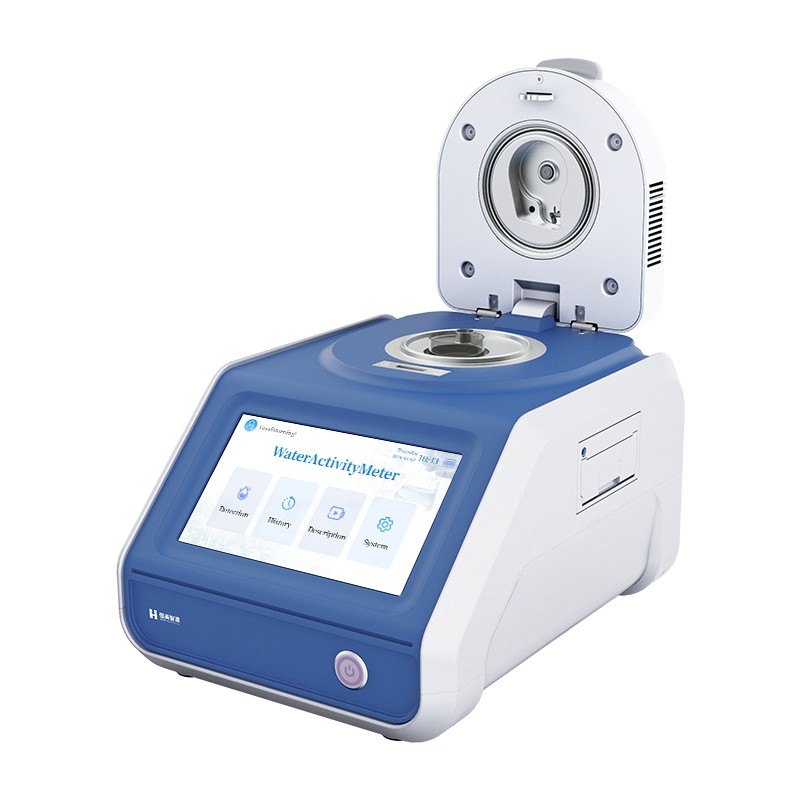
A water activity meter measures the equilibrium condition of water in a sample at a defined temperature. Food laboratories use that result when evaluating formulation changes, packaging, texture and shelf-life controls. The value can support an established food safety program when interpreted with the product's other relevant properties and validated process.
What does a reading of 0.60 a_w mean?
It means that at the measurement temperature, the equilibrium vapor pressure above the sample is 60 percent of the vapor pressure above pure water. Under the equilibrium relationship this corresponds to about 60 percent equilibrium relative humidity. It does not represent 60 percent moisture by mass. Record a_w and the relevant temperature next to the value, and use the procedure's rounding and reporting rules.
Why measure water activity and moisture separately?
Two foods with the same total water content can bind water differently because of their composition. A change in dissolved solids or in the distribution of moisture between parts of a product can change a_w. A moisture test estimates how much water is present. A water activity test measures its equilibrium behavior. Use the measurement your specification calls for and keep both records when the product development plan needs both.
What affects a chilled-mirror measurement?
Chilled-mirror instruments determine a dew point from the vapor in an enclosed measuring environment and relate it to sample temperature. The sample must reach the conditions required by the method. Check the instrument instructions for the sample cup, sample amount, filling level, temperature handling and cleaning. Condensation or residue in the chamber and an unusual sample composition can affect some measurements. Follow the method's criteria for accepting a reading and investigating problems.
What if a snack has a dry coating and a moist filling?
First define which part the decision concerns. The whole product, a specific component and the interface between components can answer different questions. Use the sampling and preparation procedure established for the product and record what went into the cup. If a product study monitors movement of moisture between components during storage, preserve component identity and collection time so later results can be compared at the same point in the study.
How do we check an instrument before using it?
Use the appropriate verification materials and procedure for the instrument. Select points relevant to the working range under the lab's quality plan and record the expected value, observed value, temperature, date and acceptance decision. If a check fails, follow the procedure before issuing associated results. Calibration, verification and cleaning are distinct actions and should be visible in the record when they affect a decision.
Why do two laboratories disagree?
Review product identity, sample selection and preparation, method, measurement temperature, timing and verification status. A comparison between separate packages can include genuine differences in product condition. Where possible, use comparable portions and agree on the protocol beforehand. If a result is near a decision boundary, follow the rule set by the product quality program rather than averaging figures generated under different conditions.
Can one value determine shelf life?
A water activity result supports a decision about one product property. Shelf life also depends on factors such as formulation, package, storage, process controls and the changes the product undergoes over time. Define the role of a_w in the actual shelf-life program and use a validated decision process for the product. For a new package or formulation, measure representative material across the planned storage study and retain the conditions with the data.
What should an AW-M1 evaluation include?
Test your typical products and any difficult or borderline matrix, assess the verification workflow and confirm which records are available. The AW-M1 is a benchtop chilled-mirror water activity meter offered under HENG MEI Intelligent Manufacturing. Share your sample type, target range, expected workload and reporting process with Shandong Hengmei Electronic Technology Co., Ltd. when requesting the model and its current instructions.
Address of this article:https://www.hmfoodtesting.com/article/water-activity-meter-faq-for-food-shelf-life-and-quality-testing-heng-mei-intelligent-manufacturing.html
 Return to List