

 Current
location:
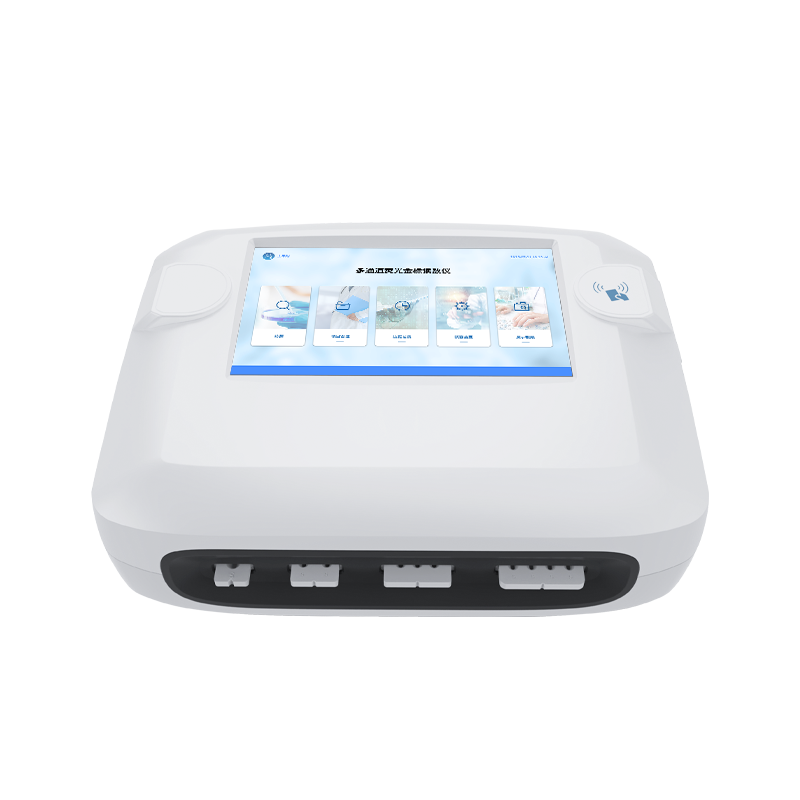
A colloidal gold reader measures a compatible lateral flow card under the conditions defined by its method. The card supplies the test chemistry. The reader provides optical interpretation, and any numeric output depends on the calibration and software for that assay. Before moving from visual records to an instrument, confirm how the reader handles card fit, reading time and invalid results.
Why can a visual result and a reader result differ?
A faint test line can be difficult to classify by eye. An optical instrument may calculate a ratio or compare signal with an assay cutoff. The two outputs should be compared only under the same method, with the card read within the defined window and its controls valid. Record the visual and instrumental observations separately during a trial rather than using whichever result appears easier to explain.
What does a missing control indicate?
The kit instructions define the expected control and the conditions under which a card can be interpreted. If the control fails under those instructions, the result should be handled as invalid according to the procedure. An absent or abnormal control may reflect card condition, sample handling or a test process issue. Keep the sample identity and kit lot so the team can determine whether other cards in the same group require review.
Can a reader handle any card of similar size?
The card must fit the holder, and its line positions and assay interpretation need to match the configured method. Apparent physical fit is only one criterion. The optical positions and software may still be wrong for the card. When buying a reader for several kits, request a compatibility list and try the real card types. Include combination cards where the lab uses several strips in one housing.
Does a darker line always mean a higher concentration?
Signal direction depends on assay design. Competitive lateral flow tests can behave differently from sandwich assays. A test line should be interpreted using the assay instructions, and a numeric signal should be treated as a concentration only when the method defines and verifies that conversion. If the procedure reports a classification, preserve that classification and the associated cutoff instead of assigning an unsupported concentration.
What should be recorded for a repeat?
Retain the first observation, the reason for the repeat, the original sample identifier and the new card identity. Record whether the repeat used retained material or a new sample. If the original result was invalid, preserve that status rather than assigning a negative result. In a busy lab, a repeat linked only to a time or rack slot can be very difficult to reconcile later.
When should a screening result be confirmed?
The purpose and governing specification determine when confirmation is required. A case that meets an internal criterion should follow the laboratory's hold or referral procedure. Ensure the receiving laboratory has the correct target, matrix and lot identity. If a broad class assay was used, avoid assigning the response to a particular compound without further evidence. Label the screening and confirmation records so decision makers can see which supported the final action.
What is a useful acceptance check?
Ask the supplier to demonstrate your supported cards with the exact model, application and holder. Check how the report shows the sample, test, lot, reading time and status. A multi-format reader should be evaluated with all card types the lab expects to use. For example, an HM-JD03 evaluation can include each supported panel format in the proposed test menu so staff see how the displayed targets are assigned. HENG MEI Intelligent Manufacturing supplies colloidal gold readers through Shandong Hengmei Electronic Technology Co., Ltd.. Provide the kit documentation and expected workflow when requesting a configuration.
Address of this article:https://www.hmfoodtesting.com/article/colloidal-gold-reader-faq-for-food-screening-and-invalid-card-results-heng-mei-intelligent-manufacturing.html
 Return to List