

 Current
location:
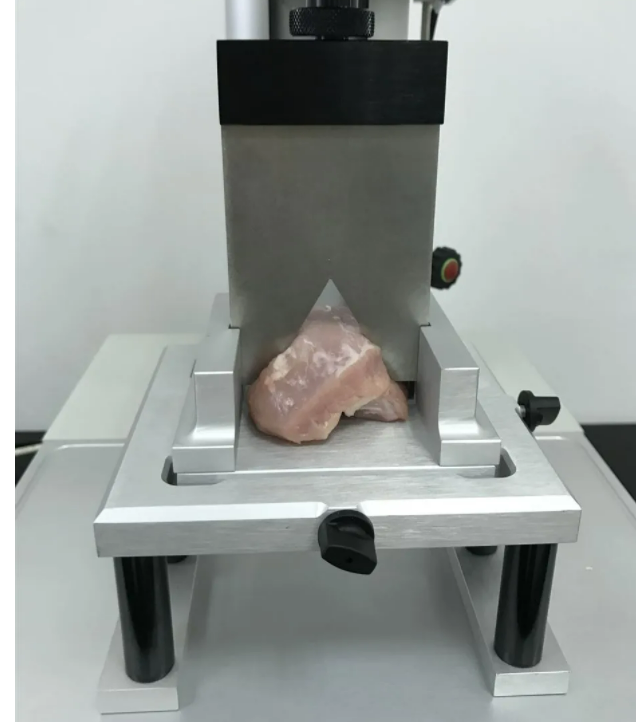
A meat processor can use a tenderness tester to monitor the consistency of a defined product and investigate changes in its mechanical response. The solution combines an agreed sampling plan, consistent sample preparation, the correct test fixture and records that link every measurement to its source. The quality team should choose the method and decision criteria for the product before collecting data.
Choose a question the test can answer
A plant may want to compare successive lots of the same cut, assess a process change or investigate a customer complaint. These are different questions and may require different sampling plans. State the product, production period, population of interest and the decision that will follow the result. Include production and quality staff in the discussion so the laboratory receives samples in time to support the decision.
Define the comparison group. A value from one muscle or product format should not be compared casually with a different cut prepared under another procedure. Record the species, cut, batch and any relevant processing history. If the product or method changes, identify the effective date in the records so a trend can be interpreted in context.
Build a sampling plan with production
Specify the lot, sampling units, collection points and number of independent units needed for the decision. A plant investigating variation across animals needs a plan that captures that variation. Several portions from one piece of meat provide information about that piece and the measurement procedure, but they do not represent several independent animals. Keep the source relationship visible when calculating and reporting results.
Apply an identifier at collection and preserve it when a cut is divided into test portions. Record the collection time, production batch and other information required by the plant's procedure. If a sample is missing, damaged or handled outside the protocol, record the exception and follow the agreed disposition. An instrument reading cannot repair an uncertain sample identity.
Standardize preparation across the comparison
Use the approved method for storage, aging, cooking where applicable, specimen geometry, fiber orientation and testing. These factors can affect the measured response. Staff should have a current procedure and a worksheet that captures the conditions needed for interpretation. When two groups are compared, prepare them under the same protocol unless the preparation itself is the treatment being studied.
For a process trial, decide in advance how samples will be assigned to groups and how deviations will be handled. Keep the order and identity of the measurements in the record. If a preparation step differs between shifts, record the difference and review whether the results remain comparable. A written handover should identify samples that are awaiting preparation, ready for measurement or already tested.
Set up the tester for the selected method
Confirm the fixture, operating range and instrument settings required by the laboratory's method. Inspect and check the equipment according to the manufacturer's instructions and the plant's quality plan. Record the instrument and fixture identifiers, operator, date and method version. If the plant uses a customer-specified method, verify that the supplied configuration and procedure meet that requirement.
During a run, follow the procedure for placing each specimen and recording the force or other response. If the instrument stores a measurement trace, link it to the specimen identifier. A damaged fixture, failed check or unexpected trace should trigger the documented review before the associated results are released. Preserve the original data when a measurement is repeated.
Interpret the measurements at the right level
Calculate the statistics specified in the quality or study plan and retain the individual results. Report the unit and the number of independent sampling units as well as the number of measurements. For example, ten measurements from two cuts and ten measurements from ten independently sampled cuts describe different sampling designs. The result sheet should make that distinction clear to production management.
Review both the average and the spread when the decision concerns consistency. Two batches can have the same mean force but different variability. A batch with a wide range of results may need a different investigation from one in which all measurements shift together. Set the internal decision criteria before examining a new batch and review unusual values against the preparation and equipment records.
Investigate a change in the trend
First confirm the sample identities, method, fixture and equipment checks. Compare the batch with the same product and method over a relevant period. Look for changes in preparation, storage, aging or production records that coincide with the shift. A change affecting only one specimen may have a different explanation from a shift across several independently sampled units.
If a repeat is permitted, document whether it uses another portion of the retained cut or a newly collected production sample. These choices answer different questions. Keep the original result and record the reason for the repeat. The quality manager should decide whether additional sampling, a method review or a production investigation is needed under the plant's established process.
Connect laboratory results with customer experience
A mechanical measurement is useful for comparisons made under a controlled method. Consumer tenderness is a sensory outcome influenced by the product and the way it is prepared and eaten. If the plant wants to use an instrumental limit as a predictor of sensory performance, it should evaluate that relationship using representative products and an appropriate sensory study. Revisit the relationship when the product or process changes.
Share reports with production in a form that supports action. Include the product and lot, sampling design, method, units, summary statistics and any exceptions. A chart can show a sequence of comparable batches, provided that method or product changes are marked. Define who reviews the chart and who authorizes an investigation when a result meets the internal review criteria.
Fit the program to the plant schedule
Estimate the samples per shift and the deadline for each quality decision. Include collection, preparation, instrument checks, measurement, data review and reporting in the schedule. A test instrument's operating speed is only one part of the workload. Conduct a pilot with the intended staff and representative products, then measure the time spent at each stage.
Keep the fixture, consumables and instructions available at the testing station. Plan how the plant will handle urgent samples or a failed equipment check. Maintain a list of open investigations and reconcile it at shift change so the next team knows which lots are awaiting a decision and who is responsible for them. Periodically review repeat rates and missing records to identify opportunities to improve the workflow.
HENG MEI Intelligent Manufacturing is the brand of Shandong Hengmei Electronic Technology Co., Ltd. A processor considering a meat tenderness tester should share the method, product, fixture requirements, expected workload and reporting needs. Confirm the proposed configuration and evaluate it using the same preparation and records the plant intends to use in routine quality control.
Review the process after implementation
After the first period of routine testing, compare the planned schedule with the time actually needed for collection, preparation and review. Check whether the sample identifiers and production records allow a reviewer to trace each result. If staff encounter recurring gaps, revise the worksheet or handover procedure and record the effective date. A clear record makes a later customer investigation faster and gives production a reliable basis for comparing batches.
Address of this article:https://www.hmfoodtesting.com/article/meat-tenderness-tester-solutions-for-processor-quality-control-heng-mei-intelligent-manufacturing.html
 Return to List